
There’s a question lurking at the centre of Hector Bell’s Skin Deep, the kind his protagonist Ethan would absolutely rather not answer: if you could physically see the pain your private choices were causing someone you love, would you stop, or would you just get better at not looking? The premise has a wicked, almost folkloric symmetry. After his girlfriend Georgia’s best friend reveals she’s started cam-girling, Ethan can’t resist a look, and then another, and then another, slowly discovering that each clandestine visit seems to coincide with a worsening rash blooming across Georgia’s skin. The supernatural conceit gives Bell a genre engine, but what’s really powering the film is something far more of its moment: a portrait of a very specific contemporary man. Ethan is curated, sex-positive in the abstract, performatively enlightened, and underneath all of that quietly entitled in ways that would genuinely surprise him to hear named aloud. The film’s incel undercurrent, its manosphere static crackling just out of frame, wasn’t where Bell consciously began. It’s where the character organically arrived once the story demanded a protagonist whose public and private selves had stopped speaking to each other. That something so zeitgeist-defining emerged almost by accident is, in a way, the most telling thing about Skin Deep as a reflection of the disquieting times we find ourselves living in. Ahead of Skin Deep’s online premiere, we spoke to Hector about his protagonist’s quiet villainy, the practical mythology of the rash, and the brilliant reverse arc into a self-possession he found in the very thing pulling the couple apart.
I can feel the specific cultural moment that inspired the film, that tension between performative open-mindedness and what people actually feel and do in private. What was the original spark, and how did that develop into the story we see on screen?
I think you’ve hit the nail on the head with the question. The idea from the get-go was to make a film that captures the performative open-mindedness, particularly now in a time where people are more aware of being sex positive in general life, but maybe don’t like what that means in practice. In the original idea, there wasn’t going to be any link between what Ethan does and what Georgia goes through. I think I thought there’d be something funny about someone doing this and then getting super paranoid when their partner got sick. Something just kind of pathetic about it. It just gradually built up from there over time, having an actual supernatural link between the two seemed like the logical next step to go bigger and visually tell the story.
Ethan is a very precisely drawn character, groomed, curated, outwardly confident and enlightened, with something much more self-serving quietly running underneath. Where did he come from?
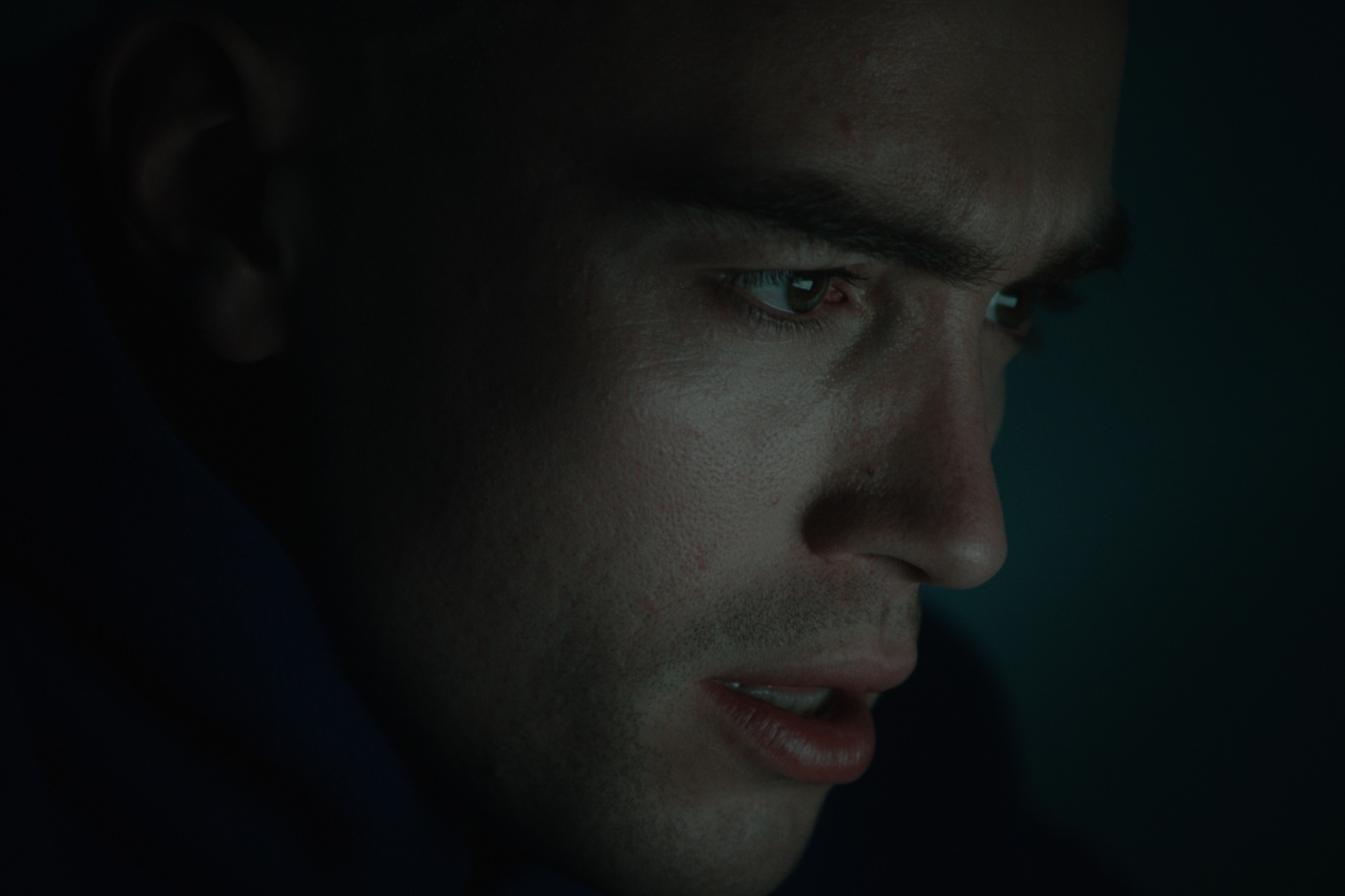
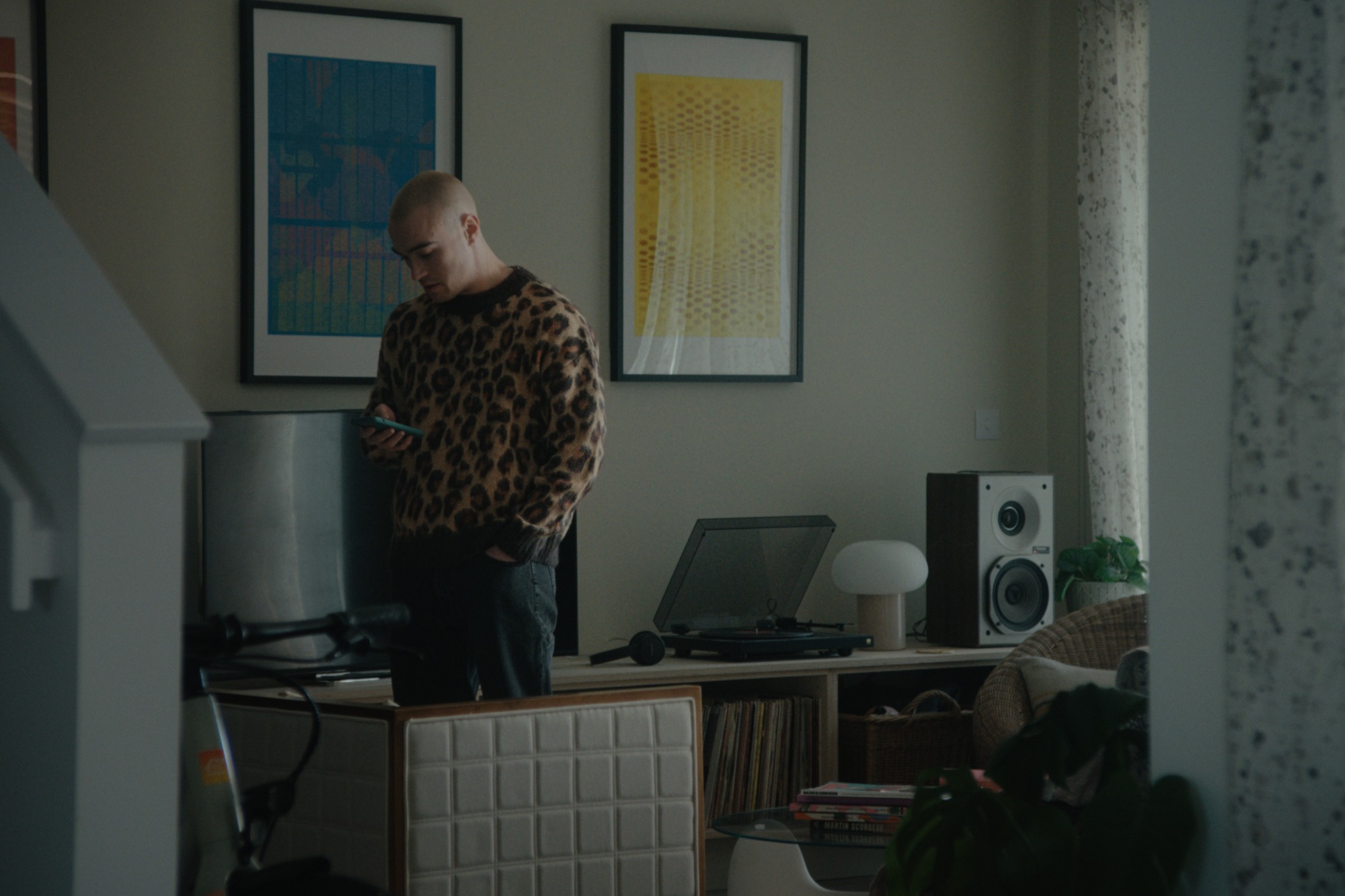
To be honest, the concept of the story is what came first, and for quite a long time, I didn’t really have any idea what type of person the protagonist would be. As I was coming up with how the story would play out, it became increasingly clear who Ethan was. He’s that sort of person who’s so socially aware they know exactly how they should represent themselves in public, but it’s the fact that they’re so calculated that makes them feel performative or maybe even a bit sinister. Again, a product of the time we live in, but with social media and internet things in general, people kind of become their own PR teams, and I think Ethan came out of the scenario when someone’s internal beliefs contradict their external ones.
There’s something quite tragic and satisfying about seeing a really arrogant, materialistic person fall apart.
There’s an incel undercurrent to Ethan that feels very of-the-moment, that particular entitlement sitting just beneath the surface of a guy who would absolutely consider himself one of the good ones. How consciously were you engaging with that archetype, and were you at all nervous about how audiences would receive him?
It didn’t start as a conscious decision, but as before, as we got further down the road of writing and making the film, it just made more sense for him to become almost a secret villain, one that the other characters weren’t aware of. For the film to make sense, he needed to present as a good guy. But behind closed doors, there’s definitely some kind of repressed manosphere energy about him.
Most Popular
The idea of having a really flawed main character always feels a lot more interesting, but I certainly had doubts that he might feel too hate-able. So, in writing, I did have to remind myself that he doesn’t need to be liked by the audience or morally good, but his decision-making needs to feel realistic, so at least we can understand him. There’s something quite tragic and satisfying about seeing a really arrogant, materialistic person fall apart; maybe that’s why he becomes more and more helpless as the film goes on.
One of Skin Deep’s most unsettling qualities is how Ethan’s spiral is never pushed into full villainy; the pernicious creep of it almost feels worse than if he’d just been monstrous.
It’s so good to hear that you have come across that! Again, I think it all comes down to what feels the most believable, not necessarily creating the worst person imaginable, but making someone who feels closer to home. The sinister comes from the subtlety; it’s like having a villain who could also be your friend or family, or someone you work with, and you’d have no idea. I guess making what he does behind closed doors all the more shocking.
It was all about striking that balance of creating something that was dramatic enough to cause alarm for the characters but not so far that it became comical.
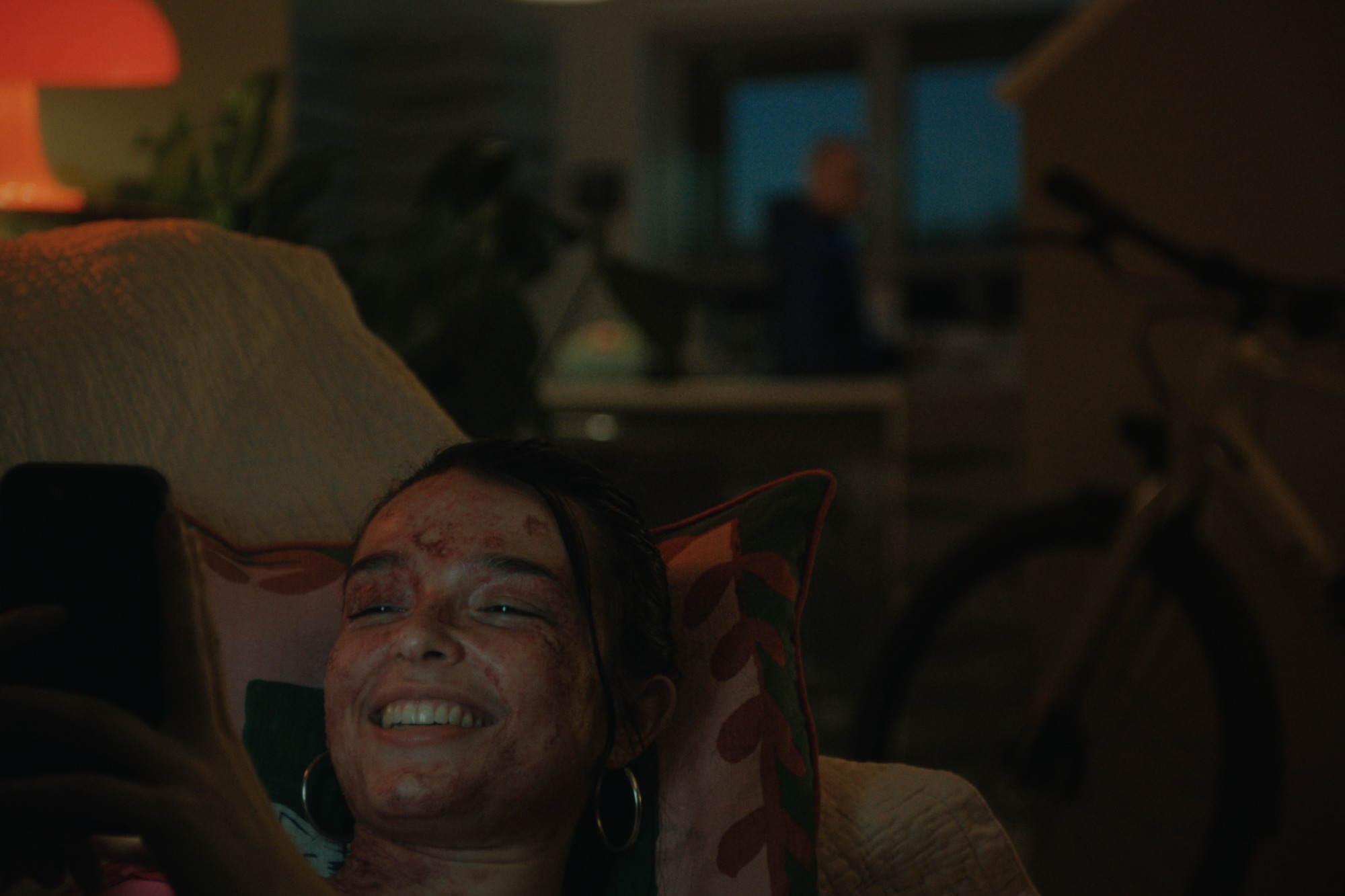
The rash is really in your face!! It has the right balance of visceral and almost mythological logic. How did you develop what it would look and feel like, and in what ways did the practical challenge of achieving that on screen shape your shoot?
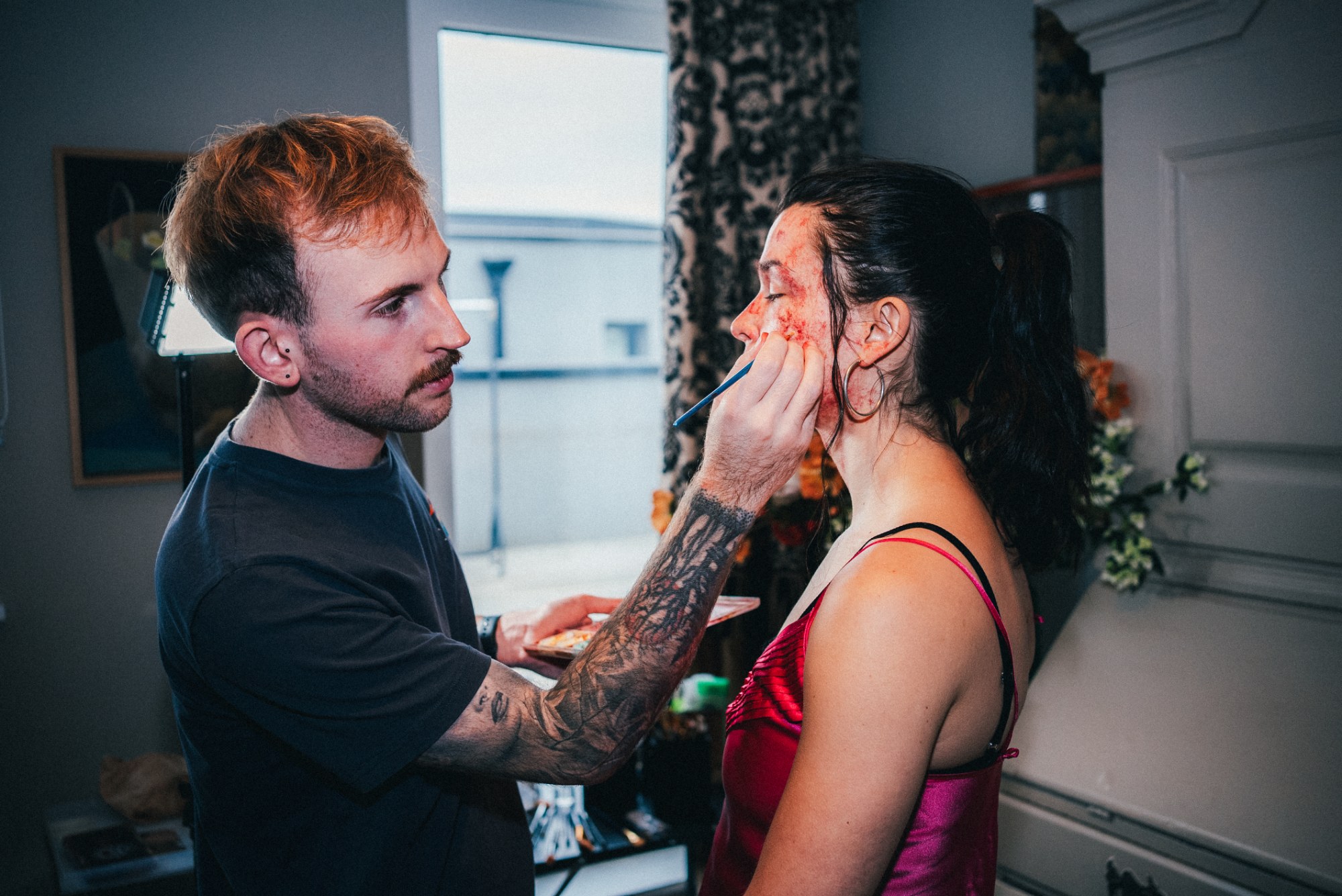
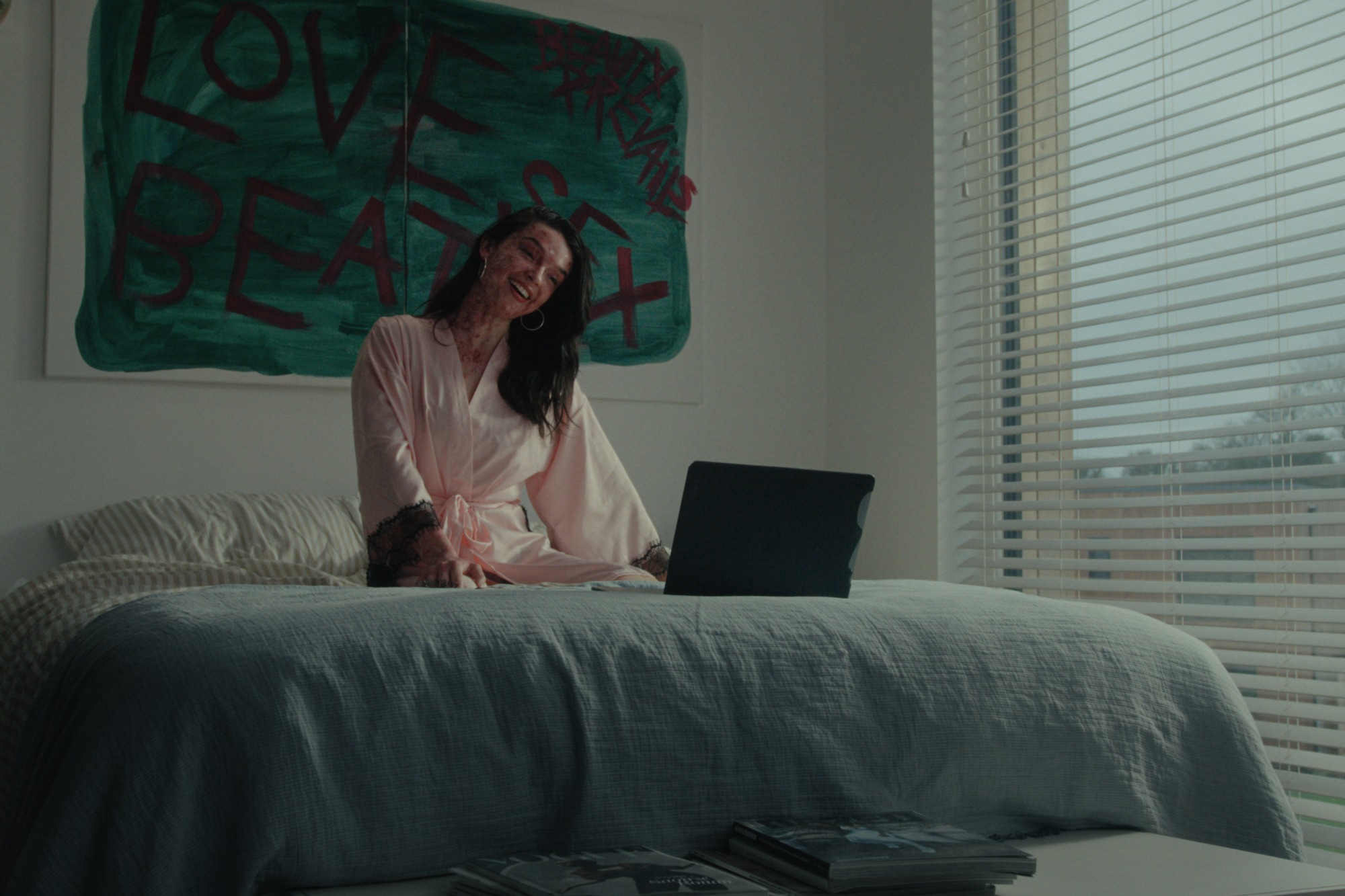
Developing the rash was really fun – in a weird way. Lots of time spent on Google images looking at really gross stuff, and gathering my faves into a moodboard of skin problems. Again, it was all about striking that balance of creating something that was dramatic enough to cause alarm for the characters but not so far that it became comical. But by the end, it needed to get bad enough to force Georgia’s character to change her perception of herself.
Then the practical challenge of it was certainly a tricky one, credit here has to go to the make-up artists and our 1st AD, we had to break the rash down into separate phases and shoot out each phase of the rash one by one to minimise the time it took to apply and remove. But we also couldn’t do it chronologically, so it was a real headache to figure out.
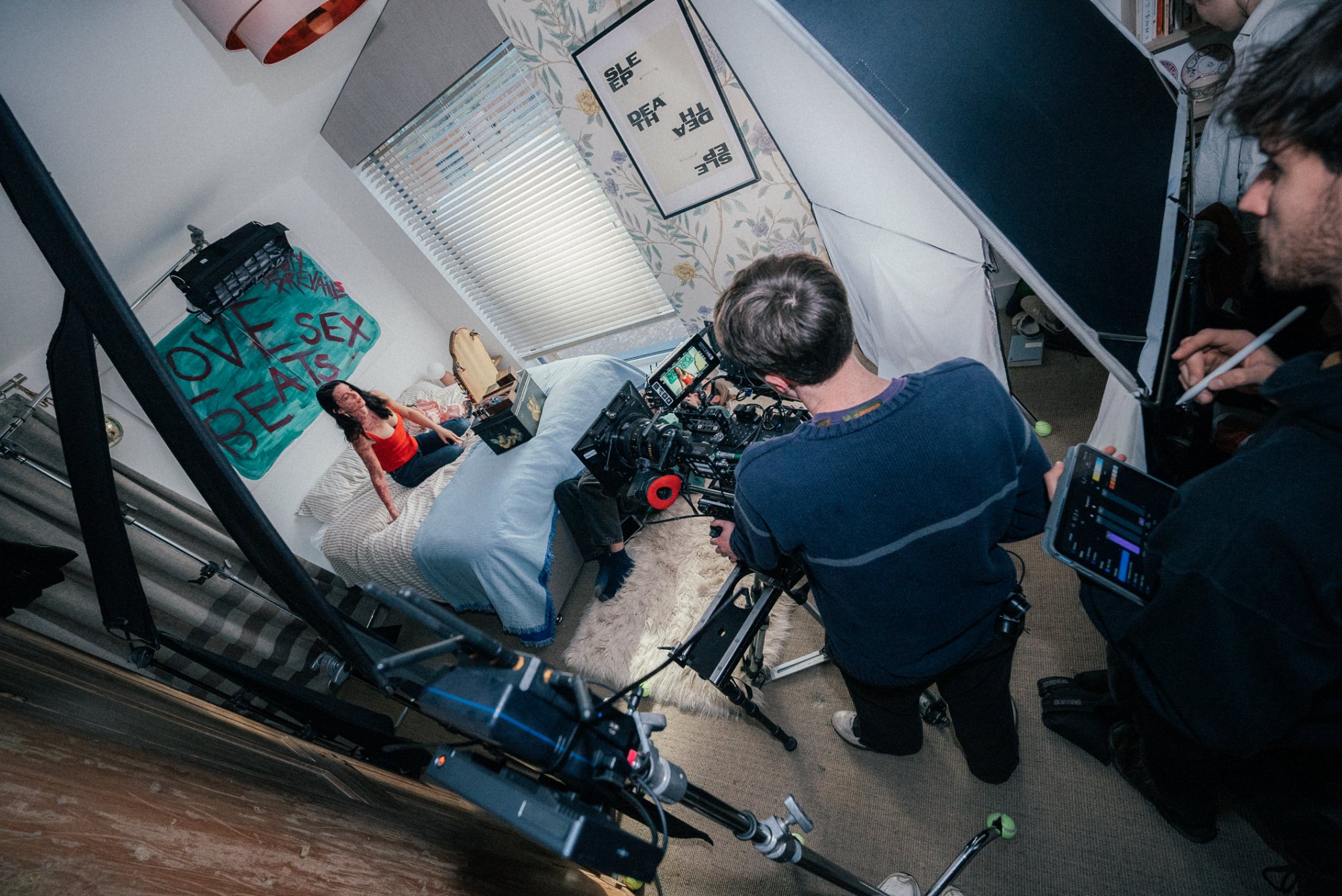
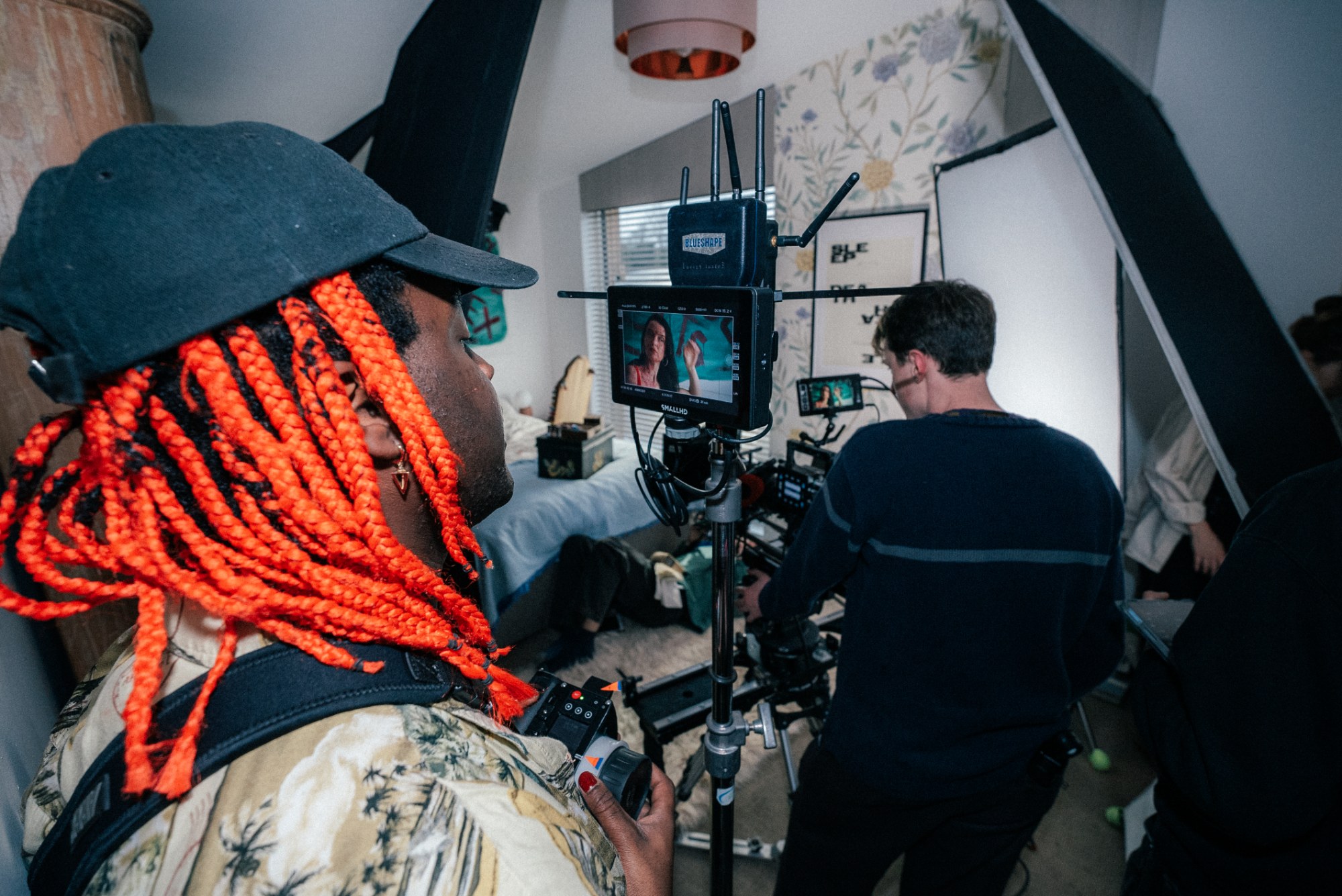
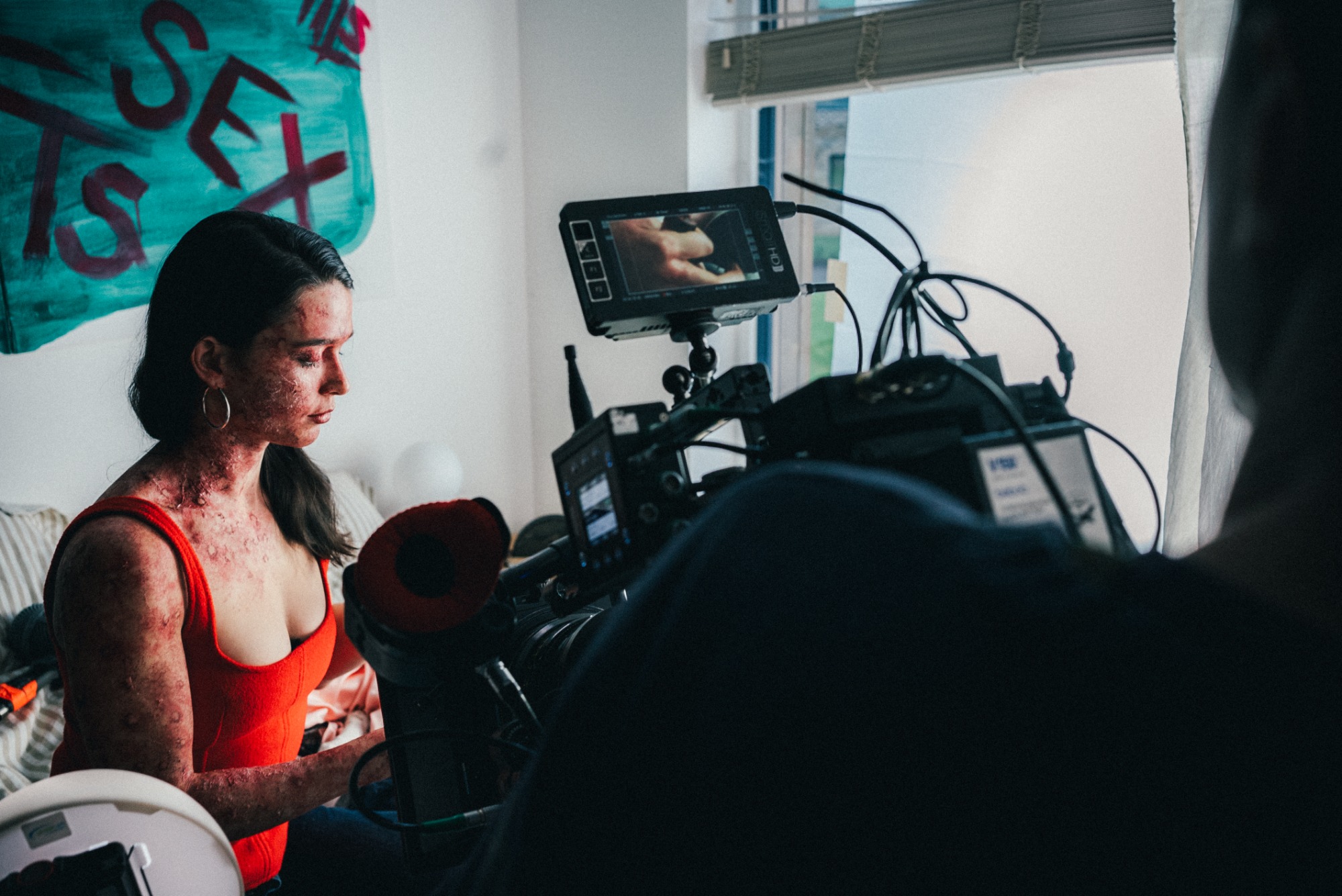
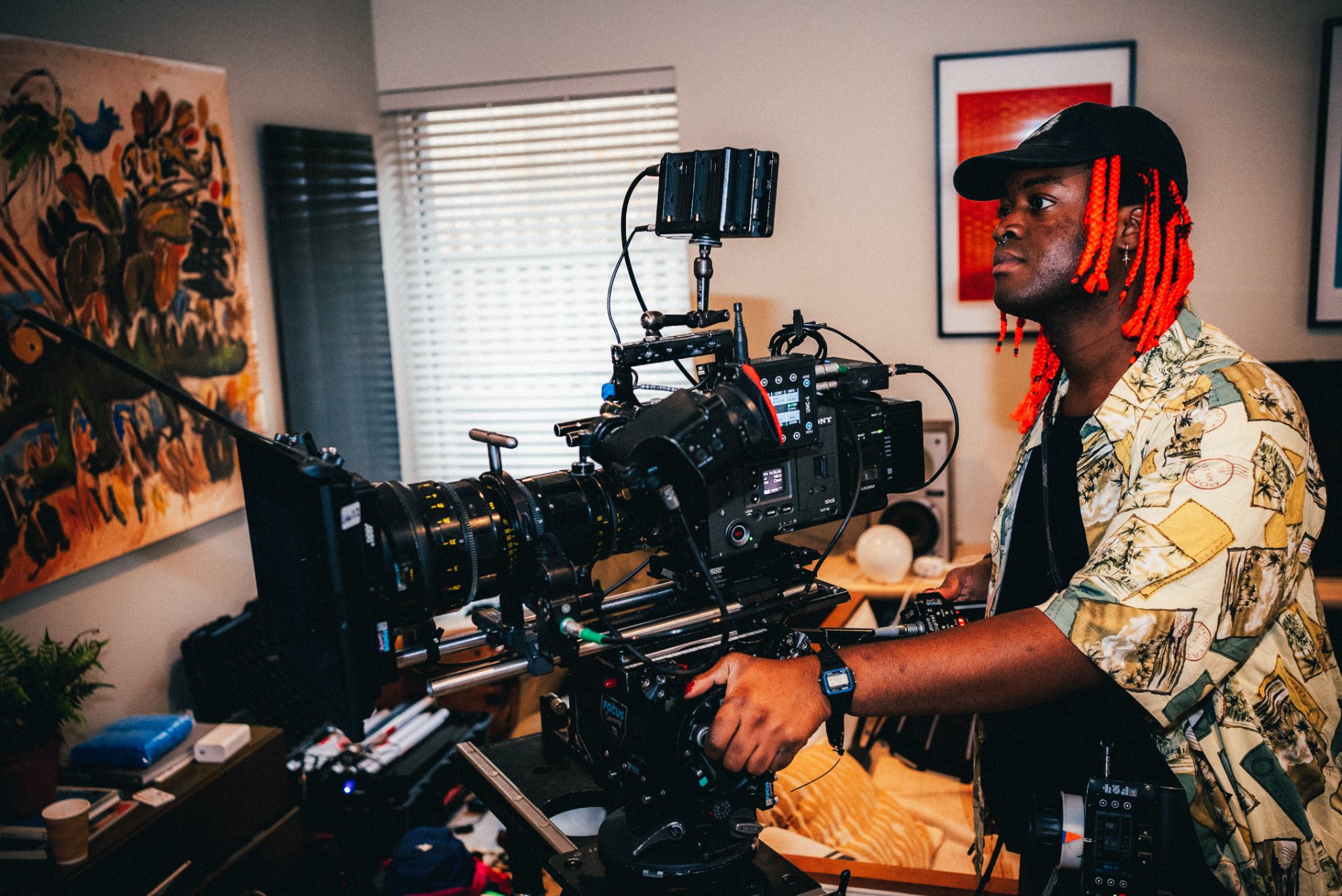
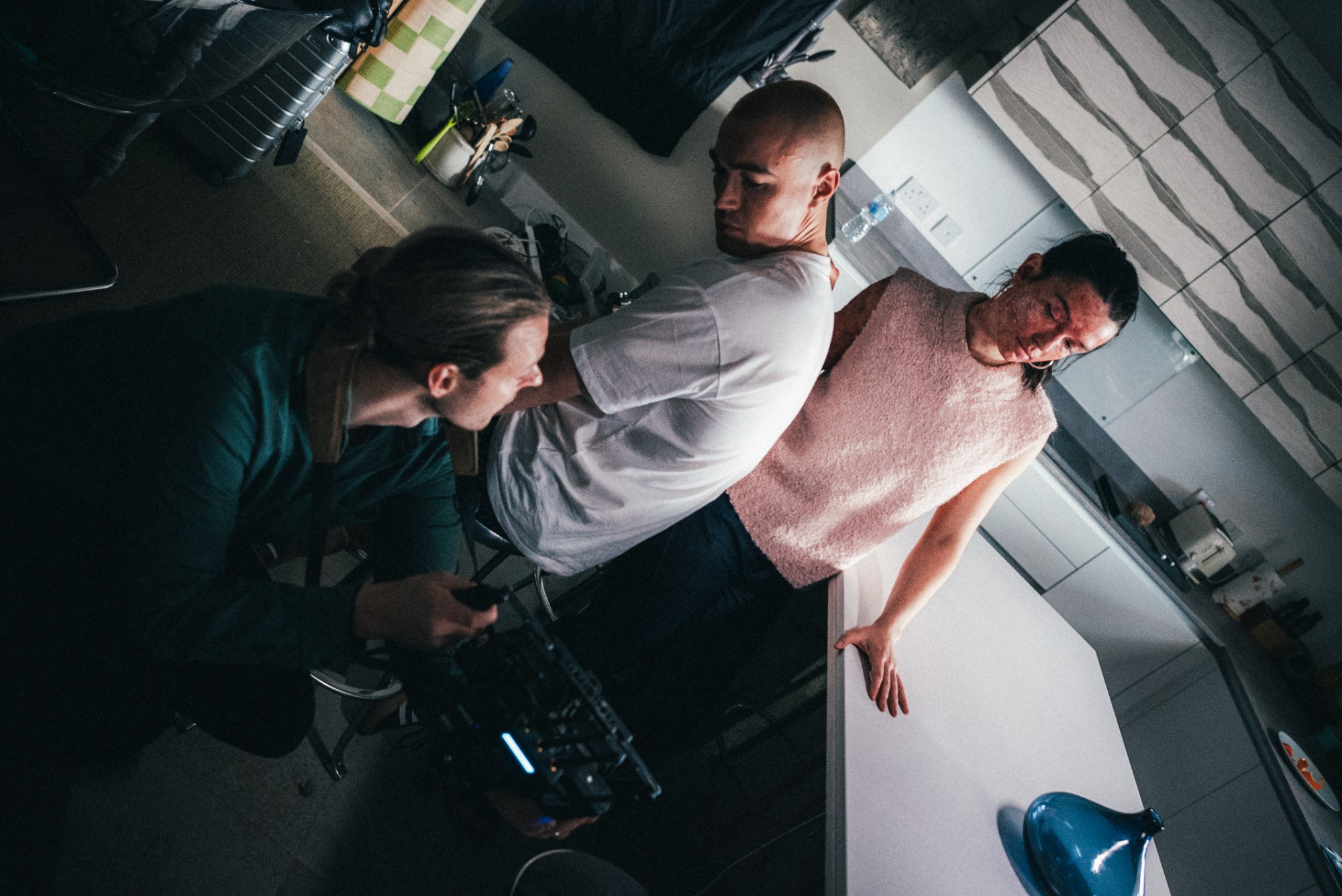
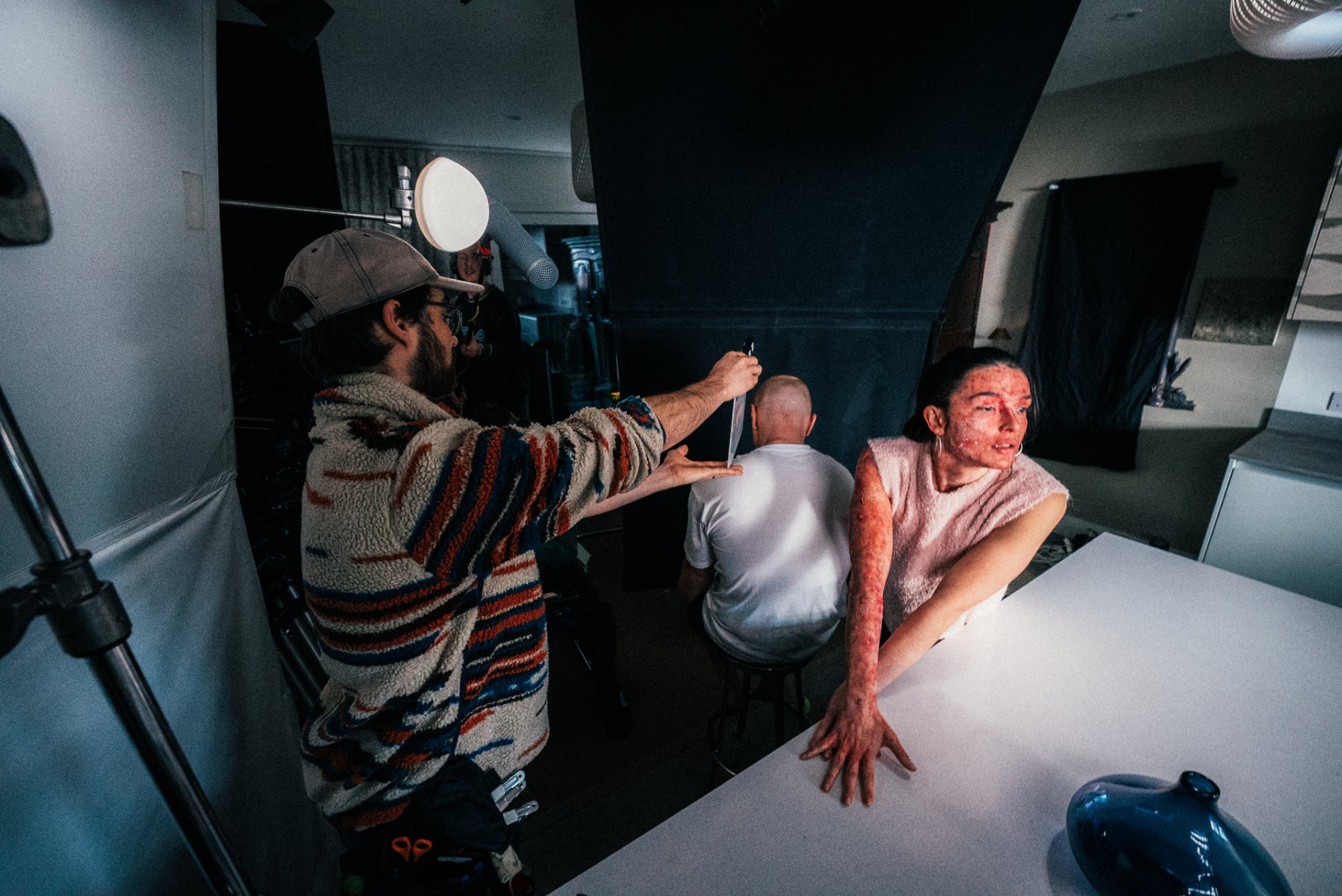
There’s a real observational quality to the camera work and a sense of watching this relationship from just slightly outside it. A visual language of detachment?
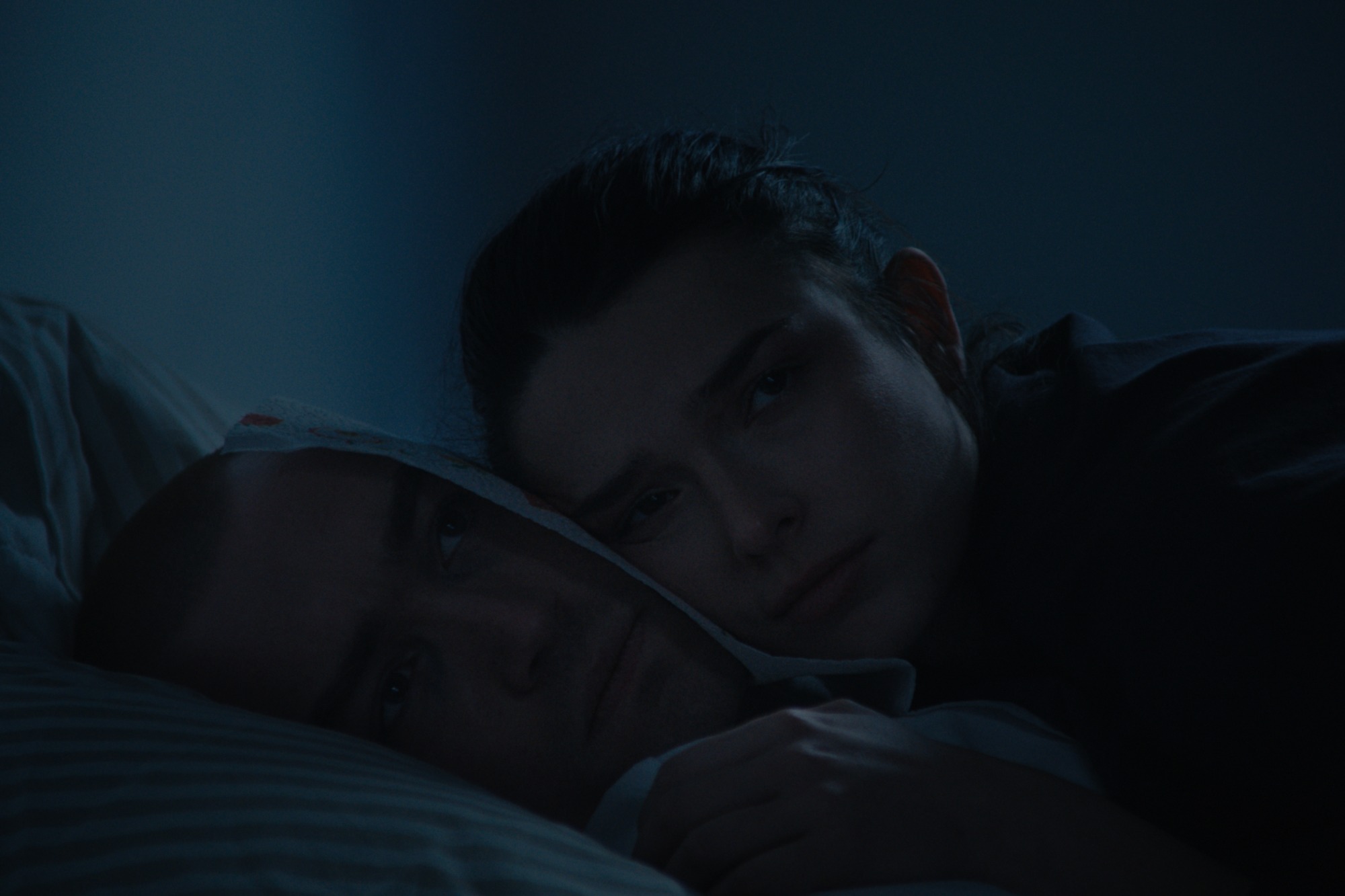
Funnily enough, the detachment was something I was set on from the get-go. I couldn’t say for certain why, but I was dead set on having the camera slightly removed and totally static for the majority of the film. I think there’s something nice about placing the audience in the house with them but slightly set back, watching the moments unfold from a distance. I feel like it adds to the tragic-comedy side of it, it’s like Ethan might be having a really rough time because of his decisions but that doesn’t mean we have to. It also helped to add contrast to the more intimate night scenes – like when you see things clearer in the cold, hard light of day.
She starts to break free of his controlling behaviour, and this final shot was a way to really hero her and mark that moment of liberation.
That final pull-out shot feels like a great conscious gear shift; it suddenly romanticises Georgia’s relationship with herself after everything that’s come before, and deliberately leaves things unresolved between them. Tell me about arriving at that ending?
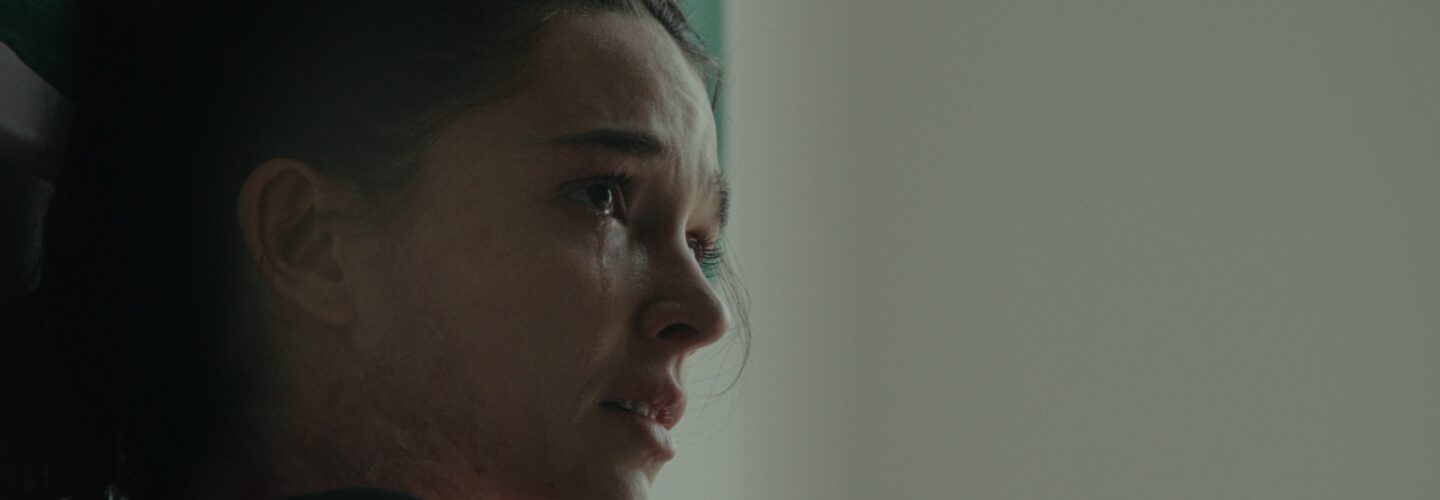
The ending we arrived at organically, to be honest, it played out quite nicely in my head that the characters have these reverse arcs in a way. To build on that, we thought it would be effective to have Ethan drift further into the background and let Georgia become the main character. She starts to break free of his controlling behaviour, and this final shot was a way to really hero her and mark that moment of liberation. I guess it also felt like the perfect counter to the final shot of Ethan, where he’s got his back to the camera, crying over the sink.
What’s your favourite short film, and what does it mean to you?
Tricky one this, but I think it has to be Whateverest by Kristoffer Borgli. It was the first short film I really remember watching. I was about 17 and had no specific interest in filmmaking or a strong desire to pursue it as a career at the time. But it really stuck with me, in a way, it’s super simple, but it just felt so different to anything I’d seen in feature films or TV. Since then, I’ve been a bit of a Borgli super fan and watched pretty much everything he’s done after.
What’s coming next for you?
In between work life as a director and editor on commercials, I’ve been doing lots of writing, a couple of shorts I’d like to get made over the next couple of years, and I’m in the early stages of developing my first feature script, Gout. More immediately, I’m in pre-production for a series of 3 micro-shorts about people getting unnecessarily upset about minor things, all going to be shot on 16mm. Fingers crossed, by the time of this release, they’ll be in the can!