A convenience store in Little Saigon becomes a liminal space where grief and the surreal logic of conversing with the dead meet the cluttered textures of everyday life in Julian Doan’s Long’s Long Lost & Mini Mart. Here, mourning is explored in its most unspoken, private forms and portrayed as a vice—an addictive pursuit of closure—sold in the back rooms of a mom-and-pop store alongside the booze, cigarettes and lottery tickets. Against this backdrop of absurdity and commerce, the film reveals how even our most intimate experiences of loss can be quietly commodified. Resisting neat resolution, Doan adopts a fluid lens that lets grief surface differently for each of his characters: a young man chasing one last conversation with his late father, and a store clerk whose carefully guarded sorrow threatens to resurface. Through a shifting narrative perspective, surreal touches and the delicate interplay of Vietnamese and English dialogue, the film captures the uncanny, intimate tensions of loss and longing. In our conversation below, Doan reflects on why he refuses to show the film’s central reunion with the dead, the surreal back-room world where those reunions are sold like any other service, and his ambition to complete an unofficial ‘dead dad trilogy.’
I know your initial concept came together instinctively. What do you think drove you to develop that first draft of Long’s Long Lost & Mini Mart so impulsively?
It was one of those rare moments where lived experience and incomplete ideas combine harmoniously due to procrastination under a looming deadline! A friend of mine suggested I submit to the Rising Voices fellowship, where 10 directors are given $100,000 to make a film loosely inspired by ‘the future of work’. I lost my dad in 2018 and had been sitting on an idea, a personal fantasy, wherein a character seeks out a service to reanimate his dead father for one last conversation… but I hadn’t yet figured out an interesting framework for it.
In a frenzied writing sprint on the day the application was due, I remembered a recent visit to a convenience store in Little Saigon, where I saw regulars drinking, smoking, and gambling while an inebriated Buddhist monk flirted with the cashier (note: it’s hotly debated in the Vietnamese community whether or not this was a real monk…). It was both mundane and patently bizarre. I remember feeling like I’d stepped into a parallel universe and thought this might be a funny and peculiar setting for the story.
I felt like I blacked out writing that first draft, but upon reading it back after submitting, I noticed exciting angles to approach the usual things that preoccupy me: the absurd ways we commodify grief and failures of communication; all while sprinkling in droll and silly details cuz at the end of the day, I feel grief can be hilariously absurd.
Grief in the film resists tidy resolution, and the shift in perspective between your two leads draws out how differently each of them moves through it. Can you share more about your approach to exploring grief in the wake of losing a loved one?
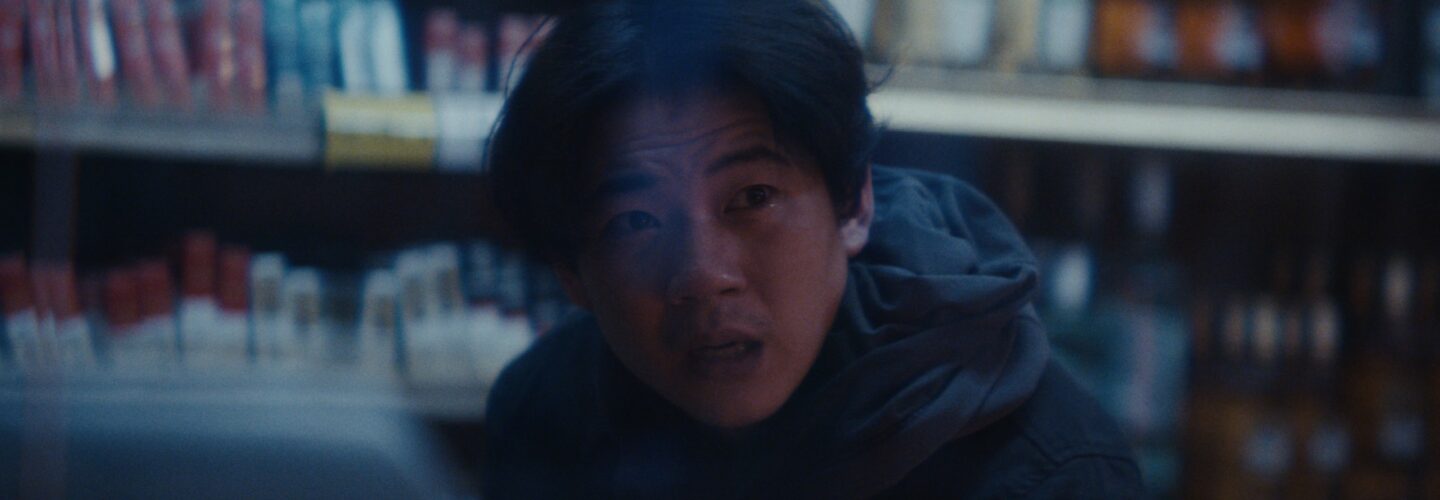
I tend to gravitate to stories where closure and catharsis are elusive or unattainable, which I see as a product of the outsized expectations we place on final goodbyes. So I wanted to start this film with the Customer (Jackie Tran) under immense self-pressure: reciting the exact lines he plans to say to his father, only to feel robbed of how he hoped that interaction would unfold. I thought it’d be exciting and provocative for the film’s grammar and structure to also resist closure as much as possible: first by immediately denying the viewer from witnessing the conversation, then later by abandoning our protagonist before the end of the film. I hoped this would leave the viewer adrift, wanting, even a bit disappointed—much like the Customer himself.
I wanted to express the intergenerational tensions I’ve seen in refugees and their children.
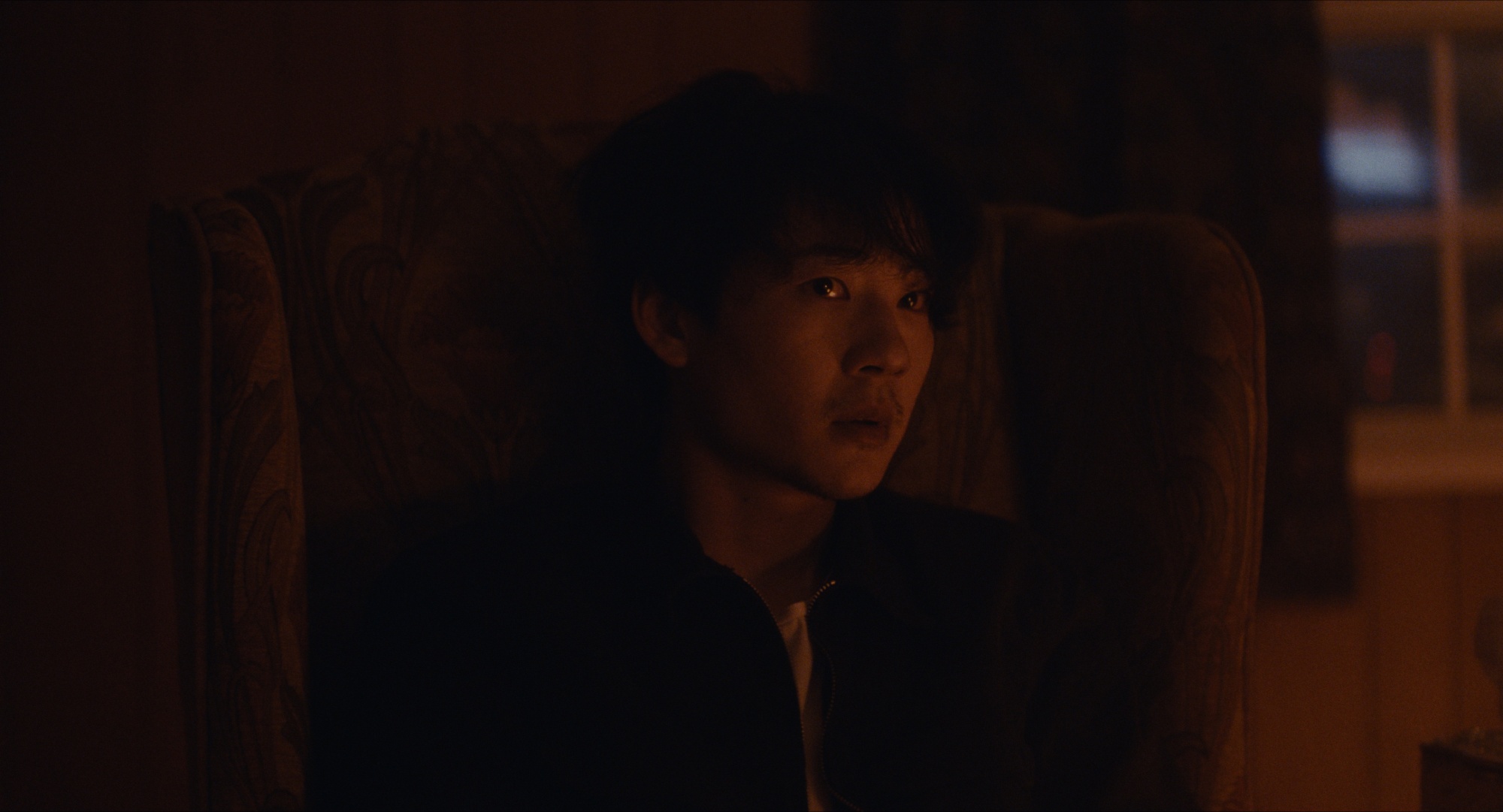
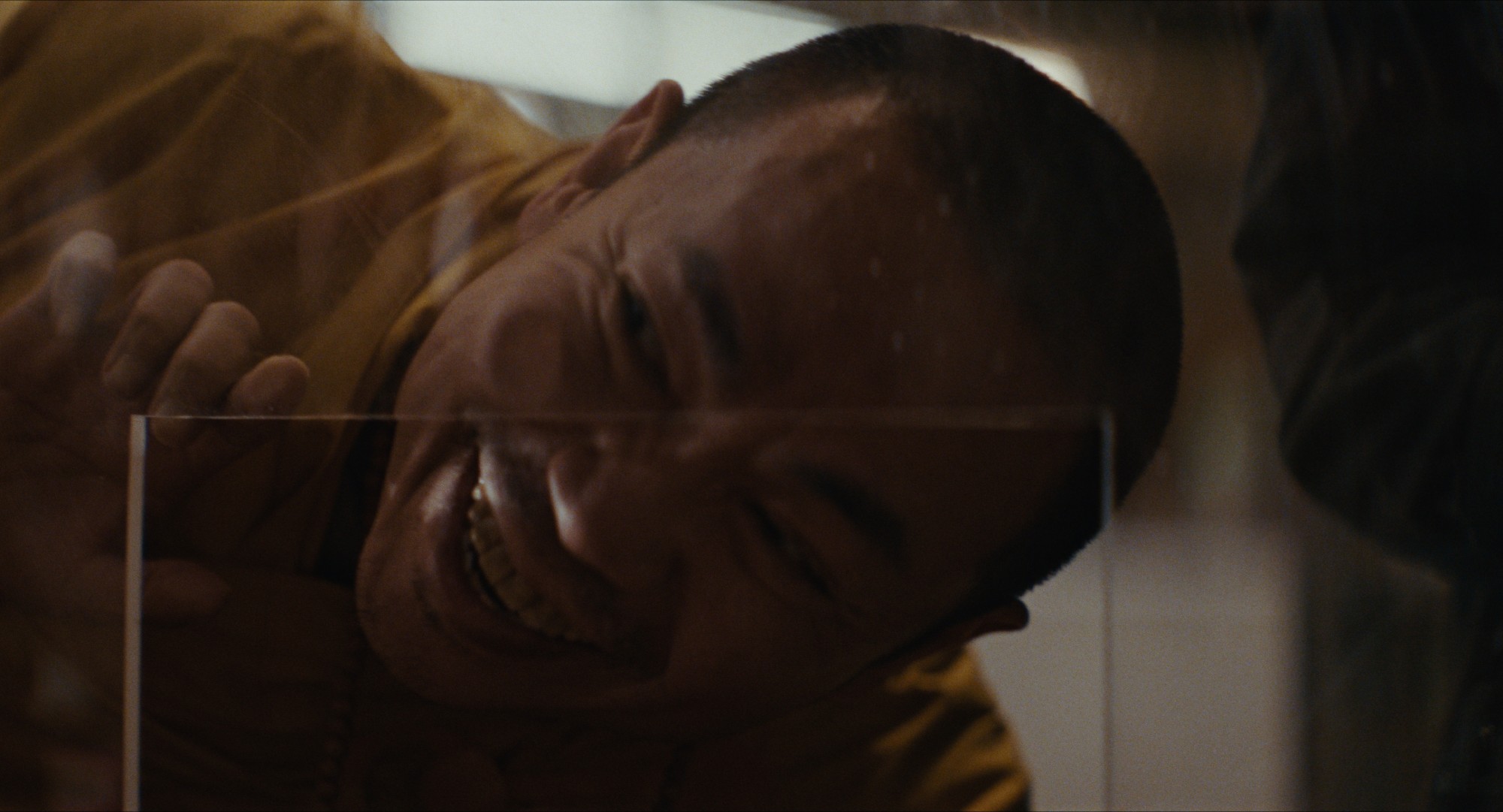
By quietly shifting the film toward the perspective of the Clerk (Hồng Đào), I hoped we could underline the idea that everyone grieves differently. The Customer is navigating the early stages of grief (denial, anger). He is young, naive, and the scene of him locking himself in the Clerk’s booth was both a plot function as well as a visual metaphor for how he handles his emotions; impulsive, volatile, a flailing animal in a cage.
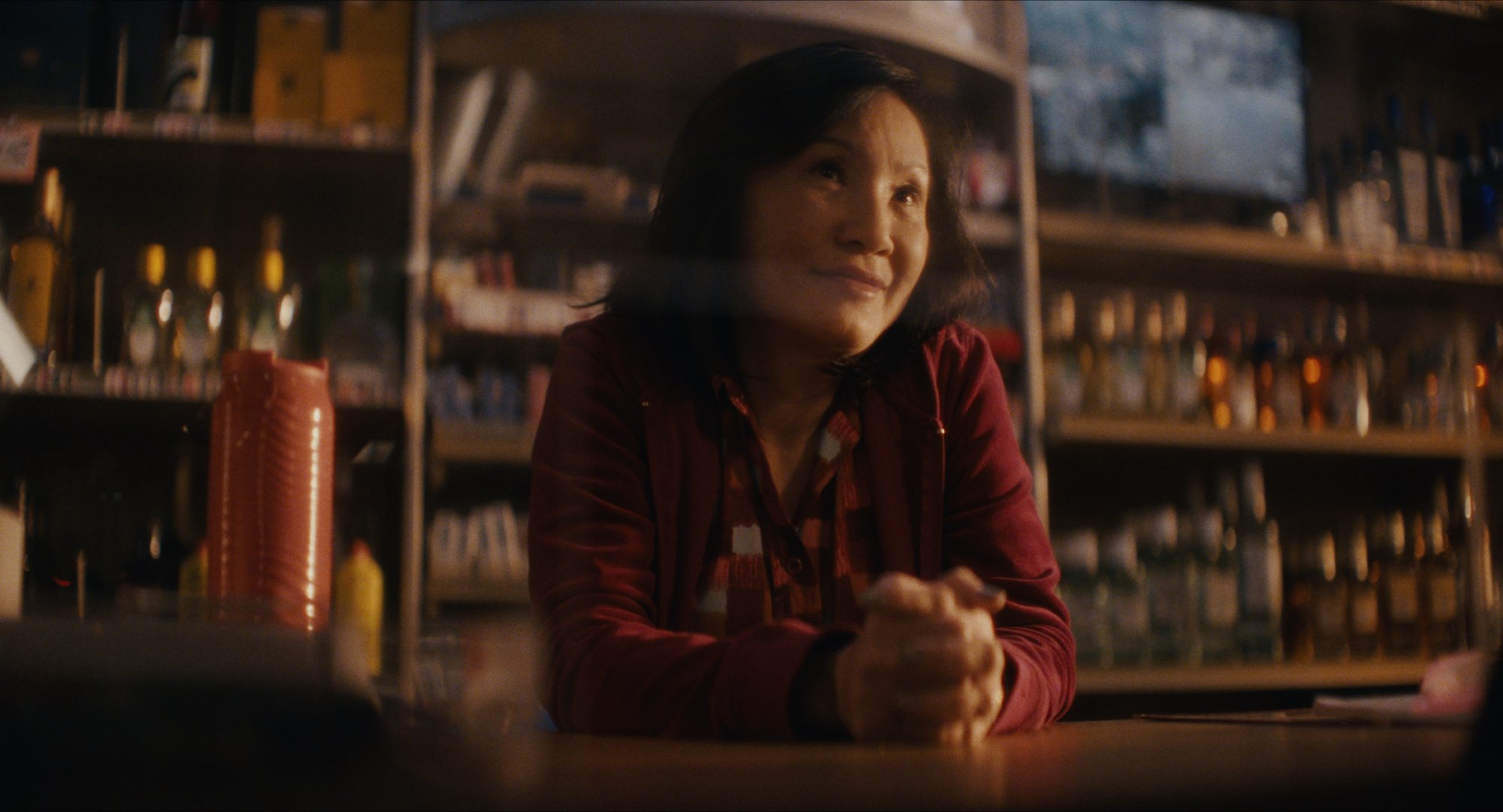
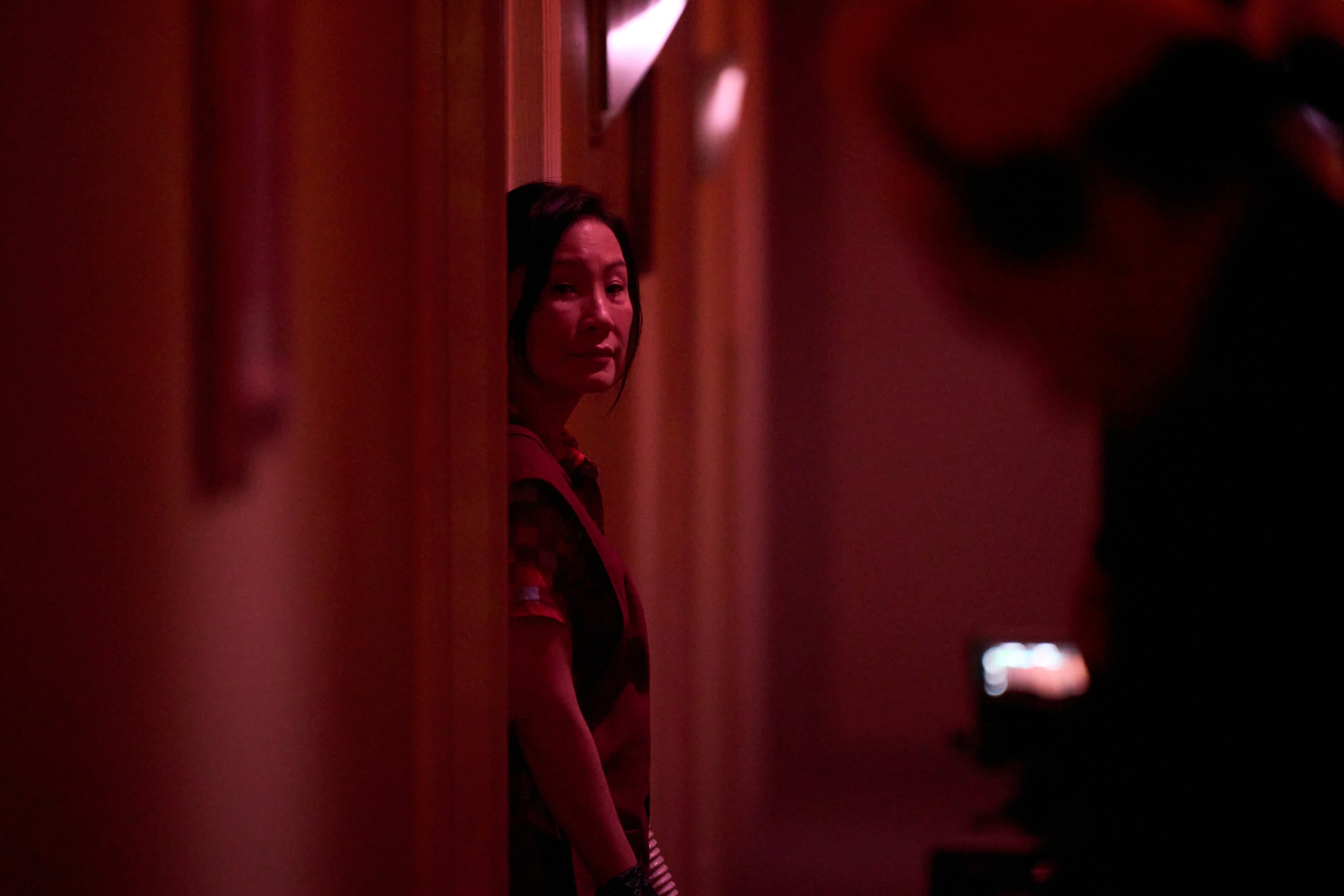
The Clerk is the flip side: her resolute attitude comes across cold and uncaring, but are defense mechanisms learned from a grief held private. While she appears to have moved on to the later stage of acceptance, her interactions with the Customer threaten to awaken her grief. His accusation that she doesn’t understand his suffering fuels her resentment, reflected in the final moments of the film, where I wanted to express the intergenerational tensions I’ve seen in refugees and their children.
In her mundane final interaction with the altar, I was hoping to convey that by never reanimating her dead husband, she maintains control of her fantasy, that her relationship with him gets to be timeless. I found this interpretation of grief both liberating and deeply sad, and wanted the final notes of the film to capture that conflicted feeling.
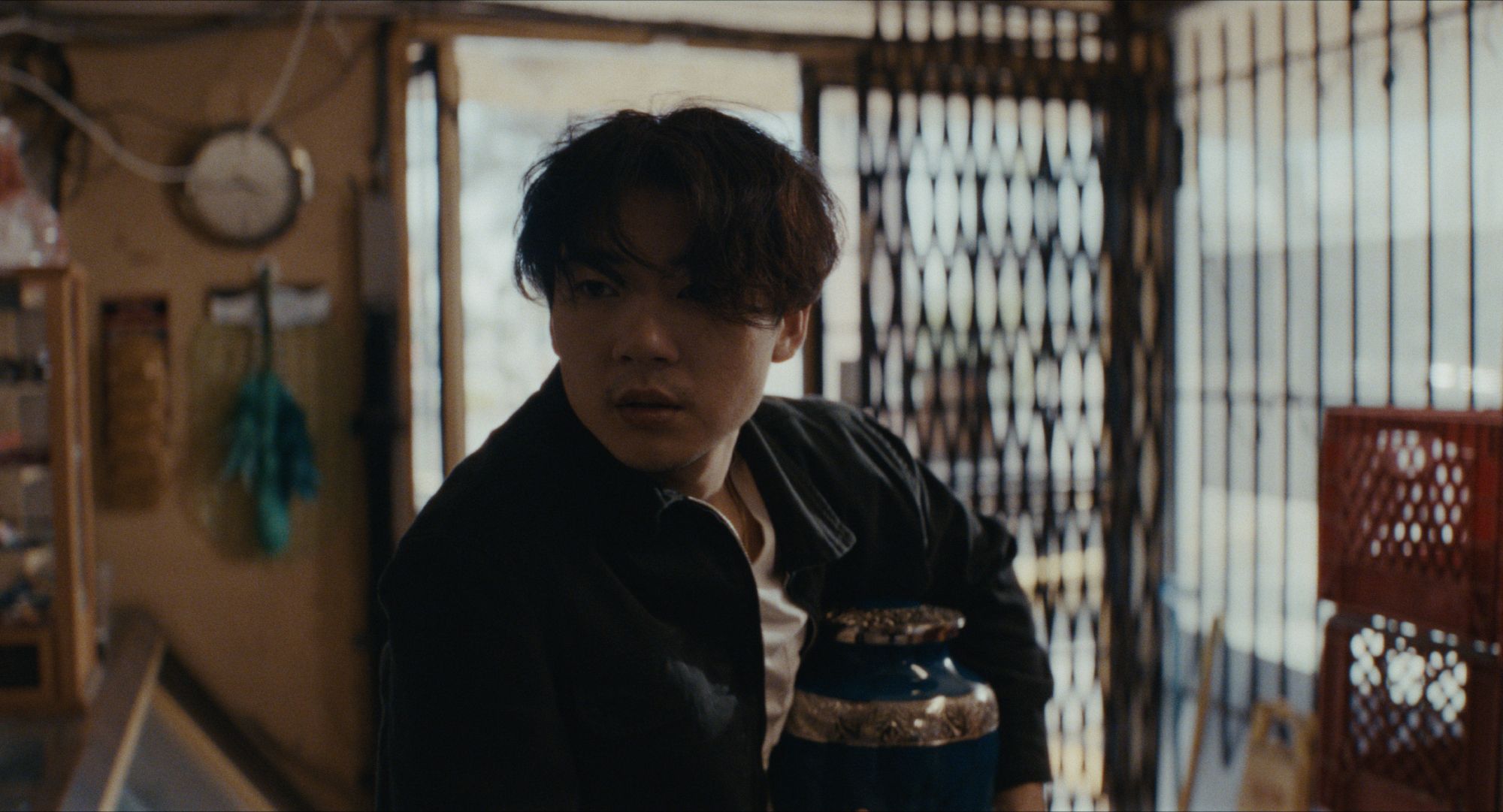
These three pillars—exploring grief as a vice, never showing the conversation with the dad, and switching protagonists by the end—were foundational to the narrative from the start. How did you develop these three key elements throughout the screenwriting process?
I think my ideas about grief as a vice (that we’re addicted to the pursuit of closure even when it hurts us) served mostly as a guiding inspiration. Up until production, the script always ended on an insert of the unscratched lotto ticket that the Clerk offers to the altar. I was hoping this would symbolize the gamble one takes in revisiting the dead, and the active choice the Clerk makes not to physically dig up her past. The producers and Hồng Đào always flagged this as a bit of a stretch, but I stubbornly insisted it was the perfect final image. Later, during production and editing, it became clear the lotto ticket metaphor was a bit too obtuse; still, this idea was a north star that drove my thematic investigations, so hopefully it’s something the audience feels, even if they don’t intellectualize it like I once hoped.
Most Popular
For the conversation, I always intended to cut away, so there wasn’t much to develop there. I took the classic Jaws/movie monster approach in that nothing I could write would ever be as potent as the audience’s imagination. The protagonist’s handoff was more clearly delineated in the original draft as two chapters; the Customer threw a tantrum in the store and left halfway through the film, with the back half featuring the Clerk taking care of her bedridden husband. It was always meant to be a reveal of silent grief and was a step in the right direction, but fell a bit flat.
The producers at Hillman Grad and 271 Films suggested it needed to feel somehow revelatory for the audience, perhaps reframing what they’d just watched. To address this, I needed to shift the Customer’s outburst later in the story, and added the plot of him breaking back into the store. This resulted in a lot of fun additions: the coin clock transition (my time working with Park Chan-wook on The Sympathizer was obviously inspiring), the quiet banal tension of the Clerk taking out the trash, her faking a phone call to her dead husband… I really appreciate this note for leading us to a more twisty and engaging film that combined my thematic interests with more satisfying setups and payoffs.
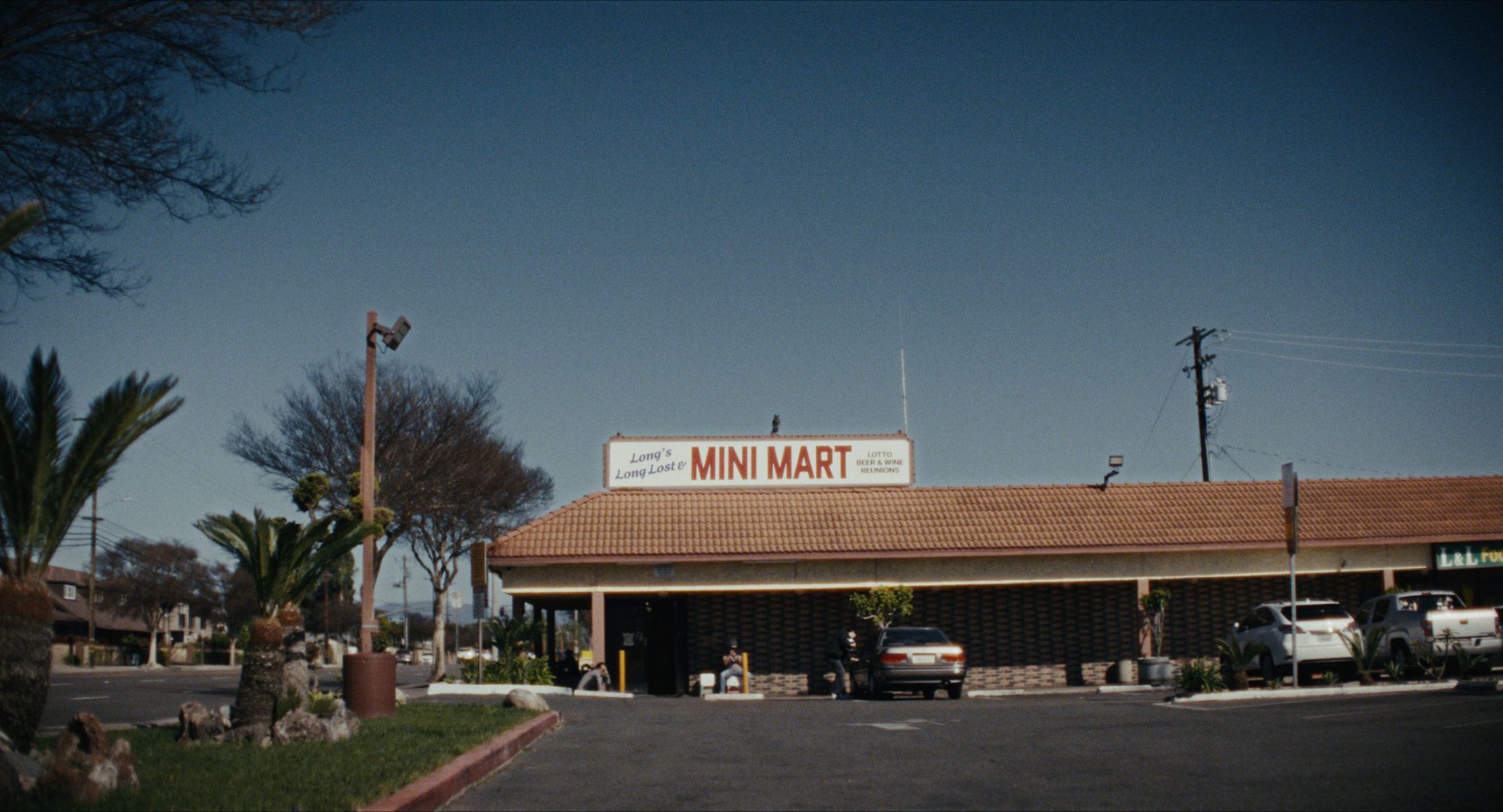
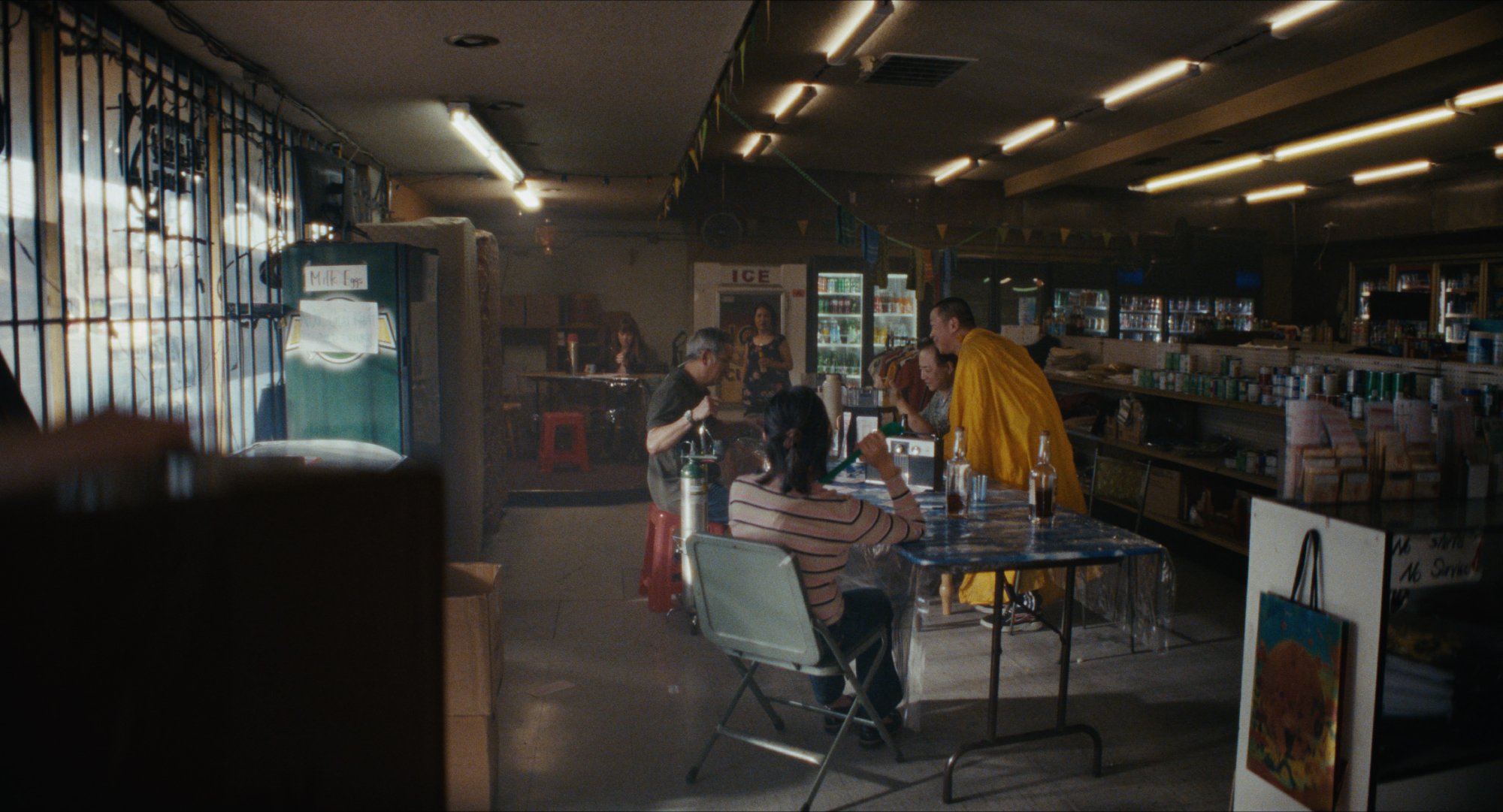
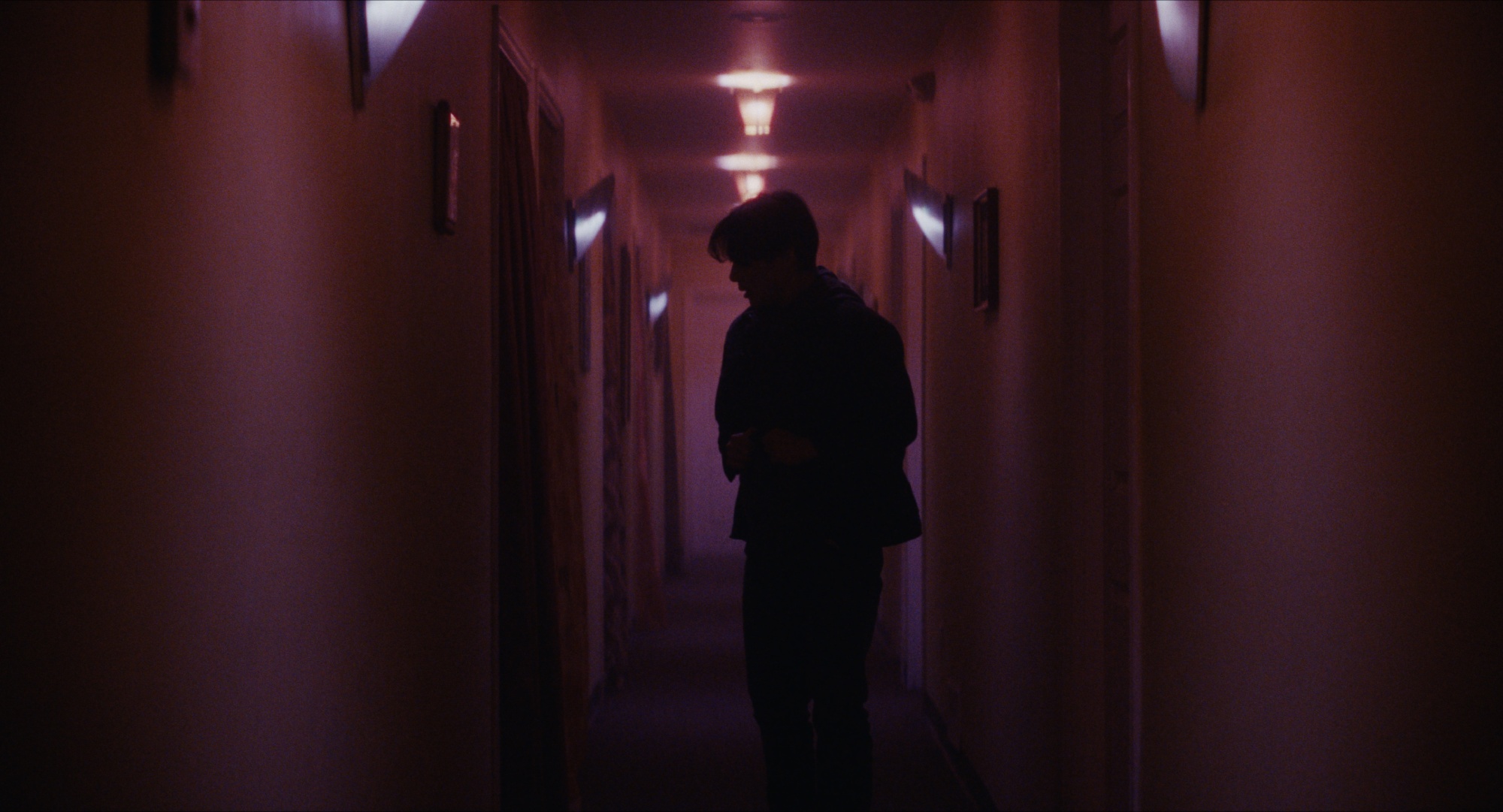
In Long’s Long Lost & Mini Mart, we enter a liminal space, between the cluttered, familiar feel of mom-and-pop shops and the surreal, illicit atmosphere of communication beyond death. Can you walk us through the location scouting process and how you brought this environmental liminality to life, shaped by your cinematic influences?
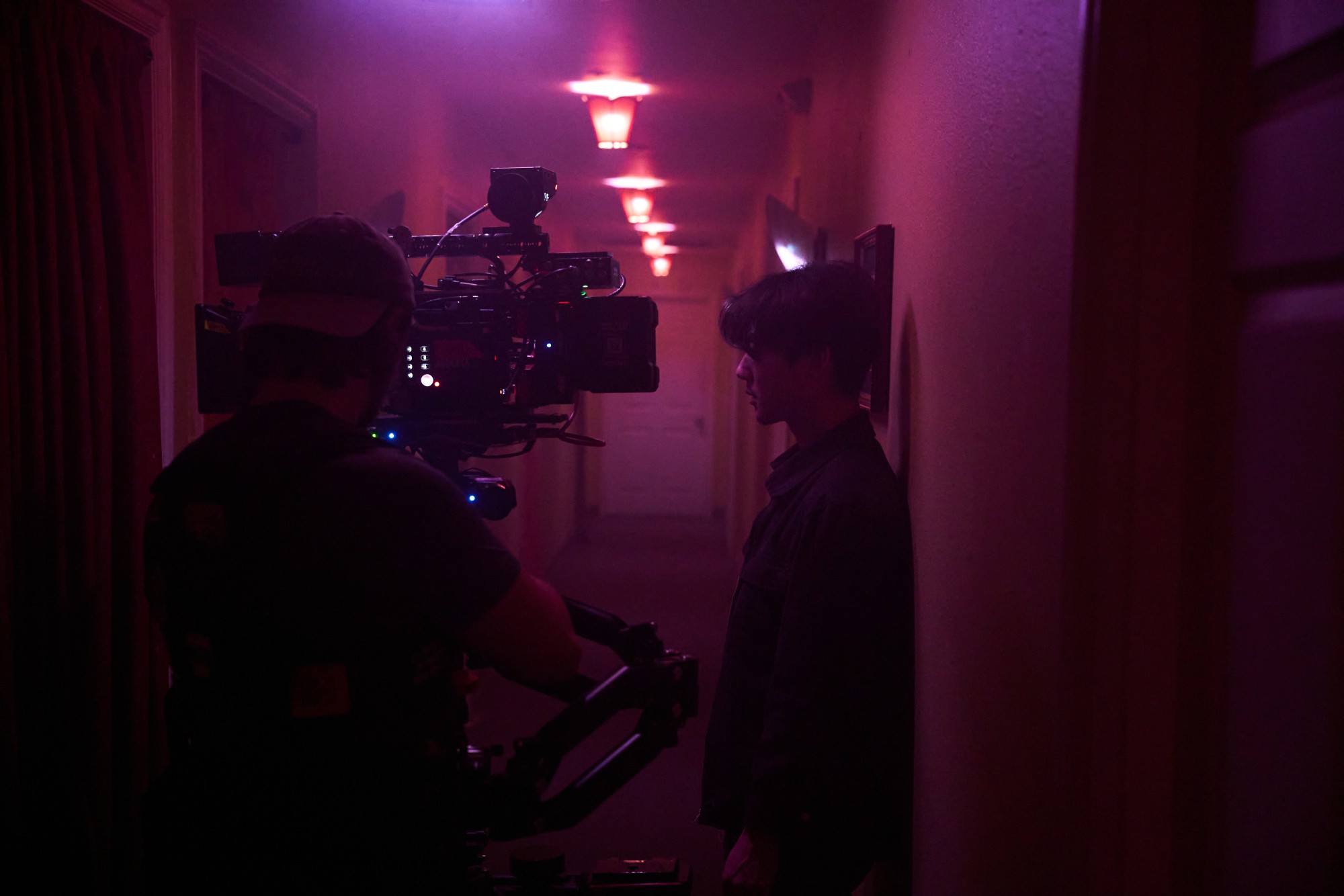
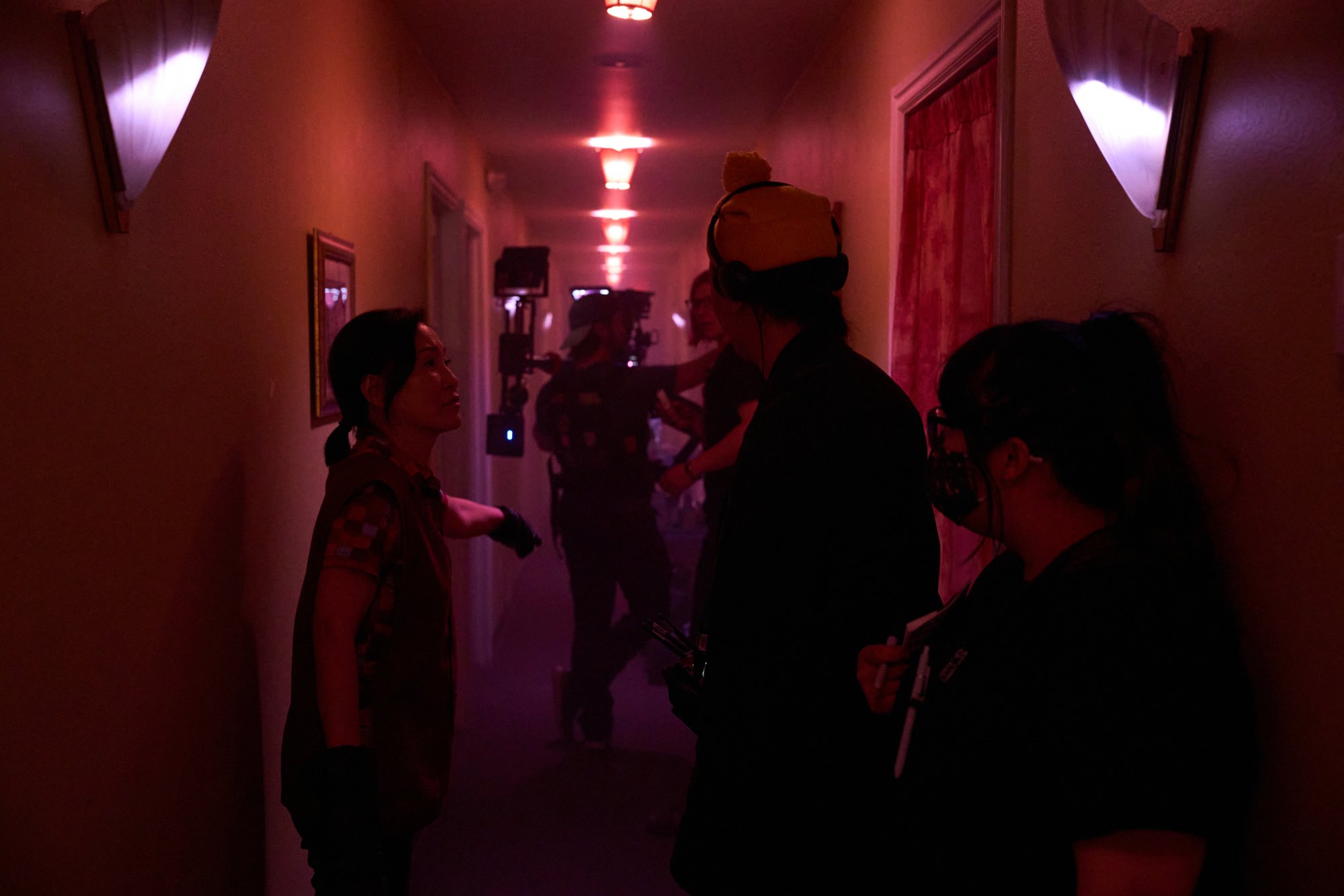
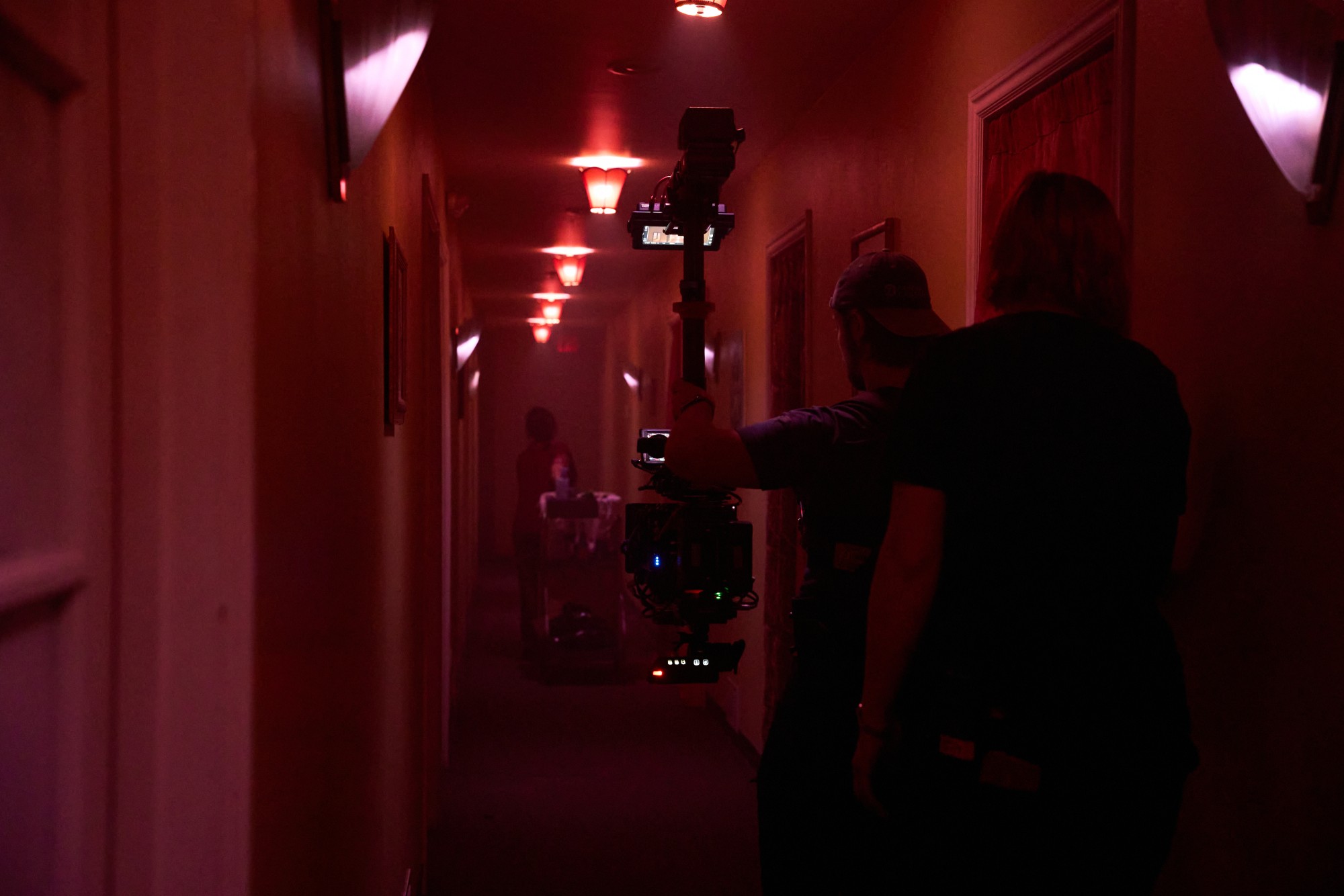
We didn’t want to shoot on a fake convenience store set. We needed a real sense of clutter and personality to help sell the heightened world. But real stores present multiple challenges; they’re expensive to shut down, the owners usually don’t want to anyway, and there are tons of visible brands (we had to avoid showing logos since this is technically a branded film). After approaching what felt like every convenience store in the LA/OC area, we found one in Little Saigon that was about to be sold, so the owner was very amenable to our filming needs. Of course, there was no way any real store would have the hallways and rooms I was envisioning, so we found Cinepack Studios in Burbank, which, amongst other things, had the perfect Scooby-Doo hallway. Through the simple magic of editing, we sold these two places as a single location. Ta-da!
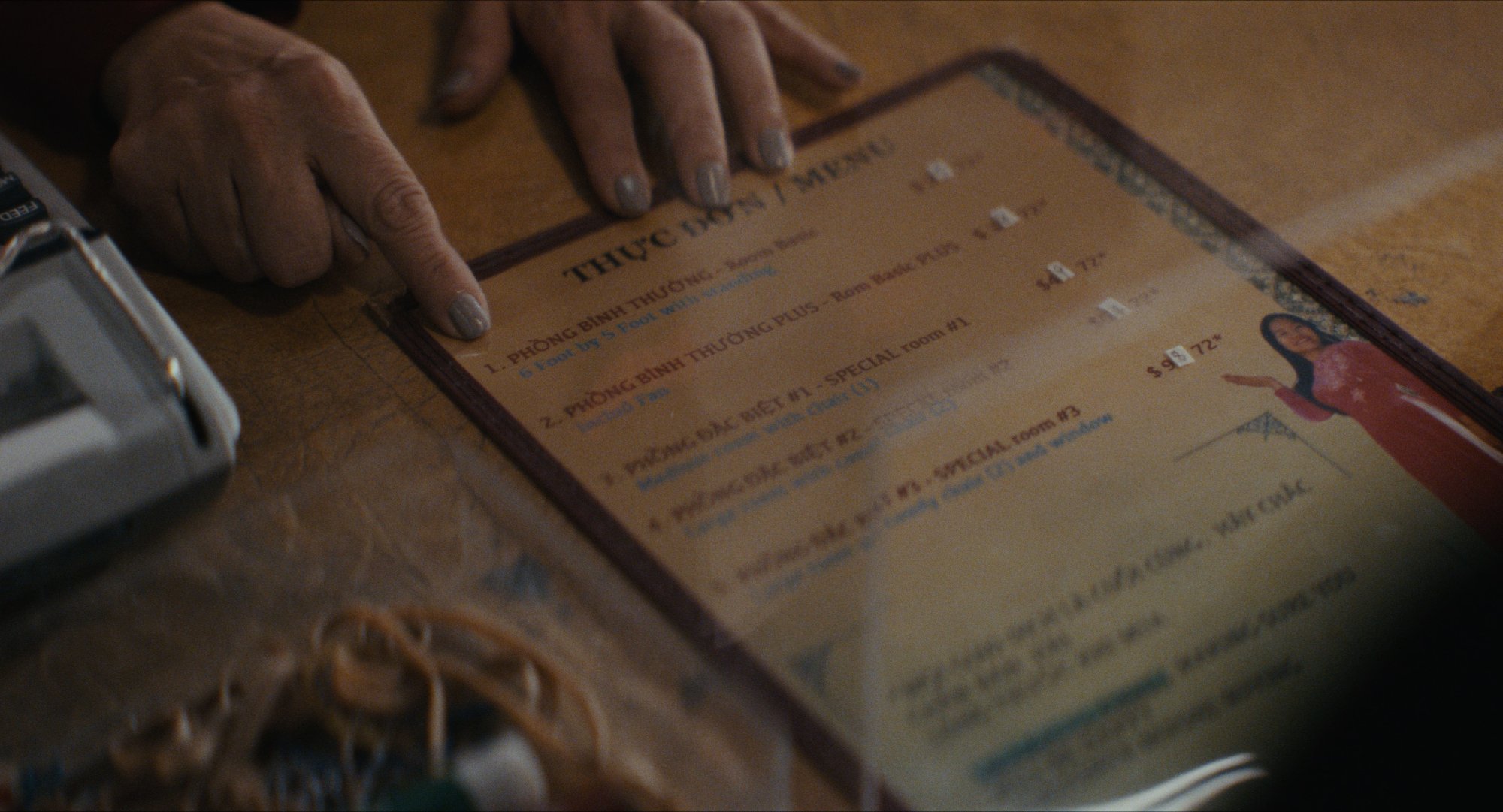
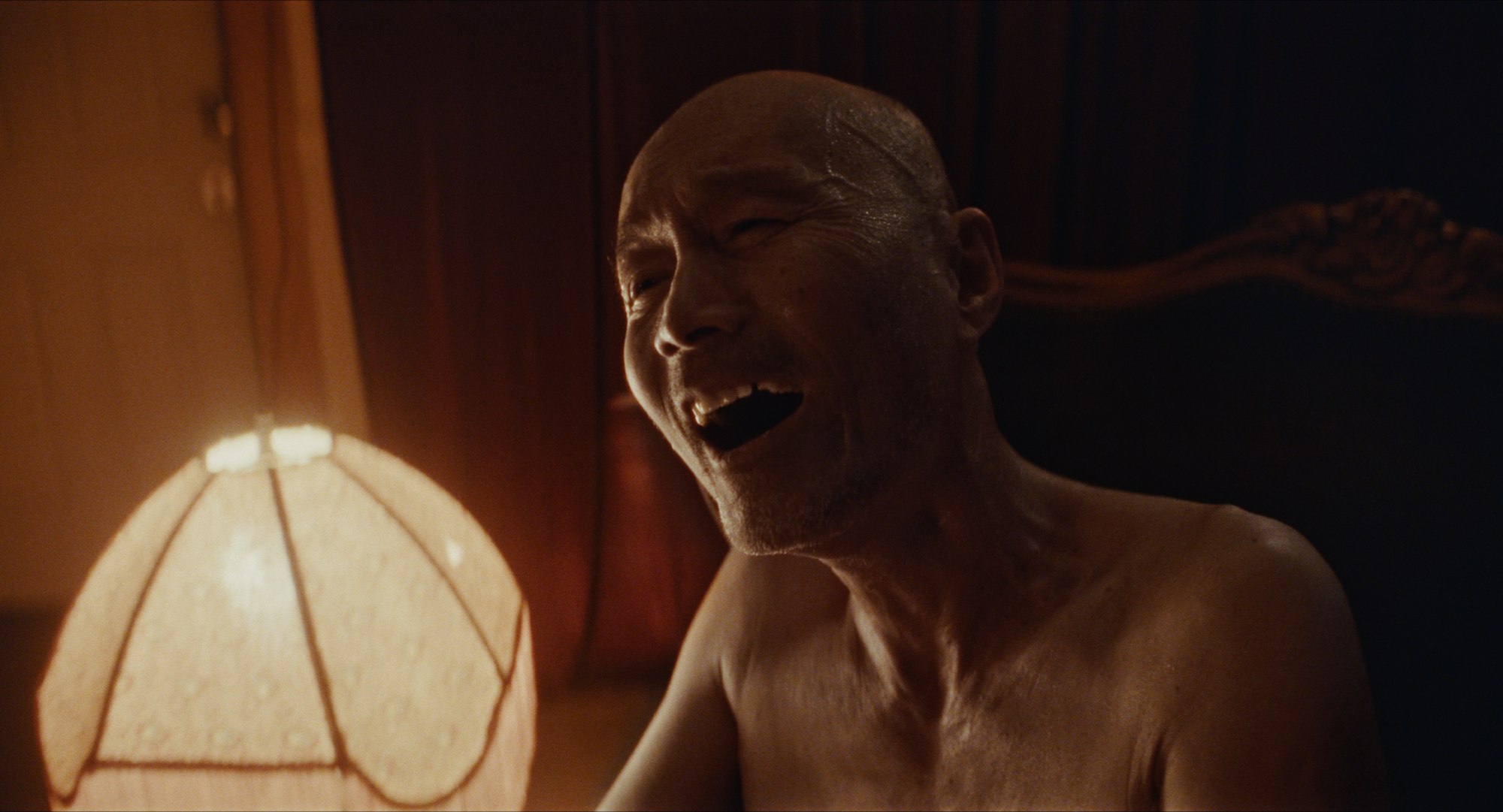
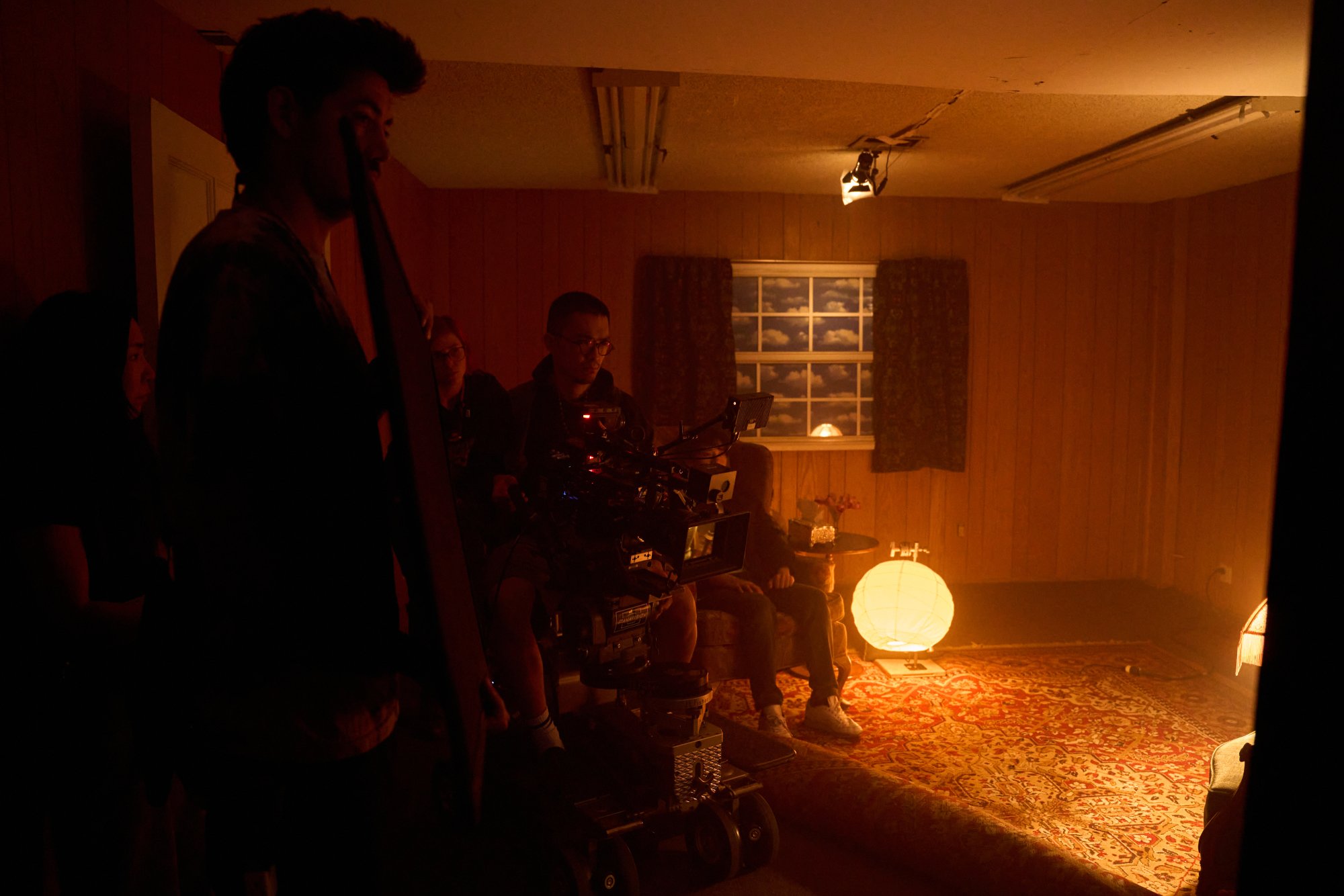
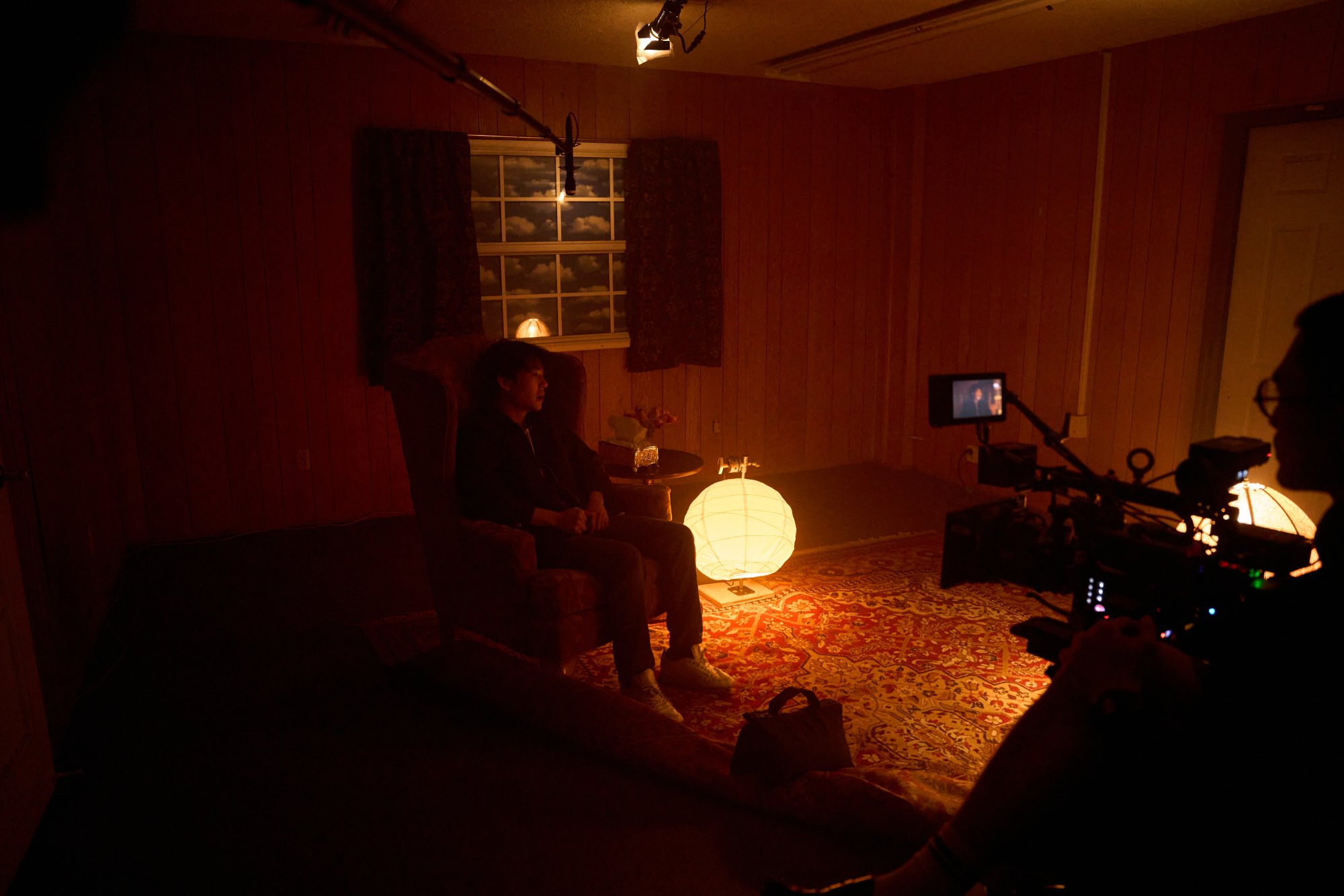
In my first call with production designer Mengqing Yuan, she described the script as a series of portals and how she wanted to create distinct layers for the outside front of store back of store as the characters descend deeper into its belly. For the front area, she dressed it like the knick-knack shops in Chinatown. For the back halls, we imitated massage parlors, love hotels, and the Red Light District. The way these spaces capture our capitalistic tendency to commodify the most intimate experiences of our lives (touch, sex) seemed like a great facsimile for communing with a dead, naked family member.
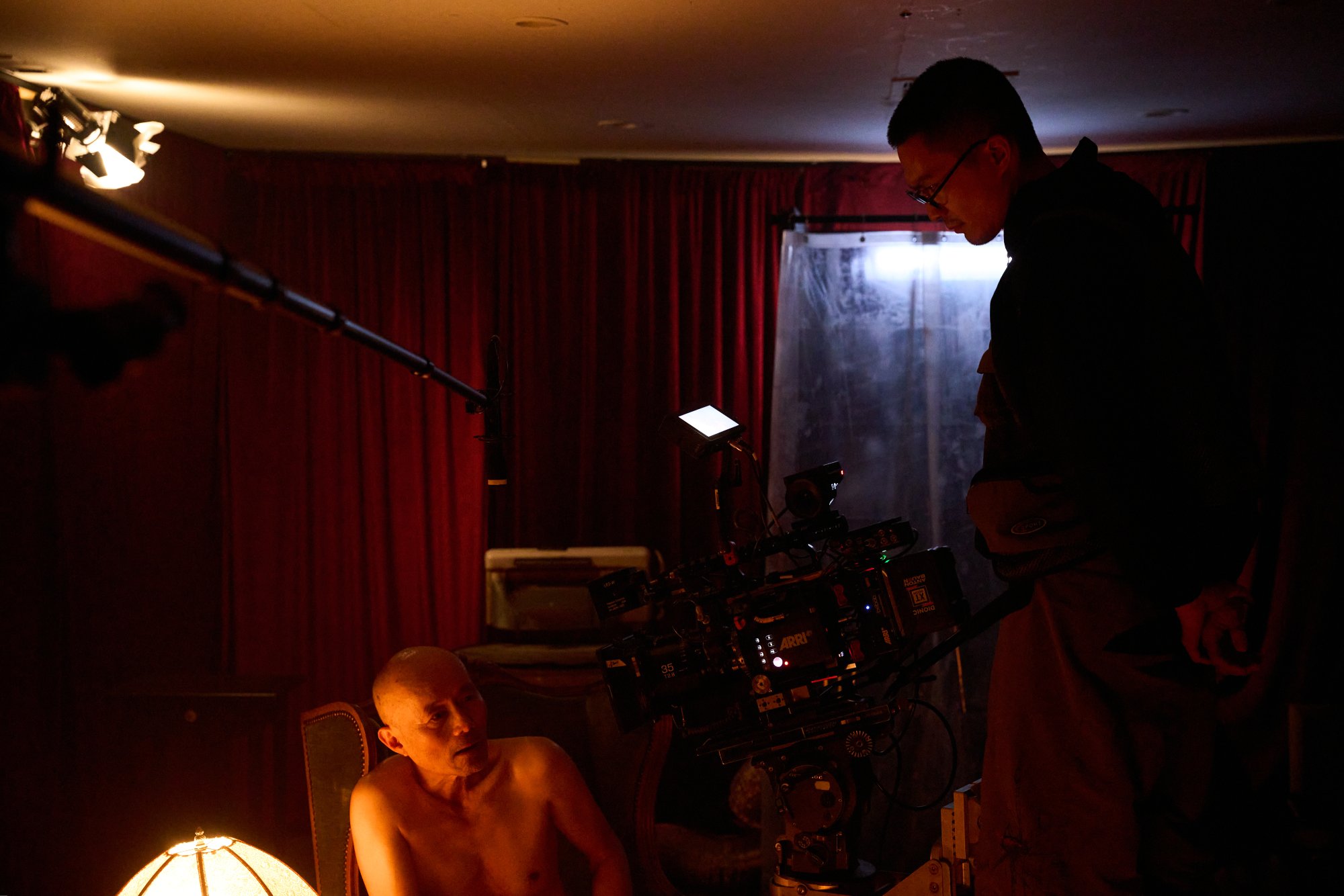
We were also super aligned on our filmic inspirations: remixing elements from Wong Kar-wai (long tight hallways and hotel rooms that echo emotional longing), David Lynch (red curtains baby!), and Kiyoshi Kurosawa (imbuing mundane objects and places with a sense of dread). For set dressing, we imagined the Clerk probably collected trash off the side of the road and jerry-rigged it together. Resourceful, not flashy, but functional. The machine that reanimates the dead is simply a 1950s washing machine, connected to a booth made of old doors and a dingy shower curtain. Of course, we imagined she’d want to curate an upscale experience for her customers; so other touches, like the fake window or the gilded tissue box, were fun and cheeky details for the observant viewer.
I just want to contribute a level of weirdness to the Viet-American pantheon of films. I want to see us making stranger stuff!
This was your first time working with a Vietnamese cast and weaving together English and Vietnamese dialogue. How did you approach casting, and what drew you to making a Vietnamese-language film?
I was so lucky to work with casting director Christian Bustamante and casting associate Ngoc Le, who cast other Viet-American films I highly admire, such as The Accidental Getaway Driver and Technicians. We went through a pretty typical casting process, which led us to the wonderful Jackie Tran, who informed the decision to skew the Customer a bit younger and was a great foil for the Clerk. Hồng Đào and Long Nguyen were on our radar early on, and though we saw other great candidates for their roles, their tastes and desire to improvise and take risks fit the film like a glove.
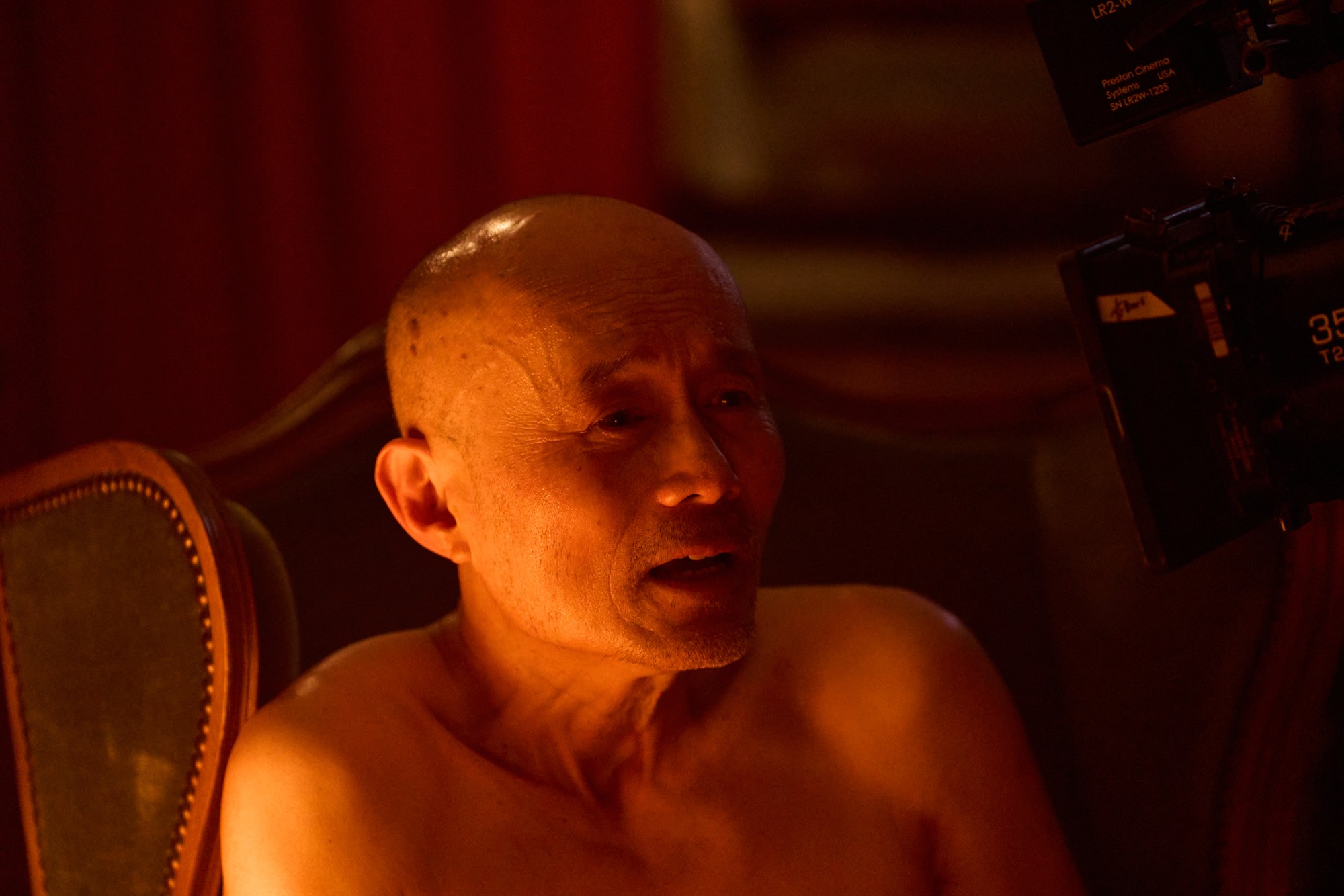
Lastly, we actually street cast Hoài Tâm (the Monk) when he MC’d a premiere screening for one of Hồng Đào’s Vietnamese features. His energy absolutely commanded the room, and I approached him about acting in the short. Unbeknownst to me, he and Hồng Đào are creative collaborators and cast mates in the Vietnamese variety show Paris by Night, and their scenes together in the film easily add an unpredictable nature to the film. He shaved his head for the role, which we greatly appreciated as he had an incredible head of hair.
Part of the choice to make this a Vietnamese language film is personal (reconnecting with my lineage), but the more creative reason is that the mom and pop energy of a refugee/immigrant-run store is very charming. They started these businesses when they had nothing, and it worked—so why change it? It’s all very pragmatic and unadorned, which felt like a wonderful counterpoint to the film’s sci-fi and magical elements. Also, frankly, I just want to contribute a level of weirdness to the Viet-American pantheon of films. I want to see us making stranger stuff!
A significant part of your work with the cast was deciding how much of each character’s history to keep off camera—building hidden backstory with Jackie, paring back exposition with Hồng Đào. Why this approach, and how do you think it shaped their performances, particularly given the role of language in the film?
Since time is of high value in a short film, I like to, if I can, minimize the energy spent explaining things to audiences and instead present opportunities for them to lean in and engage. It’s a tricky dance for me and the cast to hint at just enough details without tipping our hand or being too hazy. For Jackie, the script doesn’t really even hint at what his relationship with his dad is, so we worked together to develop a pretty dark and troubling history. It was a bit of the opposite for Hồng Đào, as her character had multiple overwritten expository monologues (this is where I fail at my aforementioned goal of not force-feeding the audience!). She has excellent taste and was such a great partner in reworking the exposition, naturalizing her dialogue while ensuring the audience knows what’s happening.
No matter what language the film is in, I try to remain open and receptive to all forms of improv from the cast… and with a cast like this, it behoves you to let them fly off the handle a bit. This was my first Vietnamese language film, and since many Vietnamese Americans speak a hilarious form of Vietglish, the best way to capture it honestly is to give them flexibility with the lines. Hearing the random bits of English thrown into their Vietnamese insults and jabs always made for tons of laughs on set! Our producer Jenni Trang Lê and script supervisor Sean D. Nguyen were instrumental in my understanding of the actors’ constant ad-libs.
I like to, if I can, minimize the energy spent explaining things to audiences and instead present opportunities for them to lean in and engage.
You mentioned using LiDAR with your DP, Jay Swuen, to 3D scan locations and place them in a video game engine. How did this new approach impact your direction and your collaboration with your DP?
At this point, it might be common practice, but since I hadn’t directed in several years, it was like being a kid in a candy shop. It helped Jay and I pre-visualize the film as much as possible from the comfort of his living room, allowing us to get 75% of the blocking and camera angles figured out before stepping foot on set… where inevitably, blocking the scene with real actors forces you to toss your plans out the window and reformulate!
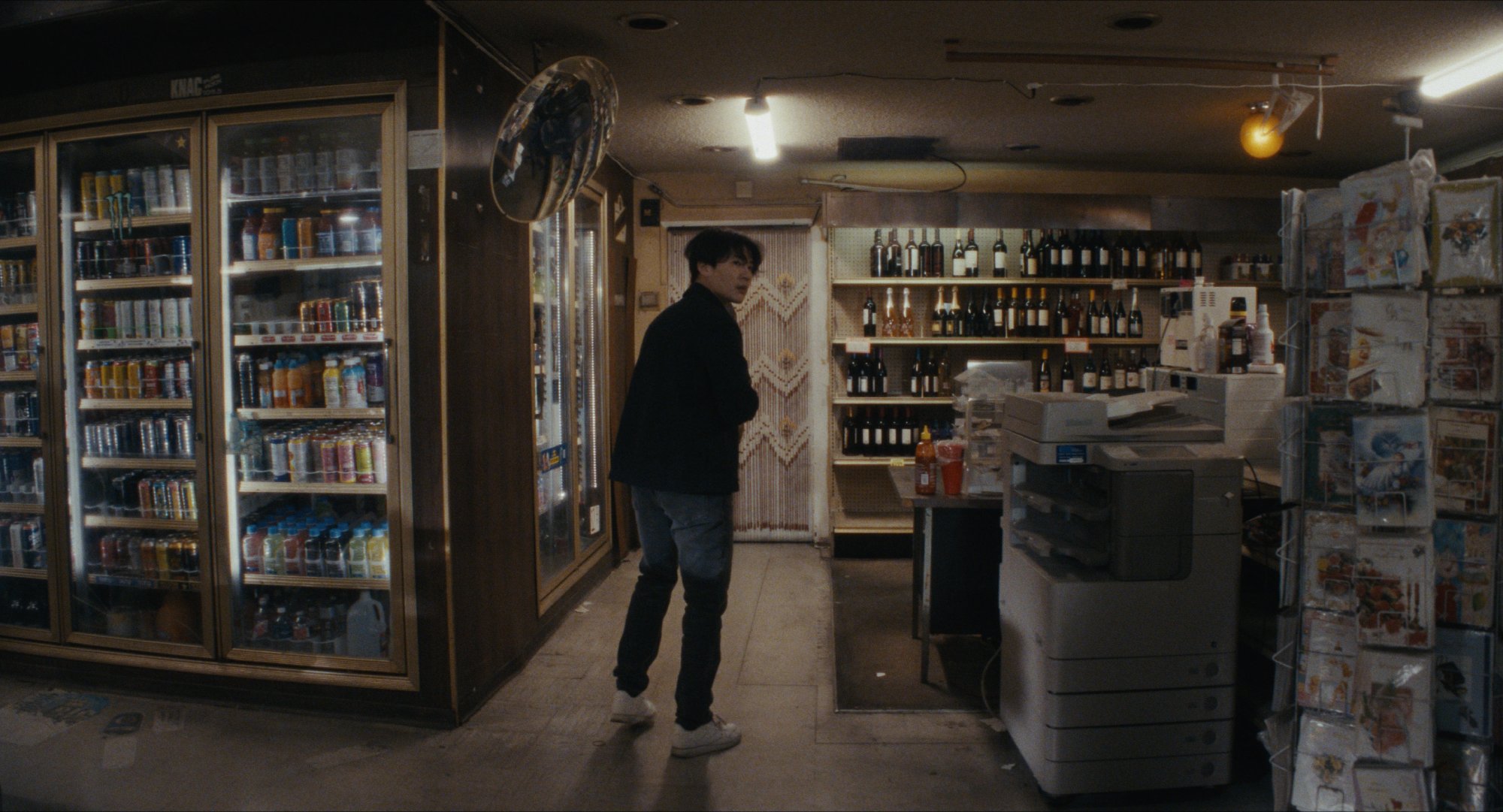
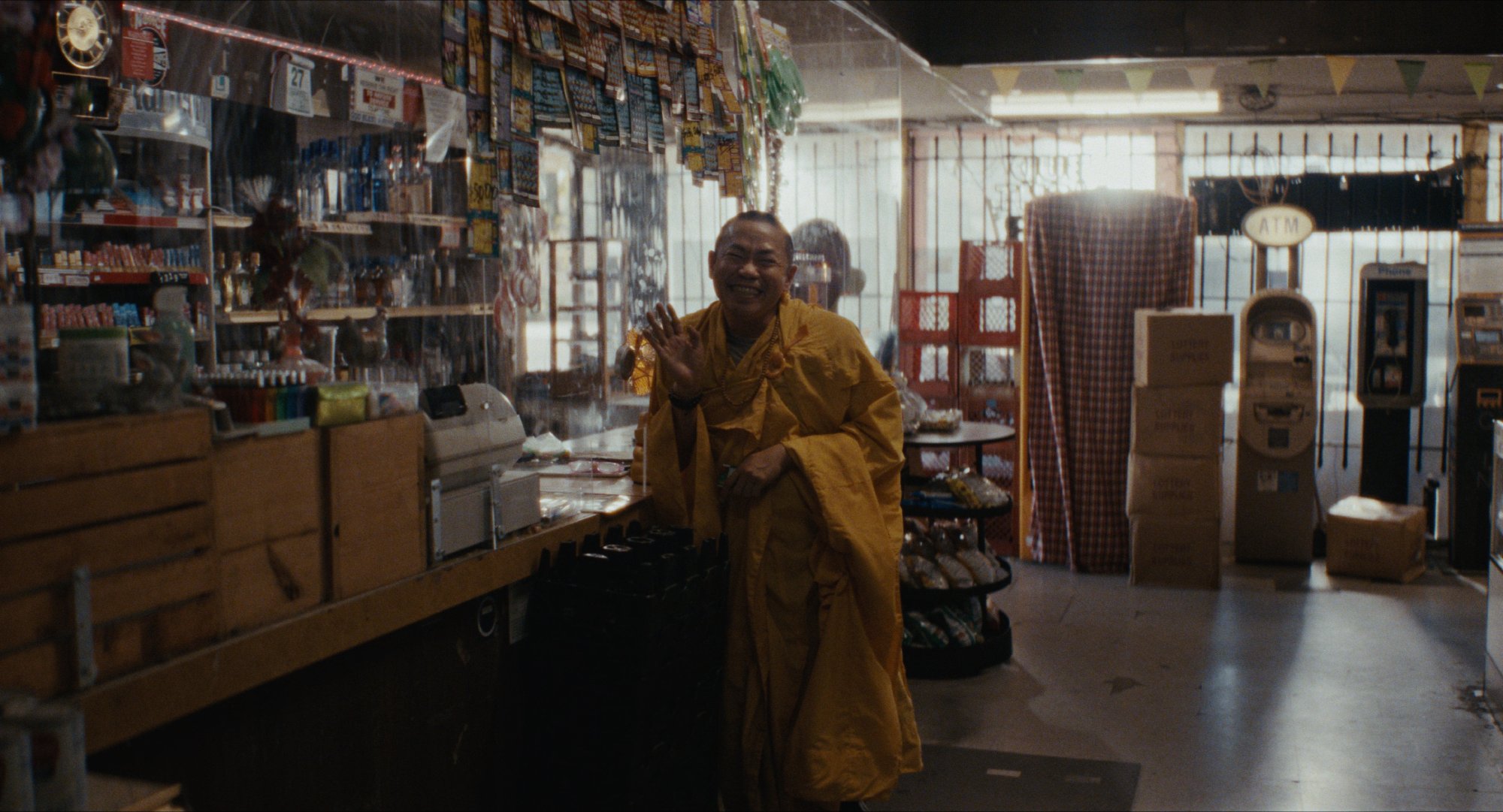
From the colours and textures of the shots to the costumes and set design, there’s a sense of cluttered absurdity, whimsy and magic. How did you work across departments to create this surreal yet grounded feeling?
With this project, my brain was such a messy web of influences that I needed a way to organize my thoughts into cogent directions for the team, without (hopefully) killing any sense of life in the process. I used a freeform notecard app called Milanote and made what I called a Tone Map, where I divided the script’s linear journey into distinct sections. I grouped images and keywords to identify the color, story, tonal, and emotional goals for each scene and location, eventually constructing what I thought was a very dynamic shape to the film.
This road map became my anchor for all the creative conversations moving forward. Whether it be the references to Amélie that informed Brianna Murphy’s lived-in yet whimsical costumes, In the Mood for Love for Mengqing’s textured lamp shades and flowing curtains, or Cure for Jay’s lighting and camera energy, all of the departments worked toward a tone hovering between the real and the slightly fantastical.
The score plays a key role in establishing the film’s tone, beginning with an Aphex Twin album as a temp-music touchpoint. How did that starting point shape your collaboration with composer René G. Boscio, and the soundscape that emerged?
Our editor, Lynn Hong, mentioned the film’s tone felt like a waking dream, so they used Aphex Twin’s Selected Ambient Works Vol. II, in which the artist recreated soundscapes of his lucid dreams, as a starting point. Of course, all temp music should simply start a conversation, and one of my favorite questions then asked by our composer René G. Boscio was, “Are we scoring the character or the environment?” It was such an astute way to think about the score. It made me think about House of Leaves, where the house is bigger on the inside than on the outside; so using a bass recorder, gamelan strips, odd studio drums, and prepared piano techniques, René made a sonic palette with an outsized sense of reverb and weight, making the spaces feel larger than the frames they lived in.
Is there a short film that has stayed with you over time and that you’d like to share with the DN community?
This is SUCH a tough question! There are so many, for so many different reasons, and I could list at least 20 easily. The Event by Hugo De Sousa and Frank Mosley—I suggest this short often, and the way I pitch it to people is: it’s the only film that gets better the longer you put off watching it.
With Long’s Long Lost & Mini Mart still fresh, can you share what you’re working on next?
My main goal is to complete an unofficial ‘dead dad trilogy’, capping off with a feature (Long’s Long Lost & Mini Mart being the 2nd film in the series). I’m looking for producers for one feature called Half Sweet (a feature expansion of my Sundance short Raspberry), which is a tragicomedy about a family keeping their dying father alive in hospice care against his will. It’s Haneke style theater of cruelty mixed with Tati-esque sight gags, both bluntly depressing and wryly hilarious. I really believe in its potential to be unlike anything out there.
I’m also in the early phases of writing another feature tentatively called It’s Called Star Joust, about a screenwriter attempting to write a schlocky sci-fi film involving a NASA conspiracy and space centaurs, but is overcome with insecurities that his work is baseless without injecting his personal grief and trauma. The film would continue my examination of how we commodify death, turning personal loss into career gain, as well as the pressure and notion in our current climate that we can only make work about our lived experience and cultural identity.
Lastly, an out-of-pocket new idea I came up with recently is a children’s book called But Why, Bà Ngoại? Bà Ngoại” means maternal grandmother in Vietnamese, and the book would be about a dying grandmother explaining to her grandchildren what is happening to her. I’m super excited about the idea of a children’s book in my thematic wheelhouse, as I have strong thoughts on preparing people for the experience of familial loss, and I’ve wept just explaining this idea to people! That must be a sign.