
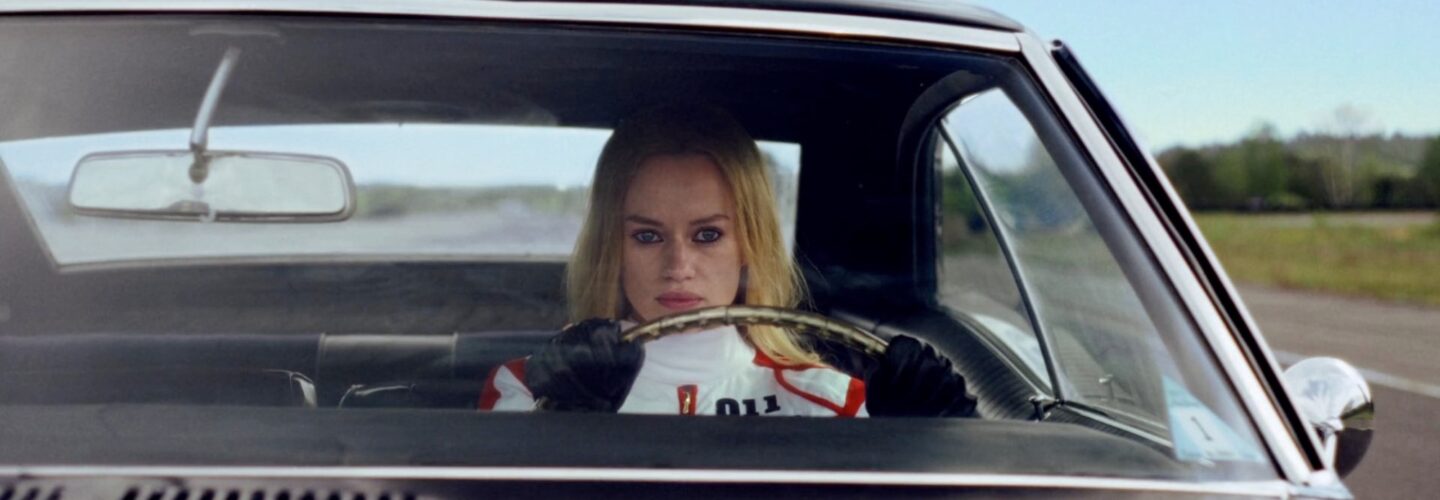

Abigail Wilson’s Overdrive doesn’t just depict the turmoil of Premenstrual Dysphoric Disorder (PMDD), it becomes it. A white-knuckled, high-octane short film that weaponises the visual language of action cinema to articulate something rarely seen on screen: the visceral, often violent internal war waged by hormonal fluctuations. This isn’t a polite period metaphor. It’s a car chase, a fistfight, a scream into the void that echoes back twice as loud. The film thrives on duality. The Driver’s crisp racing suit versus The Passenger’s duct-taped, bloodied grit. The sleek, controlled interior of the car versus the messy, sprawling fight outside. Even the sound design oscillates between eerie silence and deafening noise, with a soundtrack that slams from Fischerspooner’s frenetic pulse to Radiohead’s haunting melancholy. Wilson’s direction is unflinching, throwing the audience into the passenger seat and locking the doors. Wilson refuses to soften the subject matter. There’s no twee empowerment here, just raw, unfiltered feeling. Strap in as Overdrive roars onto DN for its premiere and we speak to Wilson about her frustration with sanitised portrayals of menstruation in the media, a central mantra dictating every frame and the extensive training she underwent to perform every sequence.
I am always on the hunt for more honest and authentic representations of periods and the hell that can come with them so was hooked by Overdrive.
I feel deeply, I always have. About seven years ago I went on a journey of self-discovery to understand my relationship to my hormones better. My premenstrual symptoms felt significantly more acute compared to most of my friends, and were oftentimes so mentally debilitating. So I did what I do best – I researched, my God did I research. I patched together pieces from medical papers, books, scrappy internet forums – the lot. What was out there back then was worryingly thin.
When I first learned about PMDD, it was a lightbulb moment. A lot of the symptoms aligned with my experience more than regular PMS. I felt that I swung between both of these conditions and felt so angry at the lack of awareness, and research surrounding them both, not to mention the stigma – my GOD the stigma! The fact that some women are out there suffering so deeply fueled me to make something about it. I followed my gut and the more I leaned into the emotional turmoil I was experiencing, this visual metaphor came out. Fast forward to 2022 after I had begun to establish myself as a director, I wrote Overdrive.
I hadn’t connected with how menstruation had been portrayed in pop-culture. It didn’t resonate with me.
It began with a simple vision I had of myself getting into my car whilst an antagonistic version got into the passenger seat. The scene was set. Next came a mantra, ‘calm to chaos’. Because that’s how these fluctuations can feel every single month. Then we were off. I hadn’t connected with how menstruation had been portrayed in pop culture. It didn’t resonate with me. I wanted to see something intense, messy, visceral and something that packed a punch (or two). I wanted to try and make something that might connect with other women through a highly intense and adrenaline-fuelled story.

Was there an intention to subvert typically masculine genre conventions with this narrative?
Honestly? There was no intentional subverting of anything to begin with. The story came first. Emotions led the way. It didn’t feel right to me making light of this topic, I wanted to write something that felt close to how it can actually feel for some women, whilst simultaneously placing it in a cinematic landscape. It had to feel intense, visceral, messy and chaotic. So, action made total sense for it. Even more so, yeah, action is a typically masculine genre convention. If I could capture the attention of as many men as possible too – fucking excellent. It felt right attacking this topic from that angle. To me action movies can sometimes be a mind-numbing form of escapism, but when they’re done right and when something is at stake, it can be unbelievably exhilarating and impactful. That’s the note I wanted to hit.
I hadn’t personally connected with anything else period-related I’d seen up until that point, so I thought fuck-it. I felt compelled to put my own spin on it to see if anyone else felt a connection to it. I’m a contrarian by nature so it felt like the most impactful way to flip the notion of what a film like this should look like.
Most Popular
How did you use film language to physically manifest ‘calm to chaos’?
‘Calm to chaos’ was my mantra from the very beginning, because those words perfectly encapsulated the emotional arc of a debilitating menstrual cycle. Any time I needed to figure something out in production I’d revisit it. It was an anchor that grounded and informed every single department. The edit was crucial for helping craft this emotional journey, not only were we designing an edit that had to build in intensity but we had to ensure it really looked like the same person was at war with herself. That had to work, it had to be believable. If there was a gorgeous camera move but we could see a body double’s face in it – we had no choice, we had to kill it.
If you strip the film back its elements are pretty simple, there’s not a hundred extras, there’s not a million locations – it really is just two characters, a car and a racetrack, which was limiting but also liberating. It meant I had to look closer at every single element in the script, for instance, how using a car’s radio could contribute to the story, and how we could craft that same arc whilst maintaining pace and momentum in a short amount of time. Even the progressive build up of action inside the car is calm, until the characters erupt into the chaos outside during the fight sequence.
It really is just two characters, a car and a racetrack, which was limiting but also liberating.
How did you distinguish the two selves visually and in their characteristics and mannerisms, then act and direct those?
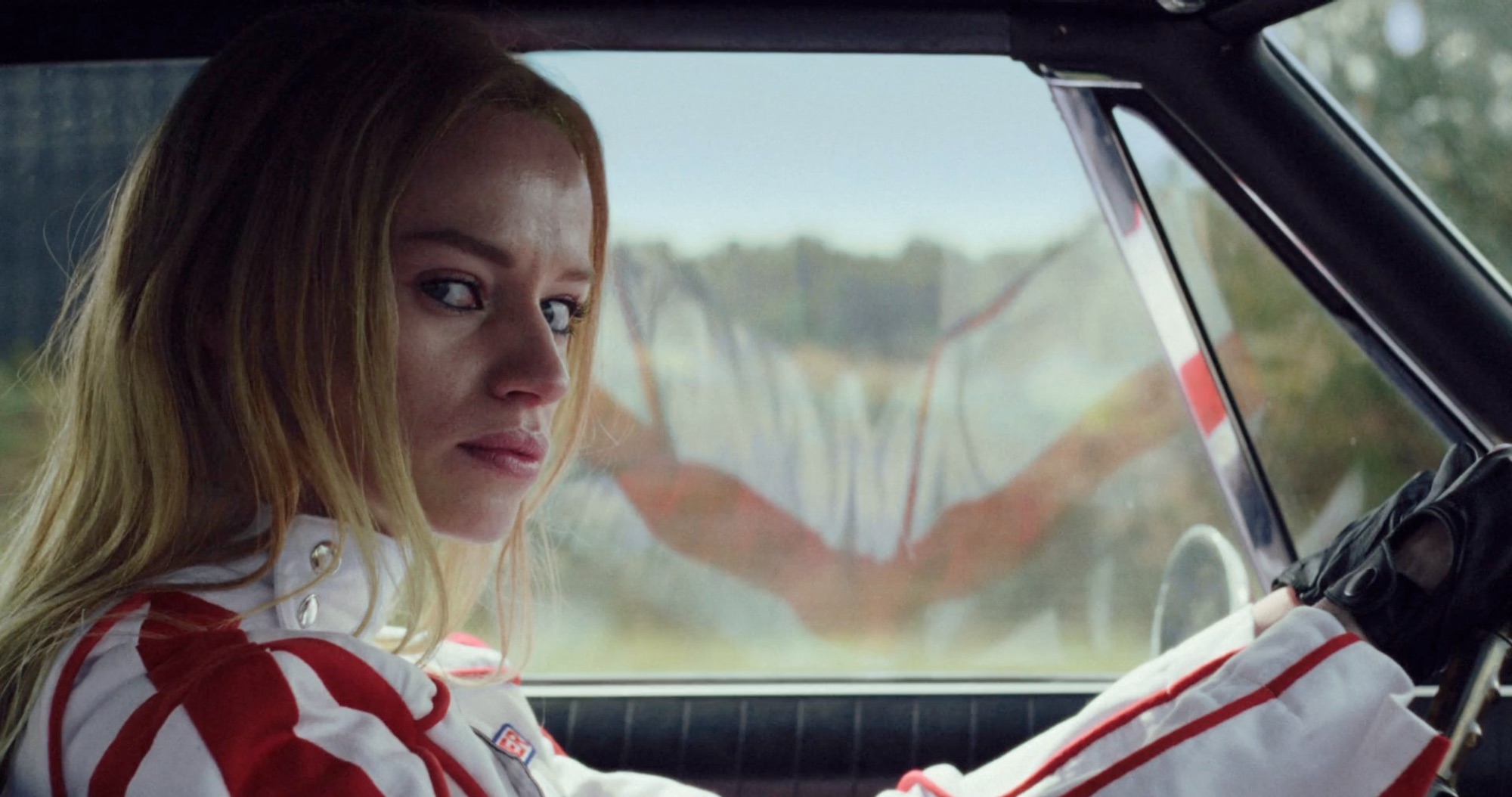
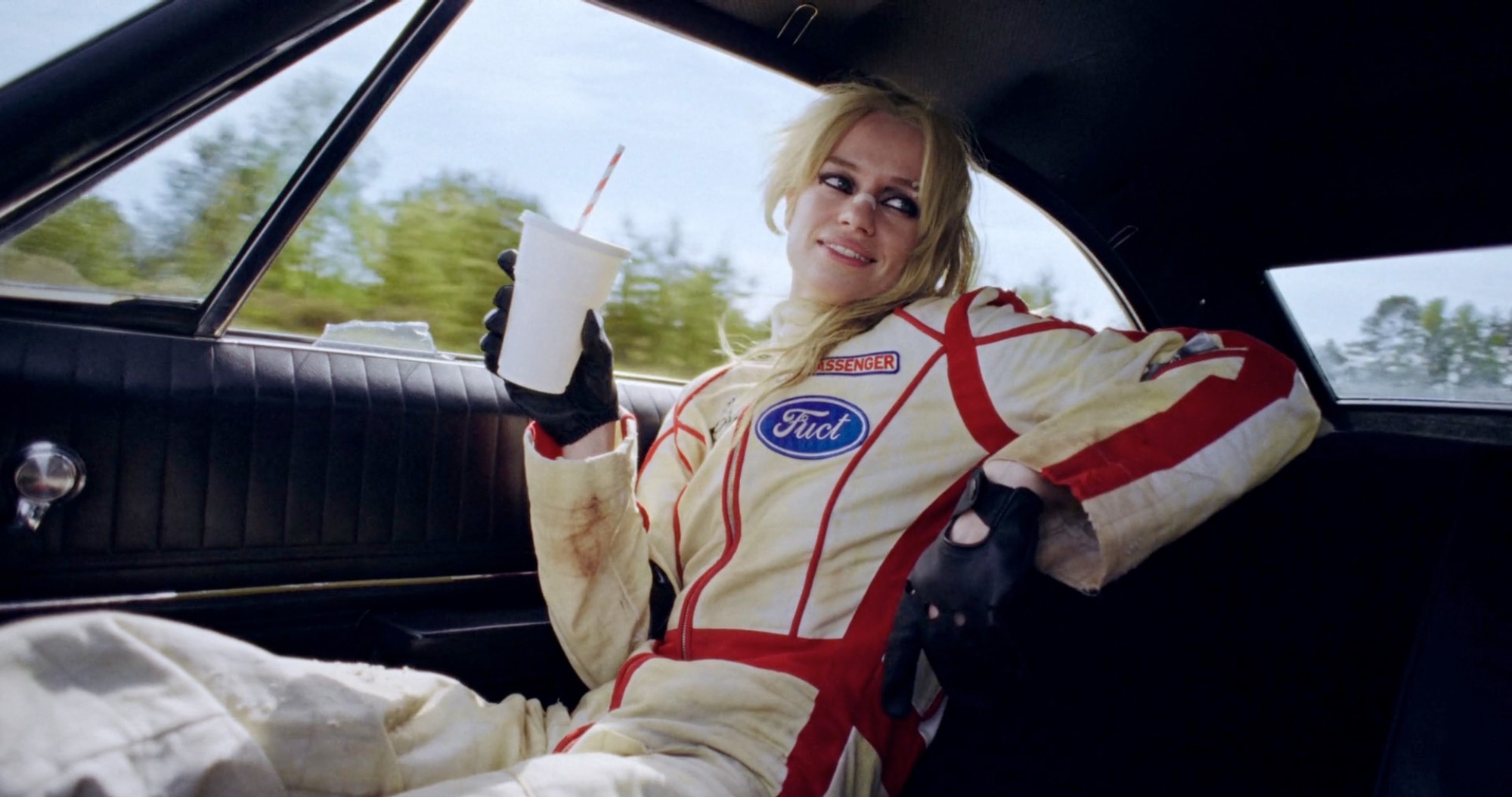
At the beginning I really saw them as the same person, with only performance-based character quirks to distinguish them. But the more I developed it I saw more subtle ideas that could come out visually through costume and hair & makeup. I was so excited at the idea of dirtying up the antagonist’s Passenger racing suit to convey the relentless repetition of a cycle – this happens every-single-month, she’s here every-single-month. We ripped her knees, duct taped the elbows to hold fabric together – makeup and hair became more unruly, bruising and cuts on her face started to appear – all subtle, but all relevant and needed to build out the world of the story even further. Compared to the clean cut, crisp suited protagonist The Driver, who enters the race with a sense of dread-filled denial each month, hopeful, a fake air of calm until she has no choice but to retaliate.
Performance wise minimal dialogue meant I could really lean into physical displays of antagonism and what that looked like for The Passenger, and in reverse, something more of a quiet frustration and denial bubbling away underneath for The Driver who just wanted and needed to get across that line as quickly as possible. She had clear direction, ‘don’t give in until you’ve reached your absolute limit’, whereas the Passenger’s was to ‘keep going until you get a rise’. Getting to those clear intentions took a bit of R&D – but I think it worked.
I was so excited at the idea of dirtying up the antagonist’s Passenger racing suit to convey the relentless repetition of a cycle – this happens every-single-month, she’s here every-single-month.
Directing myself meant having to completely trust myself, my ability and those around me. I had a strong team of people I have huge respect for and who all knew exactly what I was trying to get across every step of the way. Everyone was thankfully on the exact same page. Having done a ton of self-tapes over the years made it a bit easier too. You become so in tune with what works, what doesn’t – you start seeing yourself as the character(s) – it’s not you anymore.

The song choices are so brilliantly matched; this must have been a needle in a haystack search. Tell us about sound design.
I always build a playlist when I’m writing, so I had a back catalogue of tracks that I’d kill for for about a year. I also really wanted that Grand Theft Auto feel where you step into a new car after stealing it and suddenly there’s like an amazing Latin track blasting out – then a classical piece – then the radio changes and it’s muffled and completely chaotic. Again everything going back to the mantra from calm to chaos.
Managing to get Fisherspooner and Radiohead tracks featured for this project was just next level – the fact they agreed to it is, I have no words – I’m still beaming ear-to-ear about that as I write this and I think I always will. Sound design was next, building the car audio – it’s a very specific 68 Pontiac that had a totally unique, utterly gorgeous deep roar to its engine. Next was matching the fight sounds, which had me freaking out in the sound booth for an hour or so to get those punch reactions sounding right.

I love the fight scene, and you are doing it twice! I want to know how this was choreographed and then filmed to keep it punchy yet also give us the emotional twist.
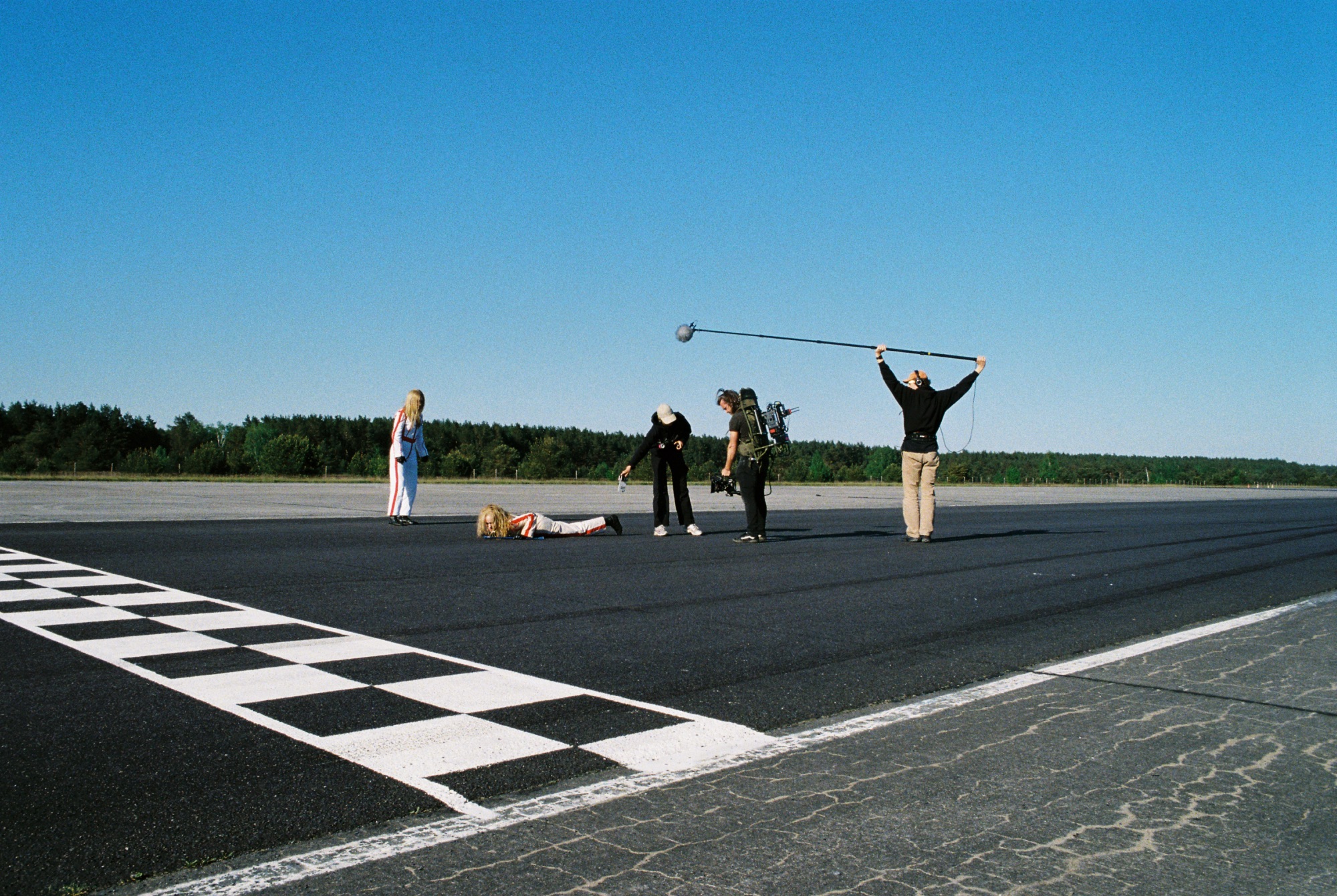
I had 3 full days of conditioning and learning the moves with a stunt team who were amazing. They drafted the initial choreography from some key references I sent over – the main one being the best female fight scene of all time – it is 100% the best – Daryl Hannah and Uma Thurman in Kill Bill Vol 2 the trailer park scene. Then myself and my stunt double got to work, each learning both characters’ parts – rinse and repeat, rinse and repeat until we felt it in our bodies.
You had to match it up – otherwise the whole thing would be well and truly fucked.
We then launched into a stunt previs, which is where you block it out and shoot each corresponding move linked together on camera, so you know how it flows and needs to look for the moves to look legit. Our second and final shoot day was hectic. We were midway through the fight scene and somewhere between losing-the-light and our previs we all got stuck. Try having a hair and makeup change whilst figuring out what you need to get, what you couldn’t get, what you have to kill, who was doing what punch next, and in which order… Because you had to match it up – otherwise the whole thing would be well and truly fucked. But we got there, it’s because of that time pressure creative solutions come out of nowhere, everyone just bands together and you pull through.
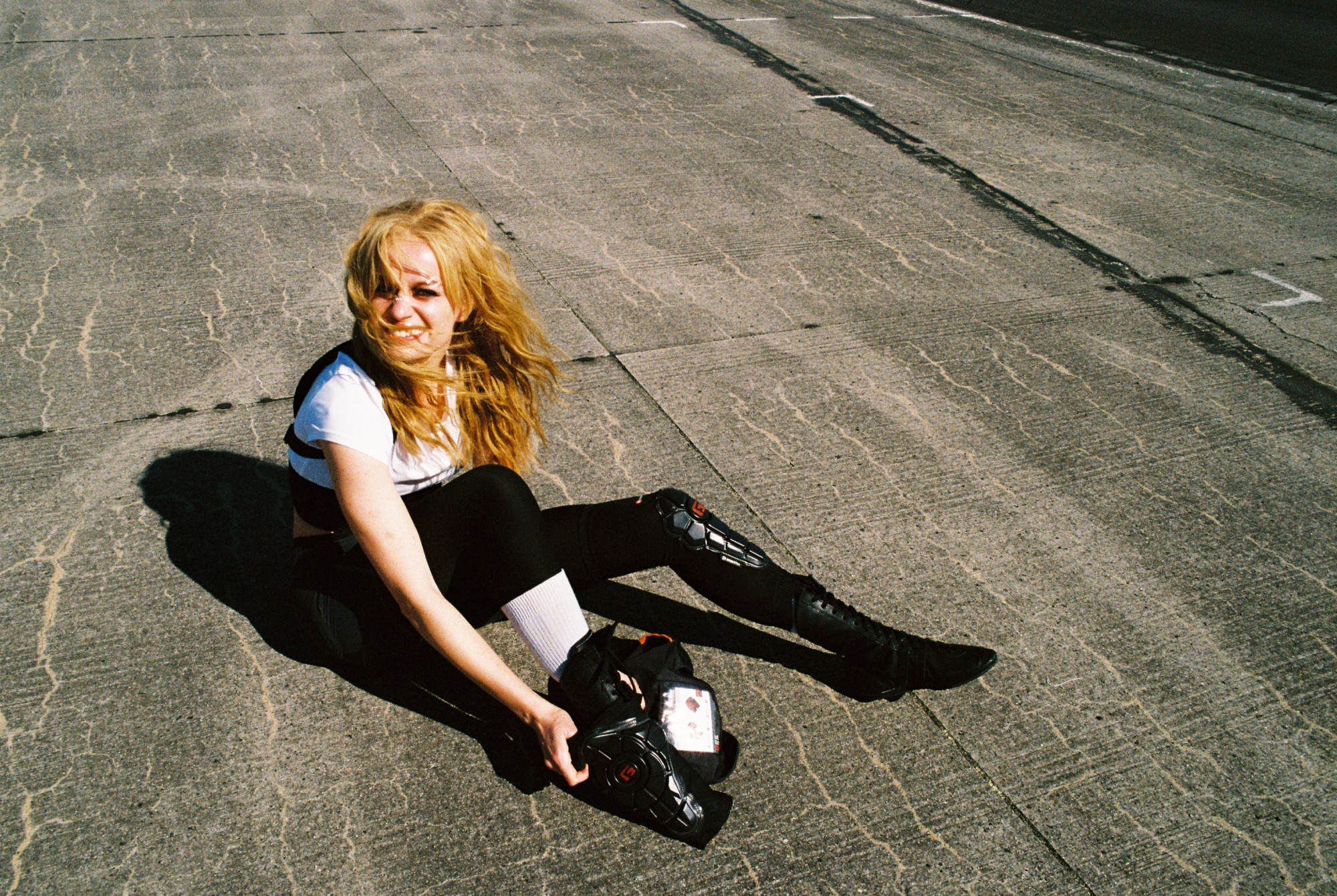

You took fighting and drifting lessons to prepare. How does your physical preparation as actor inform your direction of performance? What does it mean to direct from within the body of experience?
The biggest emotional moment I needed to generate was at the very end of shooting. And due to the lack of dialogue through the majority of the film that meant it was possible for me to jump in and out of an actor/director role on set during the days with ease. I also didn’t have to issue myself any notes, firstly because I knew the story inside and out and secondly because we honestly were running out of time – luckily I prepped like a beast and just inherently knew exactly how I needed it to be. Plus, that time pressure is a good thing – it means there’s no room for anything but total and utter commitment. During the fight sequence I had to mostly rely on my EPs and producer to give their eyes to the monitor. Only replaying key moments. We shot this in two packed days – being pedantic just wasn’t possible – and as someone who’s inherently detail oriented, that was a big lesson in letting go.
What will we see next from you?
I’m slowly approaching another period of writing, I can feel it. I have another short I’ve been dying to make – so I’m excited to flex my narrative muscle more with that guy. Some exciting features, maybe a TV series I put down a while ago – but hey – let’s see – one thing at a time. I have a tendency to bite off more than I can chew.