
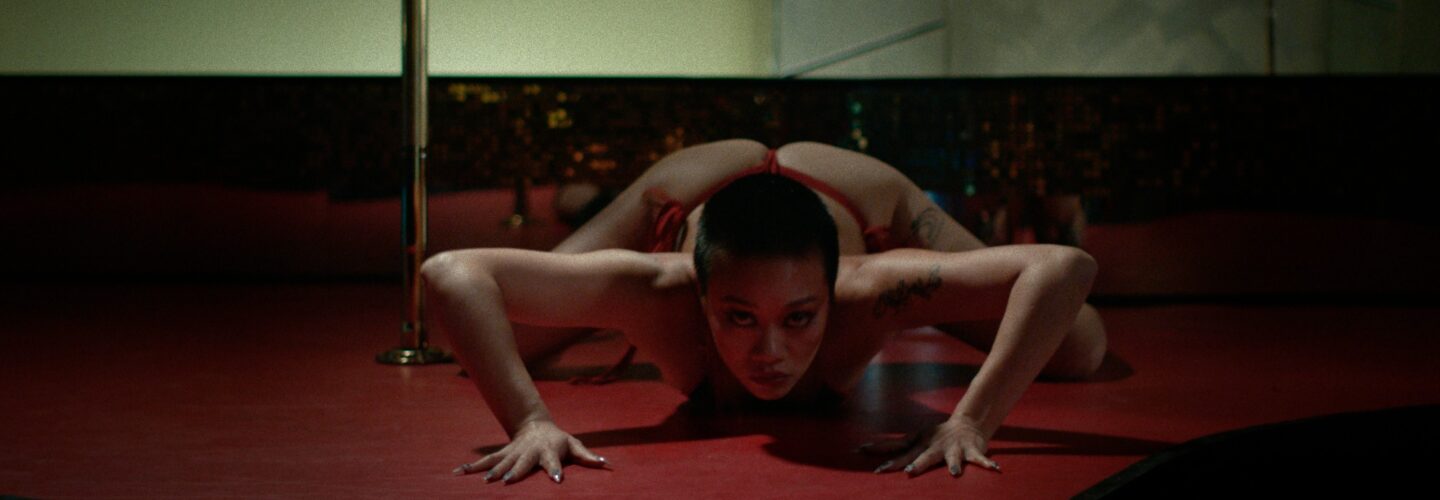
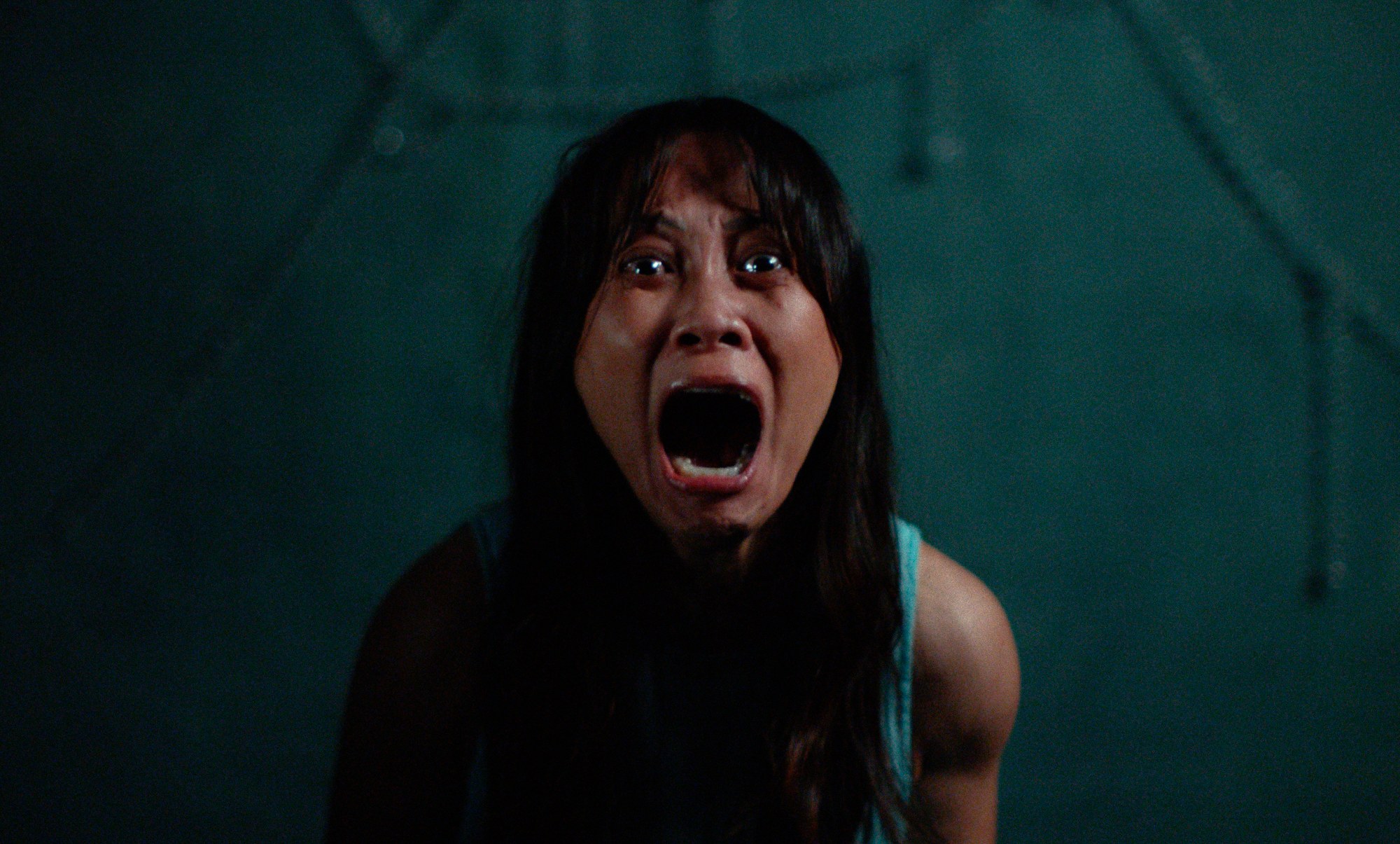
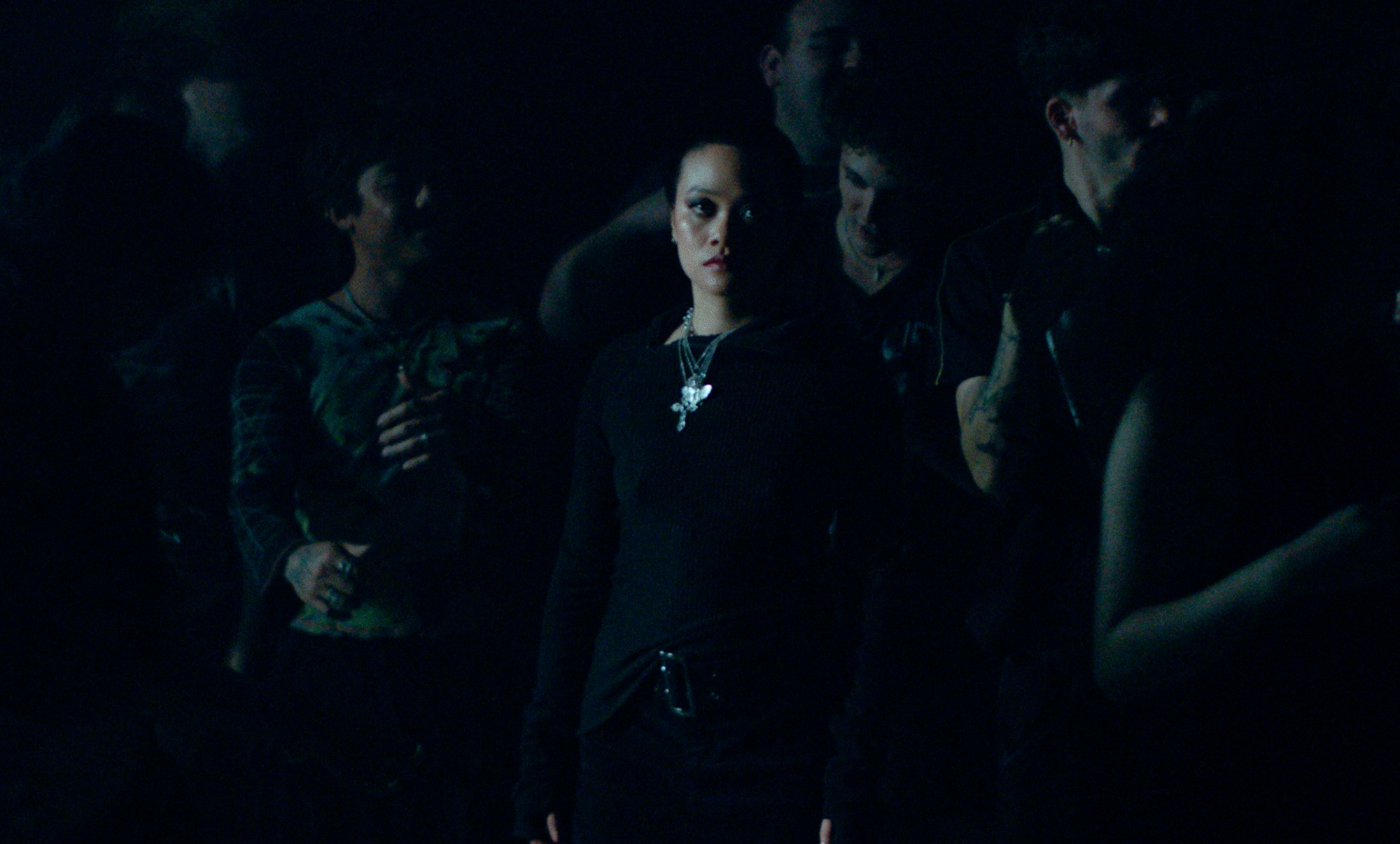
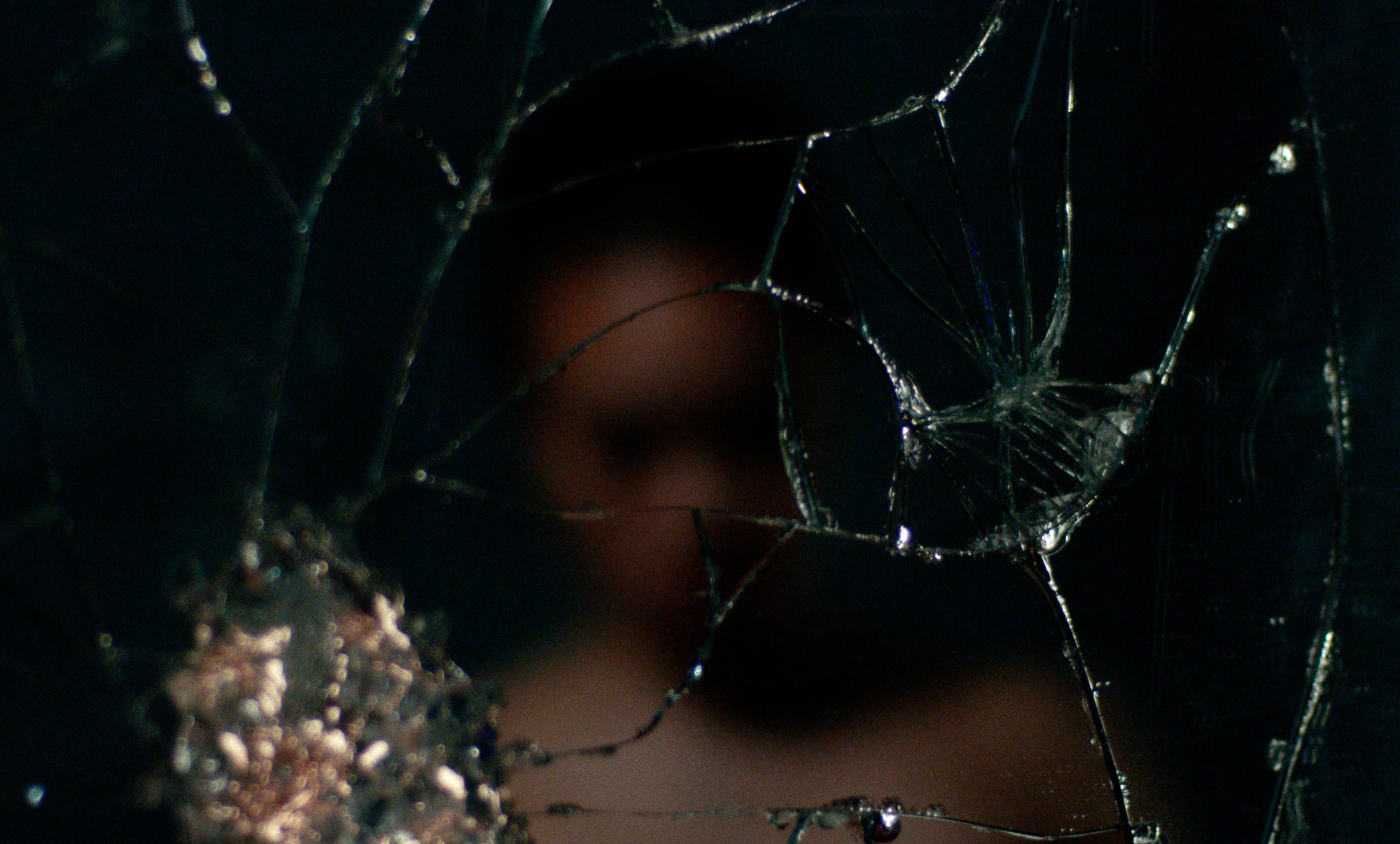
When filmmaker Grace Tan lost herself in Madison Godfrey’s poetry collection Dress Rehearsals, she found something rare—words that named a feeling she had been carrying. Godfrey’s non-binary memoir-in-verse, a decade of performing womanhood mapped in darkly witty, confessional poetry, offered Tan both a mirror and a provocation at a moment when gendered violence was occupying an increasingly grim share of Australian headlines. This spark became Spiders On My Lashline, a coming-of-rage short in which genderqueer pole dancer Ash, having survived a violent childhood attack, seeks refuge in a church and is flooded by the memories that made them who they are.
It is a film that understands pole dance not as spectacle but as language—a physical vocabulary of strength, reclamation and defiance that Tan develops in close collaboration with non-binary performer Linhqu, founder of Club Chrome, a queer pole collective platforming LGBTQIA+ people of colour and sex workers. Where so many films approach trauma through victimhood, Spiders On My Lashline insists on the body as a site of power—a space where the queer self can be both wounded and triumphant. It is also a film that arrived at its finished form through Tan’s own grief: two bereavements during production brought the project to a halt more than once, folding an unplanned layer of loss into a story already grappling with pain and recovery. Having had its world premiere at the 40th BFI Flare, a festival we revel covering here at DN, Tan joins us to discuss translating poetry’s emotional architecture into cinematic time, the challenge of capturing pole dance with cinematic poetry rather than the eye of a documentarian, and what it means to draw on your own dissonance with gender when building a character finding their rage.
How did you approach adapting poetry into a cinematic language, and how involved was Madison?
I initially wrote to Madison Godfrey as I loved their memoir, Dress Rehearsals. It put into words the essence of how I was feeling at the time, as well as echoing a lot of similar themes to my own personal film work. When I asked if I could look at translating one of their poems into a film, Madison was very excited by the idea and was looking forward to seeing how I would envision it. Once we optioned the poem and were given our blessings, Madison provided me with the space to create my own cinematic interpretation of their words. In writing the screenplay and translating poetry to film, I leaned on my emotional response towards their words.
The poem became a bedrock, a framework in a sense, and from there I saw what images came to me, what character and memories emerged, and that’s where the character of genderqueer dancer Ash started to take shape. As the poem flows in a particular way, it was important to me that the cinematic version would also capture this feeling. In particular, I knew I wanted to play with the concept of time, weaving in and out of the past and present.
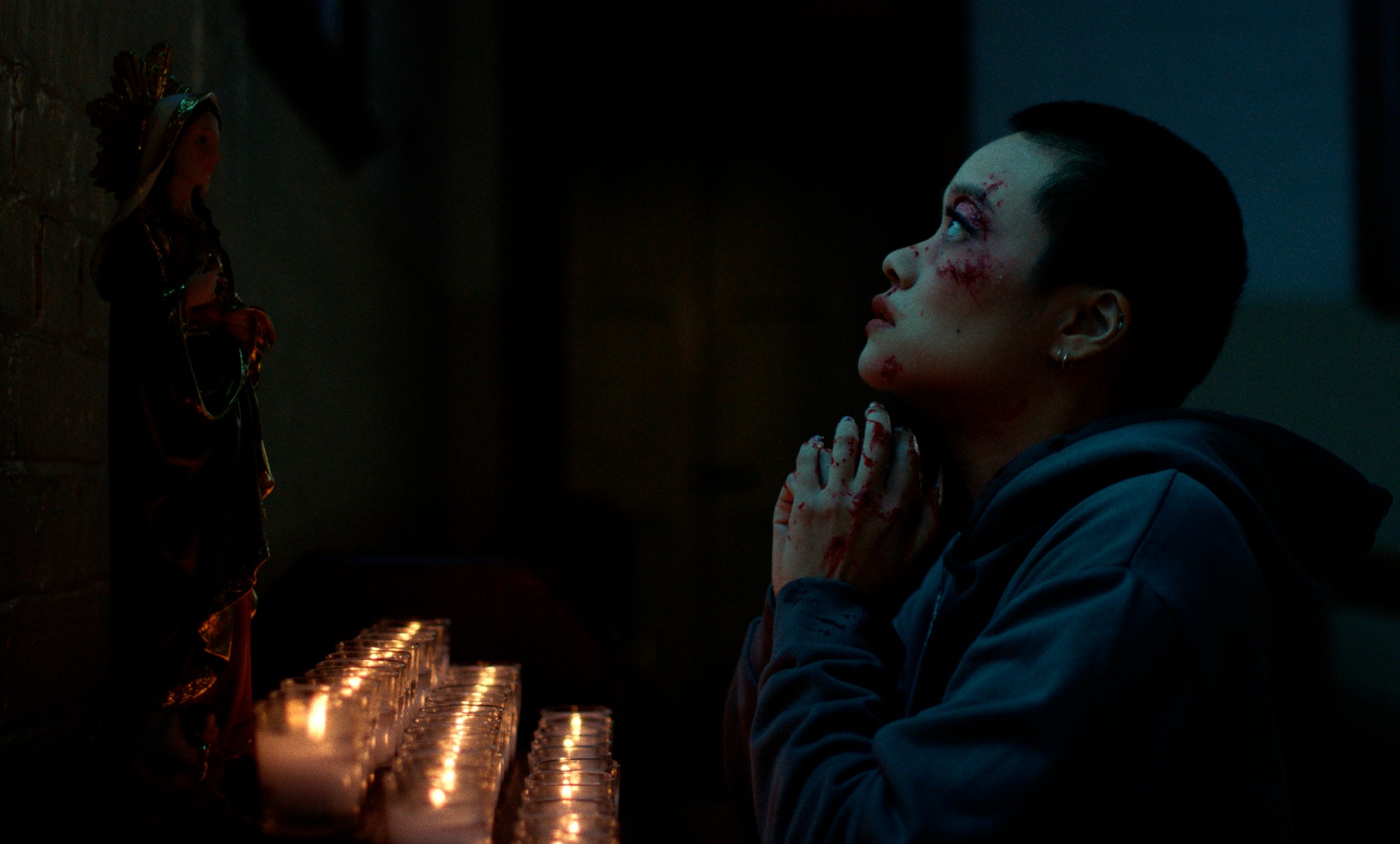
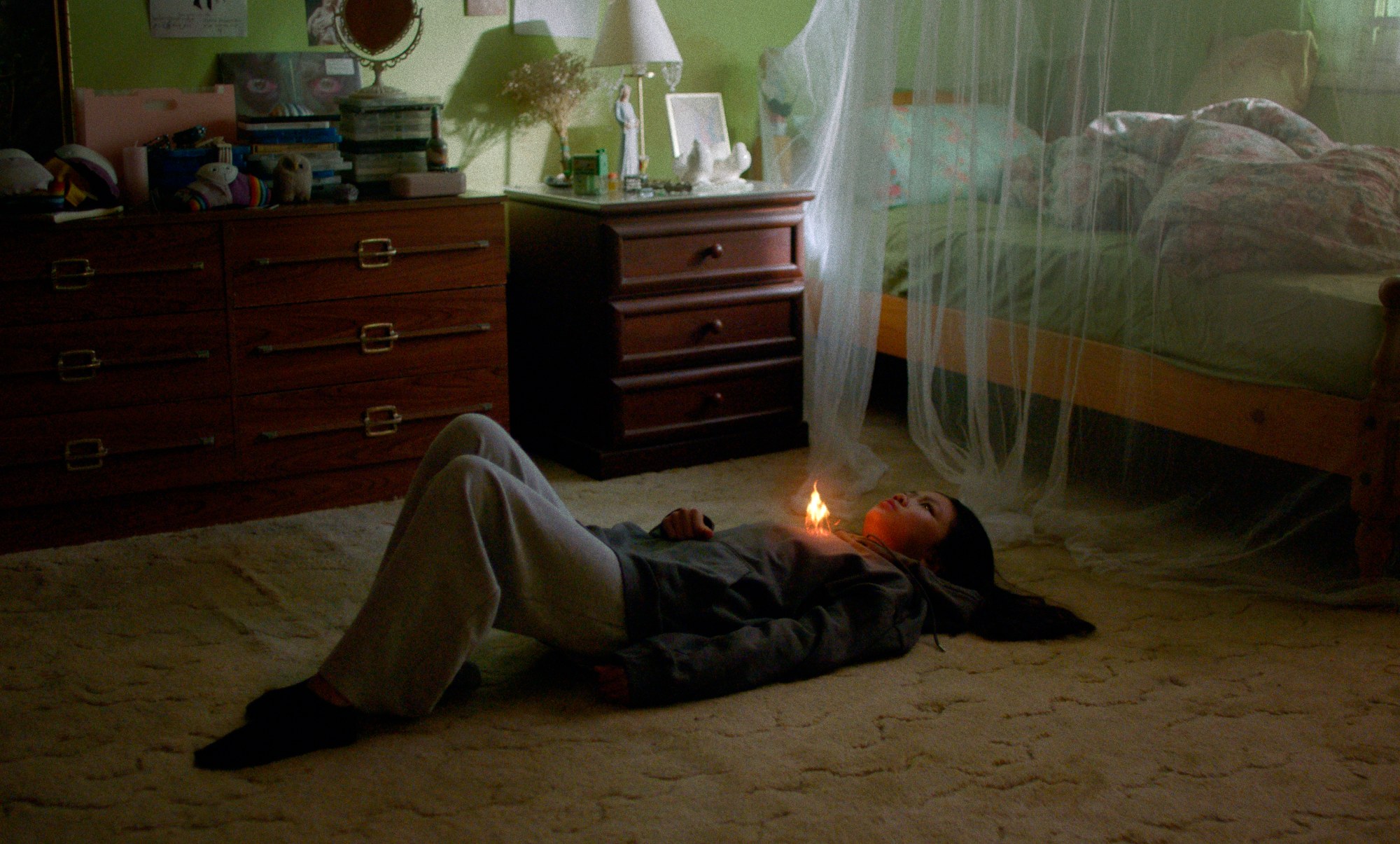
Spiders On My Lashline moves between the character’s past and their present-day dancing. How did you find the rhythm and balance between those two timelines?
The jumping between timelines existed at a script level, as I’m always interested in playing with the concept of time, particularly how the past and present interweave. In writing the script, it was always about finding ways to best transition between the two timelines without losing the audience, and knowing how to ground them in the present day. It’s here that I decided to frame the poem around the structure of a confession after a violent act. This created a way to ground the film and explore what led the character to that particular moment in time.
Most Popular
Tell us about finding Linhqu and how that collaboration took shape — how did you approach building the movement vocabulary together?
This project very much felt like the stars aligned as I happened to meet with Linhqu over coffee for another project. Linhqu is the founder of a queer pole dance collective that platforms LGBTQIA+ people of colour and sex workers. In the same way that I would work with a cinematographer or production designer, I worked closely with Linhqu and truly leaned on their expertise.
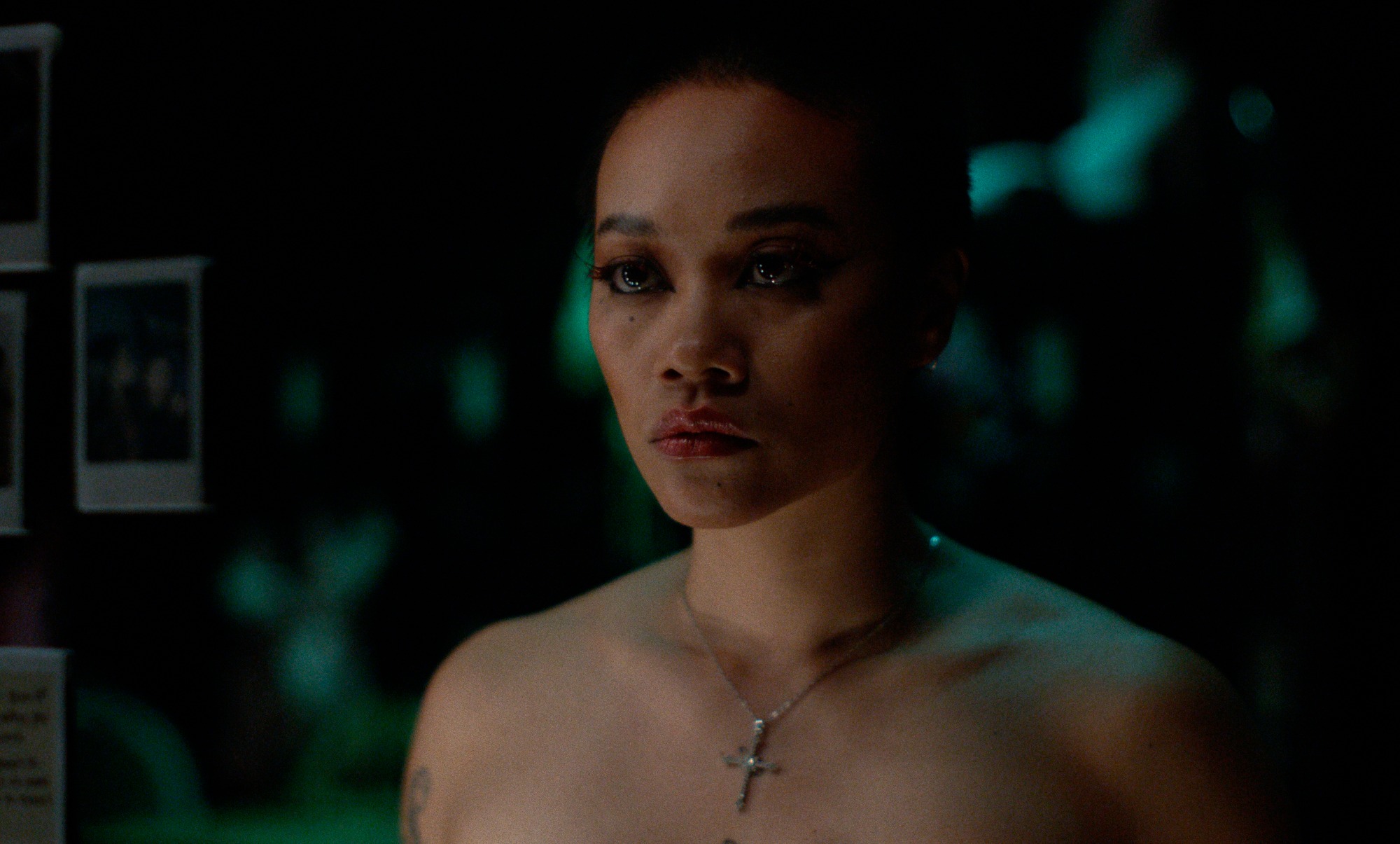
We spoke about how that character would be feeling in that moment and how it would translate into movement and dance. In particular, when we were working with the other dancers, I very much trusted and was supported by Linhqu’s experience, which meant that they were the perfect person to help lead the other dancers after our creative conversations. It truly felt like any other creative collaboration—Linh would show me some ideas for movements in exploring the character, and we would work together to shape it.
I was particularly interested in how bodies fill the frame, whether that may be in tight close-ups or in a wide, there’s power in the way a body moves through a frame.
Shooting dance is a specific challenge. How do you capture the movement in a way that feels so cinematic rather than simply documented?
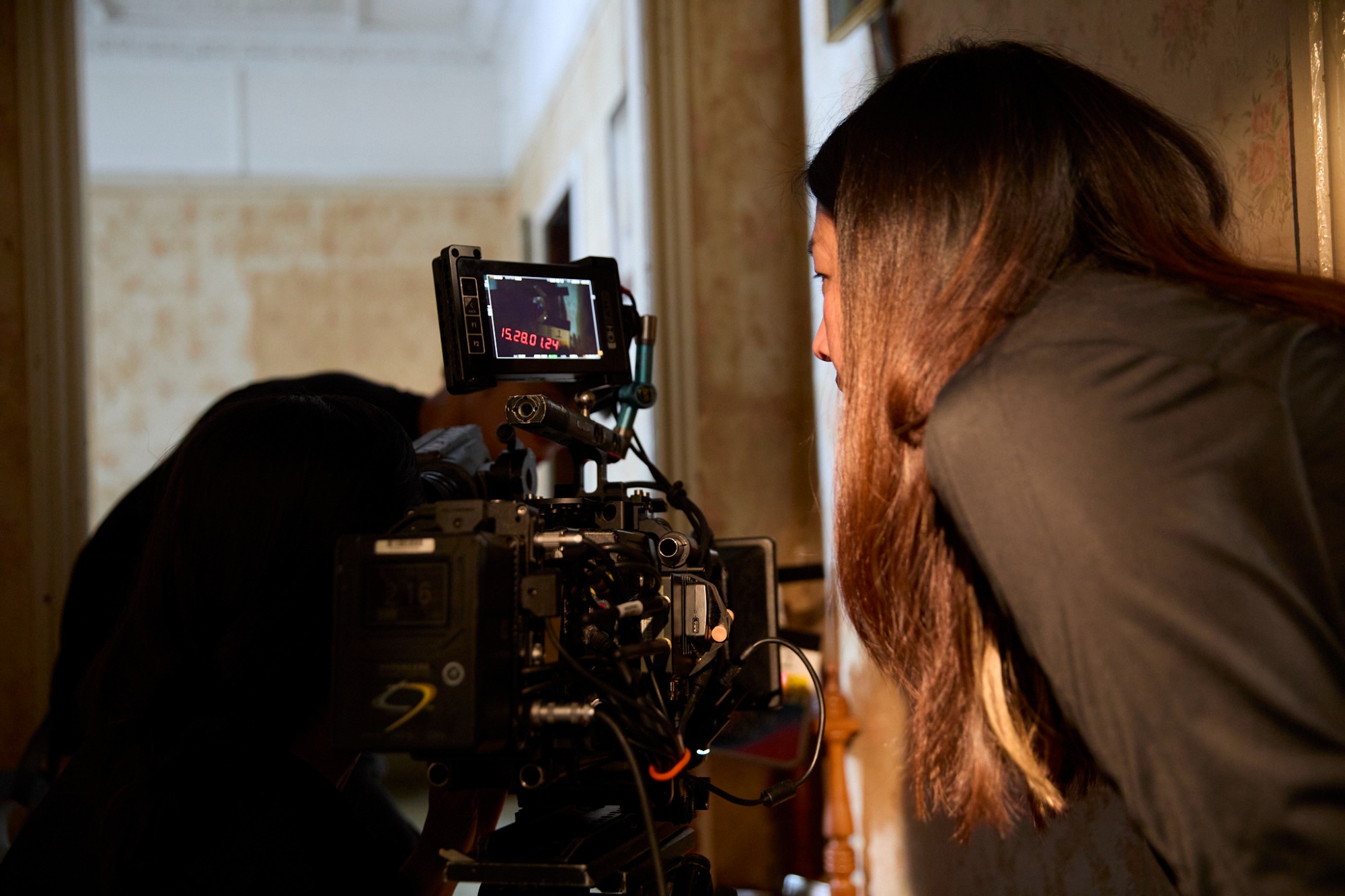
During pre-production, our cinematographer, Jaclyn Paterson, and I made sure to map out the movements in a rehearsal space prior to shooting in our location. I think in particular, as our location and the nature of pole-dancing being on a raised platform, we had to figure out ways to ensure the frame would still look cinematic. There were a couple of things that were important to me as we were working out the frame. I was particularly interested in how bodies fill the frame, whether that may be in tight close-ups or in a wide, there’s power in the way a body moves through a frame. One of our main inspirations was Claire Denis’ Beau Travail. It’s a film that finds a truly poetic way of rendering bodies on screen. In Linhqu’s wides, in particular, there was a real strength in just seeing the movements breathe and take up their own space in the frame. I also love the way Jaclyn has a very intuitive way in which she frames people and approaches movement with the camera.

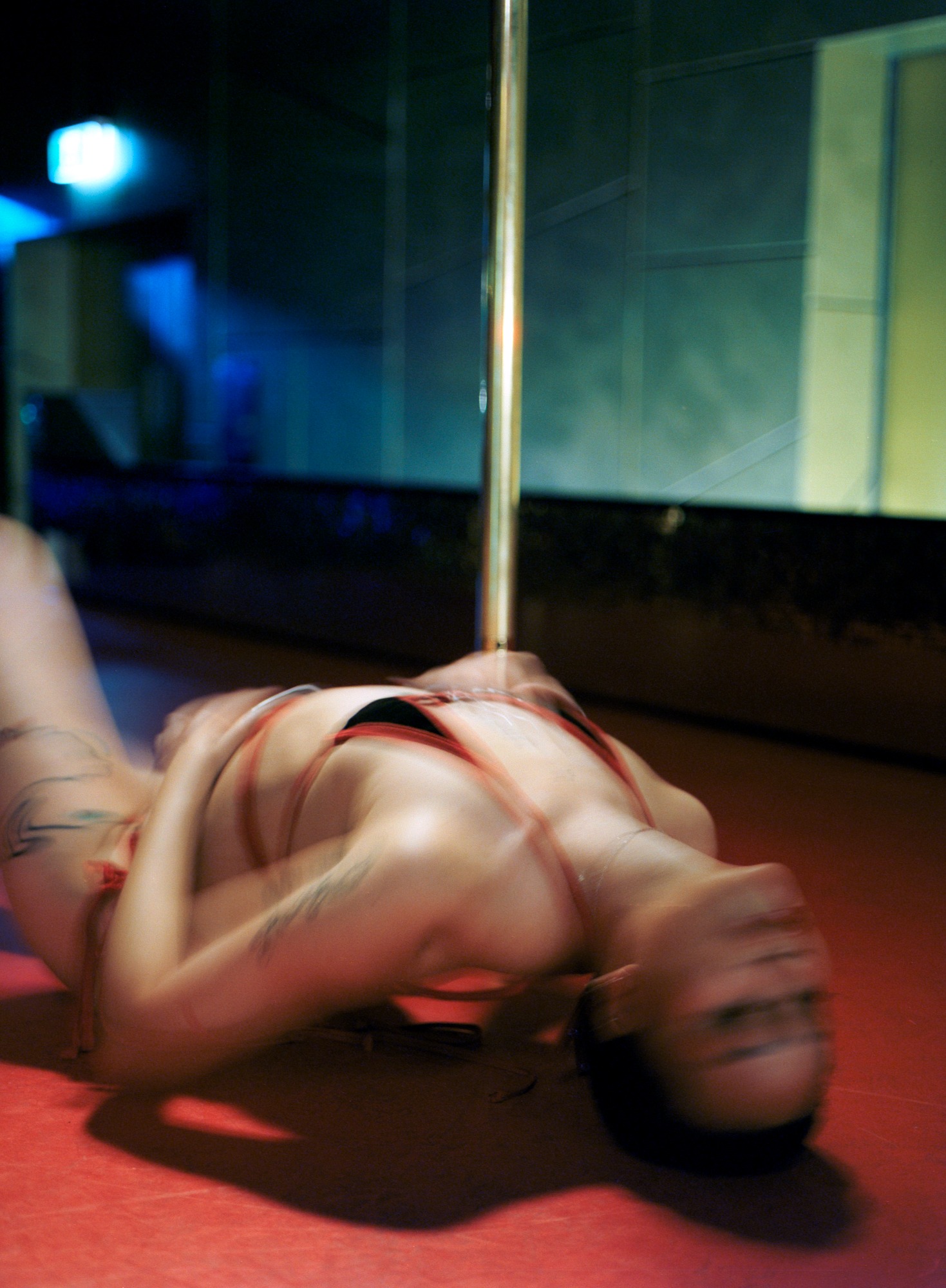
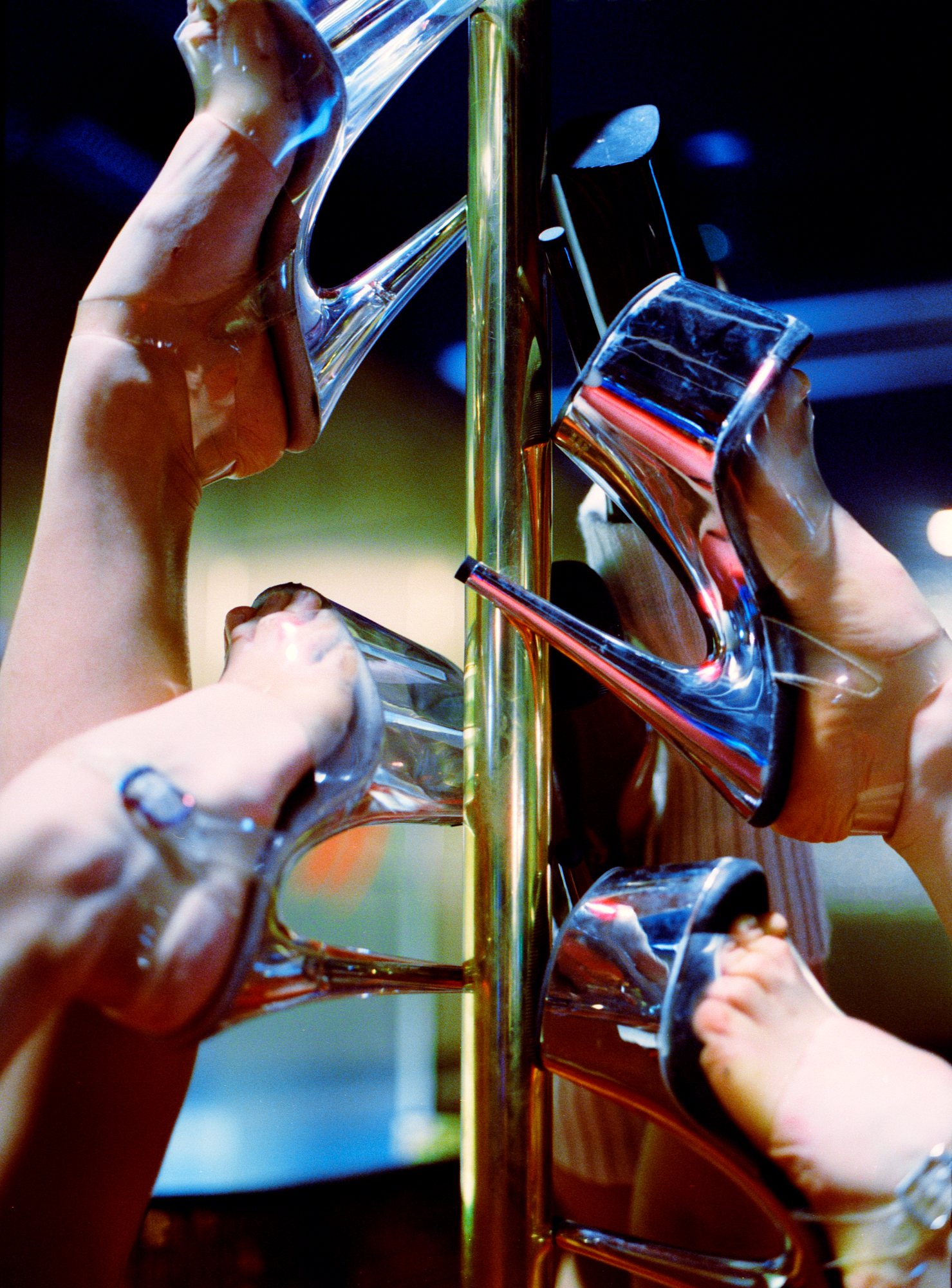
I want to know everything about filming that final, slowed-down, stunning dance sequence.
We had a couple of formations that we had workshopped in our rehearsals, this one in particular I knew stood out as truly jaw-dropping. While we were shooting, I would often find myself in a trance, in complete awe of the dancers, in particular admiring their athleticism, power and strength that’s required to pull off some of the movements. We had blocked out a portion of the shoot day to allow us to have the space to allow the dancers to not only warm up, but also take breaks when needed. With this particular sequence, we actually had to do a couple of takes as at the time the pole ended up being quite slippery for one of the dancers, and when one person slipped, they all did! We only managed one good take, but I’m really glad we persevered to get it.
The film sits at an intersection of three creative voices: Madison’s poetry, Linhqu’s movement, and your own directorial perspective. How did you navigate that, and where do you feel your voice most distinctly in the film?
One of the greatest parts of working in the medium of film is the nature in which collaboration is at the heart of it. This film felt very much like an ever-evolving beast that only became stronger as each person brought their artistry. Madison’s poem created a foundational structure for the film. From there, I imbued my own personal interpretation of the piece, where I channelled my own personal feelings to their words, to bring a specificity and personal layer to the film. Along with our other great creative heads of departments, Linhqu’s embodiment as the main character and movement felt like the final missing piece, to truly bring the script alive.
This film felt very much like an ever-evolving beast that only became stronger as each person brought their artistry.



You’ve spoken about your own relationship to gender and the dissonance of performing womanhood. How consciously did you draw on that in making this?
I’ve always found it difficult to truly articulate my feelings towards gender, particularly the social constructs in which women are meant to behave and perform in a patriarchal society. Filmmaking has most definitely provided me an outlet to explore some of the more sticky parts of womanhood, in particular, the parts that don’t quite sit right with me. In this film, I wanted to explore and better understand my relationship to bodily violence, in particular how that intersects with gender and ways in which we can try to push past society’s expectations.
Filmmaking has most definitely provided me an outlet to explore some of the more sticky parts of womanhood, in particular the parts that don’t quite sit right with me.
Please share with us your favourite/most memorable short film or films and why.
Three short films that I always return to and were big inspirations for my film are Ariane Labed’s Olla, Kahlil Joseph’s Until The Quiet Comes and Lynne Ramsay’s Gasman. Olla remains one of my top short films, due to its ability to balance humour with dark themes. There’s an unexpectedness and distinctiveness to the main character which really makes the film stand out as an original short. Until the Quiet Comes is a favourite of mine as it feels like that beautiful confluence of music with film. It transports you into a dreamspace, letting the images and music affect you on a subconscious level. I always return to Lynne Ramsay’s Gasman, as not only am I a big admirer of her work, but I love how this short truly grounds you into the perspective of this young girl having to come to terms with complex adult themes.
After a project as personal and poetic as Spiders On My Lashline, what are you gravitating towards next, and do you find the short film space continues to feed your longer-form work?
After Spiders On My Lashline I’m feeling the pull towards long-form work. Having predominantly created work in the short form space, I’m hungry for more run time in a world to explore character and story. I’ve currently got a few feature films in development. One is a psychological horror exploring faith and online indoctrination, another is a queer psychological thriller about twin sisters living in a pregnant commune and the third is an absurdist dark comedy set in my hometown in Australia. I feel the beauty of the short film space is that it really allows you to experiment and play with form and style. Each short I’ve made so far has been incredibly helpful in allowing me to practice my craft, while also providing me a space to play with an idea and try something out before going deeper in a longer form space.