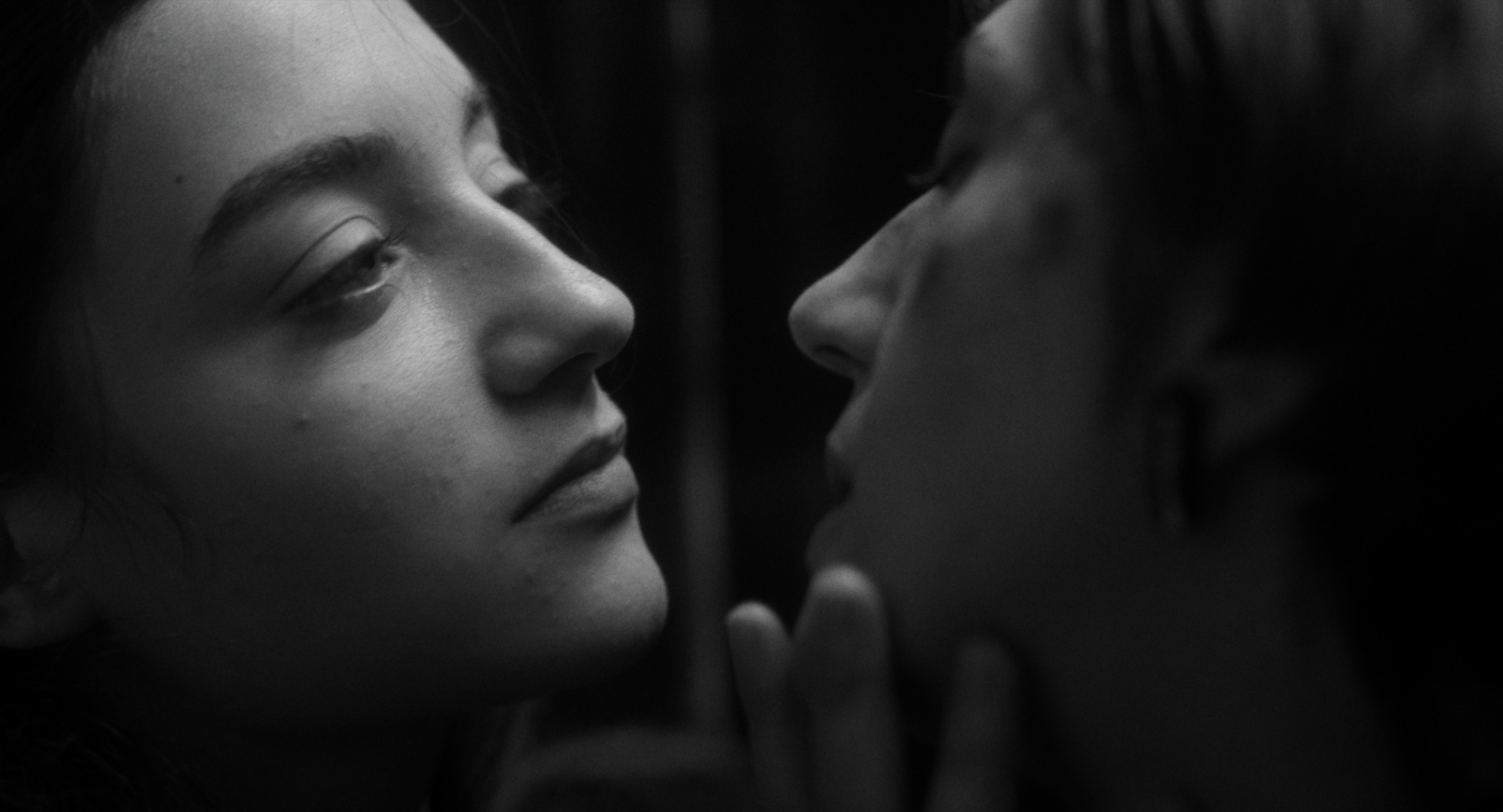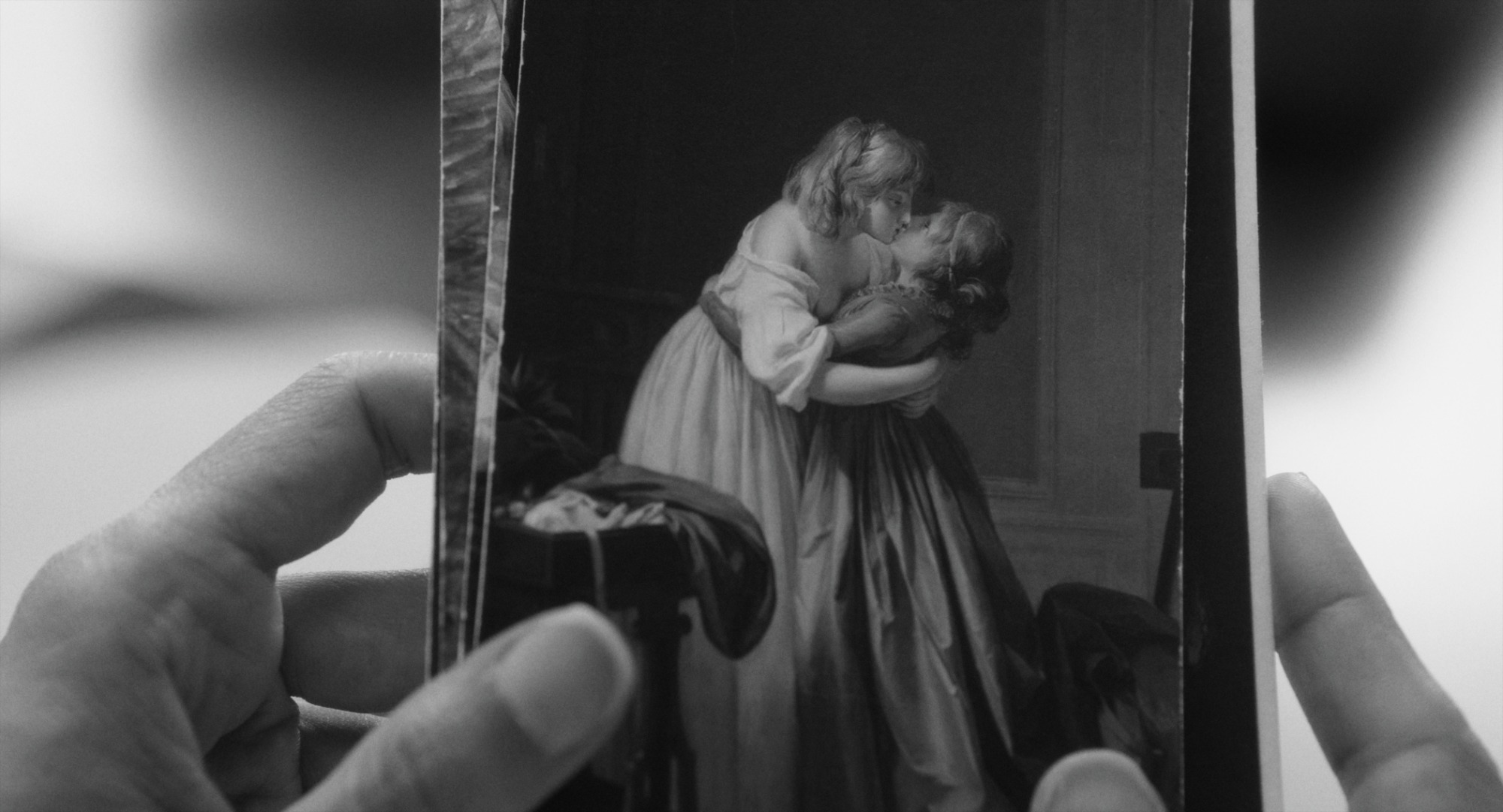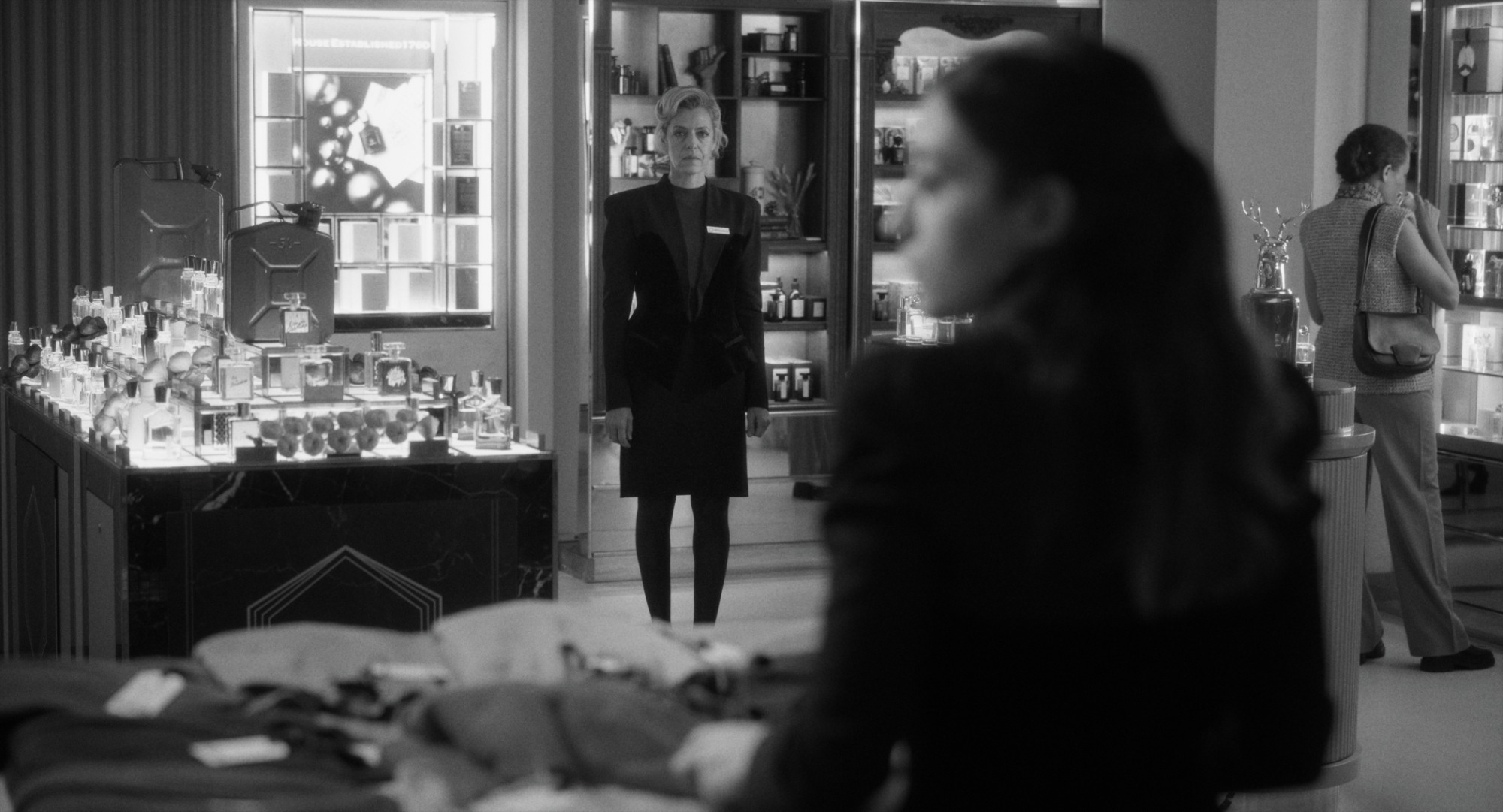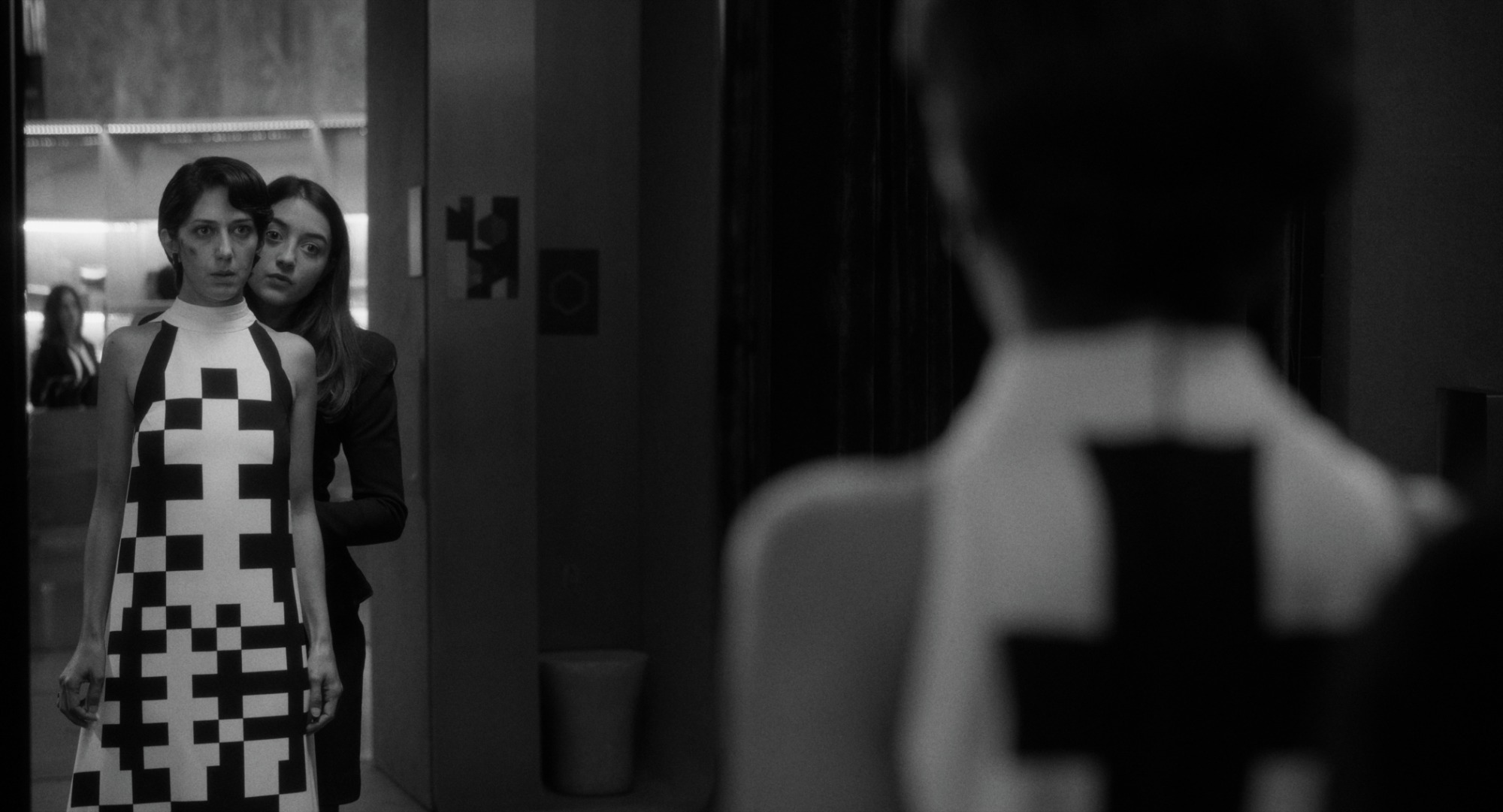

There is a long-standing critical tradition of asking what separates the absurd from reality, and right now, that question has never felt more urgent. Natalie Musteata and Alexandre Singh’s Oscar-winning Two People Exchanging Saliva (Deux personnes échangeant de la salive) brings this query into sharp relief. Set within the monochrome grandeur of Paris’s Galeries Lafayette—reimagined as a purgatory where kissing carries a death sentence and wealth is signified by the slap raised bruising on well-to-do cheeks—the film holds the question open, shimmering and unresolved, across its 36-minute runtime. Its origins lie in interdisciplinary audacity. Musteata holds a doctorate in art history; a career spent interrogating how images accrue meaning across time. Singh is a visual artist of two decades whose practice—collected by the Guggenheim and the Musée d’Art Moderne de Paris—has long trafficked in the gap between social ritual and absurdist rupture. Neither arrived at filmmaking through conventional channels, teaching themselves through a shared conviction that the screen could accommodate the rigorous world-building their other practices demanded.
Two People Exchanging Saliva’s premise arose from what they call its unfortunate saliency: conceived as a satire on rising global authoritarianism, they watched in real time as their fictional friction began to mirror reality from the Don’t Say Gay laws in Florida to the harrowing bravery of Iran’s Woman, Life, Freedom movement. For Singh and Musteata, absurdism was never science fiction; it is a mirror held to a society already inured to the ridiculous. To capture this, they built with the precision their backgrounds demanded, scanning locations to construct 3D pre-visualisations, developing a dual cinematic language split between the store’s rigid observational stillness and a handheld world infected by desire beyond its doors. Despite warnings that breaching the 30-minute festival ‘death zone’ would limit their reach, they refused to blunt the short’s edges, protecting the emotional catharsis that makes its final moments land so satisfyingly. Watch the full film below, courtesy of The New Yorker, after which continuing our Oscar-nominated interview series, we speak with Musteata and Singh about the surrealist lineage anchoring their satire, the structural logic that resisted every cut, and why, when absurdism has become indistinguishable from the news cycle, the most defiant act left is a stubborn, tender optimism.
One of the sad things about these kind of political situations is that they’re so easy to satirize and eventually the satire becomes reality.