
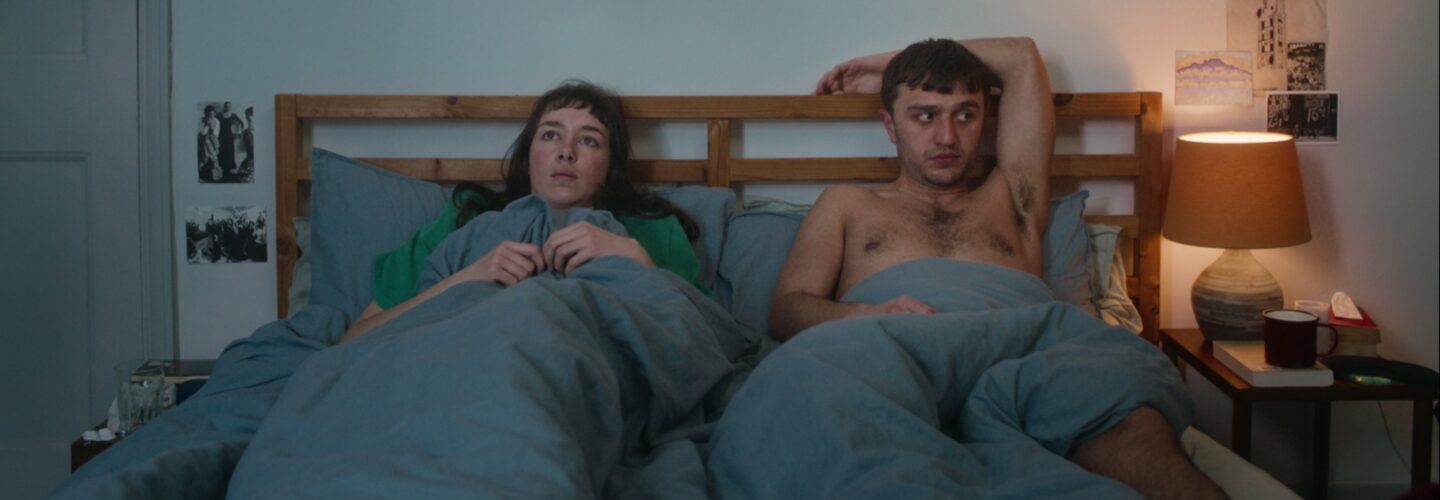

There are those modern relationship conversations that everyone recognises, and few enjoy—one that circles something real without ever quite landing on it, where both parties are performing certainty they don’t feel and deploying whatever’s to hand to avoid the moment of actual honesty. Iris Breward has made a film about exactly that conversation, and she’s put a fly in it. Afterplay arrives at a cultural moment when the language around relationships, monogamy, commitment and what we’re supposed to want from each other has never been more scrutinised or more slippery. Breward, nominated for Best Comedy at last year’s WeAreDN Awards for her pitched battle of masculinity at a children’s birthday party, Sidney, has a sharp instinct for finding the absurdity inside that slipperiness, and for the particular comedy that lives inside conflict. Her characters don’t say what they mean. They hunt flies instead. Afterplay’s beauty is that it refuses to take sides—both parties are as bad as each other, and somehow both completely sympathetic. It’s a short film less interested in who’s right than in the strange, slightly farcical mechanisms people reach for when they’d rather not find out. As established fans of Breward’s work, we’re excited to have Afterplay premiere online with DN today, alongside an interview with the talented writer-director in which we speak about directing shades of subtext without spelling it out, the percussive rhythm of an argument that has a fly in it, and why the first cut is always the drama cut.
Afterplay is a contained film—two people, one room, a loaded conversation. Where did the idea originate, and what drew you to telling this particular story in this particular form?
The specifics of the story are a mish-mash of ideas;
- An anecdote my mum used to tell me about my dad getting distracted by hunting a fly during an early stage of their relationship, and how it gave her a funny and also alarming deeper insight into him.
- My own experiences with sensitive conversations in relationships and that early 20s feeling of not really knowing what you want. I feel like a lot of people in my generation have found this new openness to love and relationships, which can be amazing, but also brings new complexities – especially relating to sex and commitment.
- An interest in subtext, and how in conflict we don’t often say what we really mean.
- Thinking about the power of disruptions in otherwise straightforward scenes. I love the bit in Triangle of Sadness where the couple are fighting, and the elevator door keeps closing, or in Boogie Nights when they’re at the drug dealer’s house and a guy in the background is constantly setting off firecrackers. The fly is both a way for the characters to displace their true feelings and also a source of ratcheting tension throughout.
I didn’t need, or want, to point to a conclusion within the subtext or signal information necessary to understand the plot – it was more about creating life underneath the words that could be interpreted.
Subtext is notoriously difficult to make visible without underlining it so heavily that it collapses. How do you make a film about people not saying what they mean without inadvertently spelling out what they mean?
The main point of the film is to show that the couple aren’t saying what they mean, rather than ascribing a particular meaning to that subtext, if that makes sense. It’s a film about avoidance, confusion, insecurity, and power games; there isn’t one final right answer that I was trying to hide. So that’s quite liberating, really. I didn’t need, or want, to point to a conclusion within the subtext or signal information necessary to understand the plot – it was more about creating life underneath the words that could be interpreted in many different ways by different audiences. I avoided the temptation to make anything too literal, I encouraged the actors to find their own secrets, tried to flip and change that as much as possible, and basically let the magic of the unspoken flourish on its own.
Most Popular
How did you direct Ciara Berkeley and Sonny Poon Tip in those pauses and beats in a conversation where everything is happening through glances and body movements?
It was mostly about finding their intentions at each point – who is trying to provoke who, why, how this might affect their physicality, rather than nailing down particular actions. The conversation is already quite loaded by the topic itself, so I feel like they found those movements naturally. I certainly didn’t want to be prescriptive about how and when to move or how they should react to each other. I tend towards finding options and creating variety, rather than trying to zero in on one particular thing. You risk the whole life of the scene if you try to pin down or capture something too specific. Honestly, it was mostly about freedom and exploration. Giving them opposing directions, letting one take the other off guard, trying a wildly different objective.


Before we dig into the narrative significance of the fly, let’s talk about the practicalities!
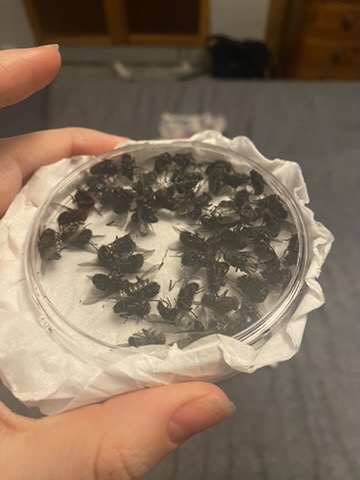
Some of the most challenging stuff was getting the real live fly to cooperate and getting those shots of it. It was pretty fun to do, but chaotic. We had a box of live flies that I ordered from eBay off a guy from Halifax, and we portioned them out so one at a time was released and filmed. In hindsight, this was very predictable, but they all just flew straight to the big light. So getting the shots we needed was tricky.
For the fly enthusiasts – please be reassured that no flies were harmed in the making of the film. We released them all at the end near a bin. The fly that gets splatted was actually a dead, embalmed fly that I bought from a different guy on the internet. He told me they had been preserved so that they would last forever (unless they got wet). I can’t comment on the ethics of his business, but I’m hoping those flies died of natural causes.
The fly is both a way for the characters to displace their true feelings and also a source of ratcheting tension throughout.
The fly does a lot of heavy lifting in terms of its comic relief, a tension mechanism, and a silent witness to their conversation.
The fly carries. Terrible that it’s not credited really! Honestly, I’d say I had the opposite concern. I find a lot of humour in conflict, so I think I naturally find the material quite funny, but I know for some it can feel more serious. I wanted to strike a balance between the two, and I think earlier cuts leant more into the emotional throughline and kind of lost any levity or silliness.
I find it hard in the edit not to get tunnel vision on emotional truth, and a lot of my work does have playful elements, which can fall flat if you neglect them. I often find the first cut is the drama cut, I’ll go quite far with that, and then I have some space, watch it, hate it, realise I’ve neglected the humour and then slowly infuse that back in.

The elevator door in Triangle of Sadness and the firecrackers in Boogie Nights (both brilliant refs) are background disruptions, whereas the fly is something the characters actively engage with. What does that shift in agency, being active rather than passive, do to the power dynamic between Nadia and Jacob?
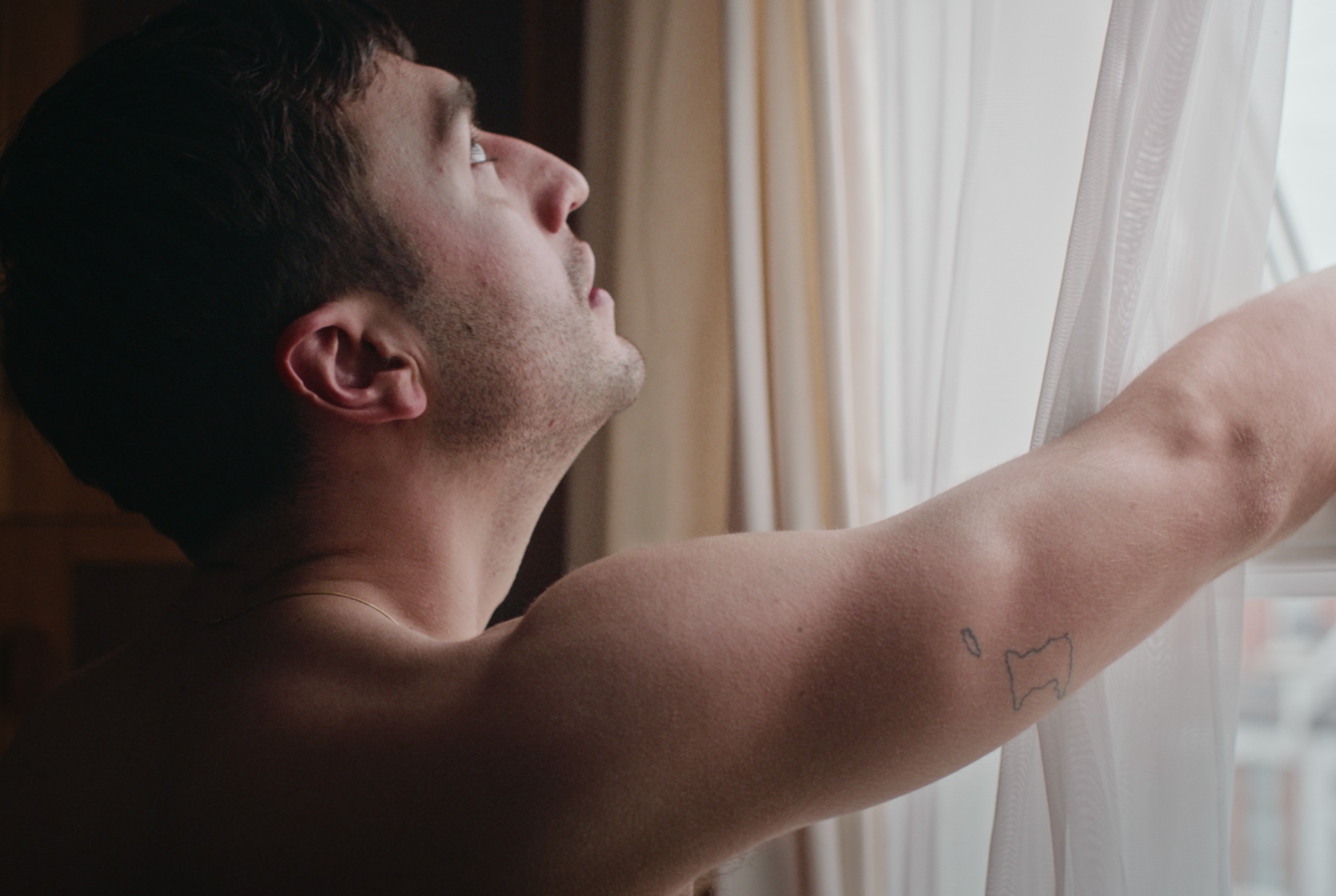
The fly becomes something to hide behind. It’s the perfect bullshit distraction. I feel like we all find ourselves drawing for these things in life. Someone asks you something mortifying, and you immediately become desperate to engage your attention on literally anything else. I think that’s where it starts for Jacob. Desire for escape, how can I divert things away from this uncomfortable place? And then, as that strategy flounders, it becomes about control and assertion of power. Not just “there’s a fly”, but I actually need to hunt it and kill it now. Nadia falls into the same trap at the point the spotlight turns onto her. It’s like a tragic last-ditch power grab. So it’s directly tied to who’s in control, who’s driving the conversation and who’s flailing.
How did working with Ian West extend into the audio performance of the simulated sex? We’re used to hearing about intimacy coordinators supporting the physical and emotional safety of on-screen scenes, but what does that support look like when the performance is purely vocal?
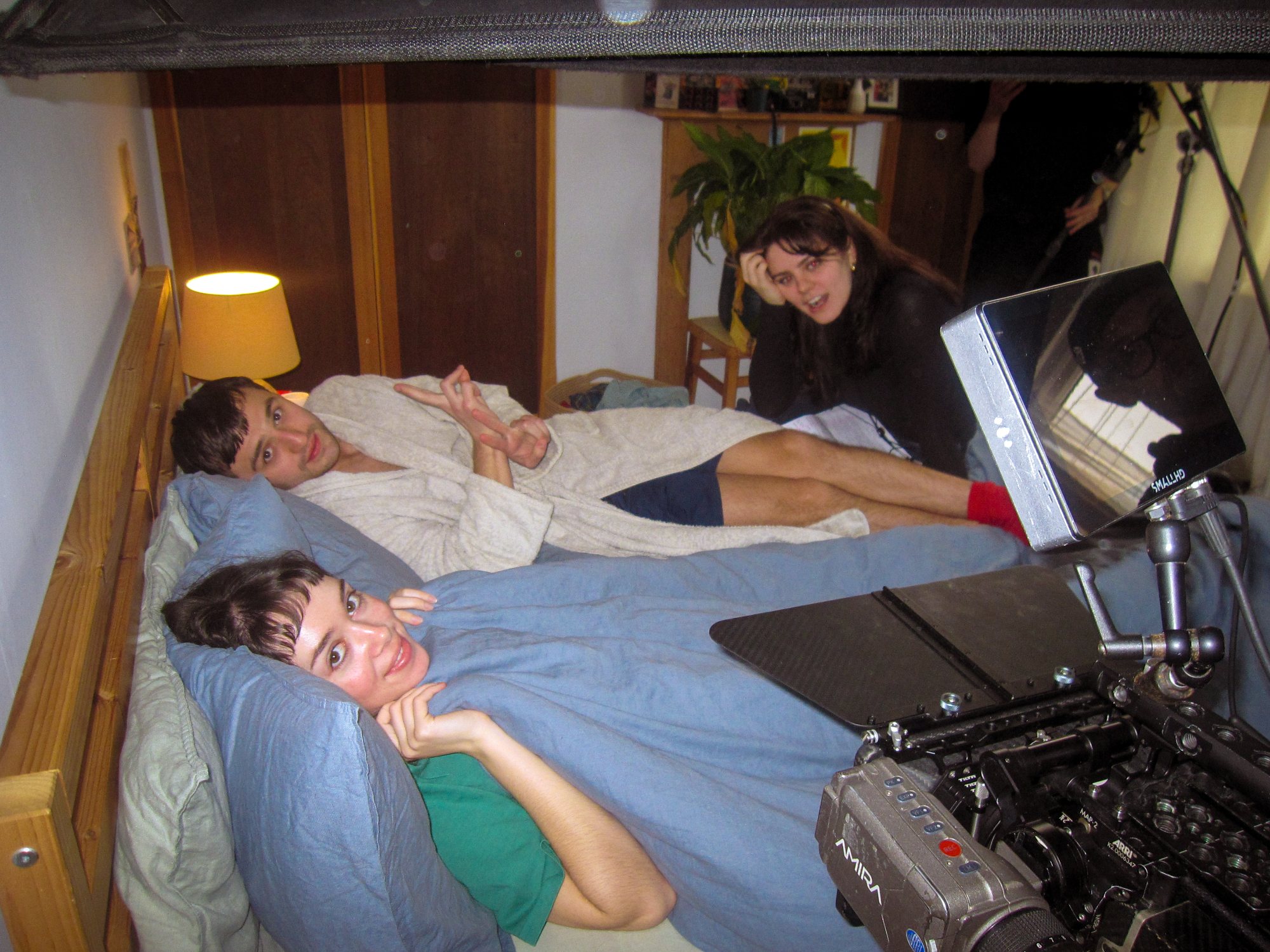
It was great actually. We came to record wild tracks last in the day, and this included the simulated sex audio. Ian had a really good technique of having the actors put their palms together and push back and forth, so they could find a similar rhythm and pace in the vocalisations. It was a perfect way to connect and ground the actors to do something which could otherwise have been a bit disjointed. A simple thing, but something that at the end of a delirious day in one room it might have taken us longer to find were it not for Ian’s brilliance!

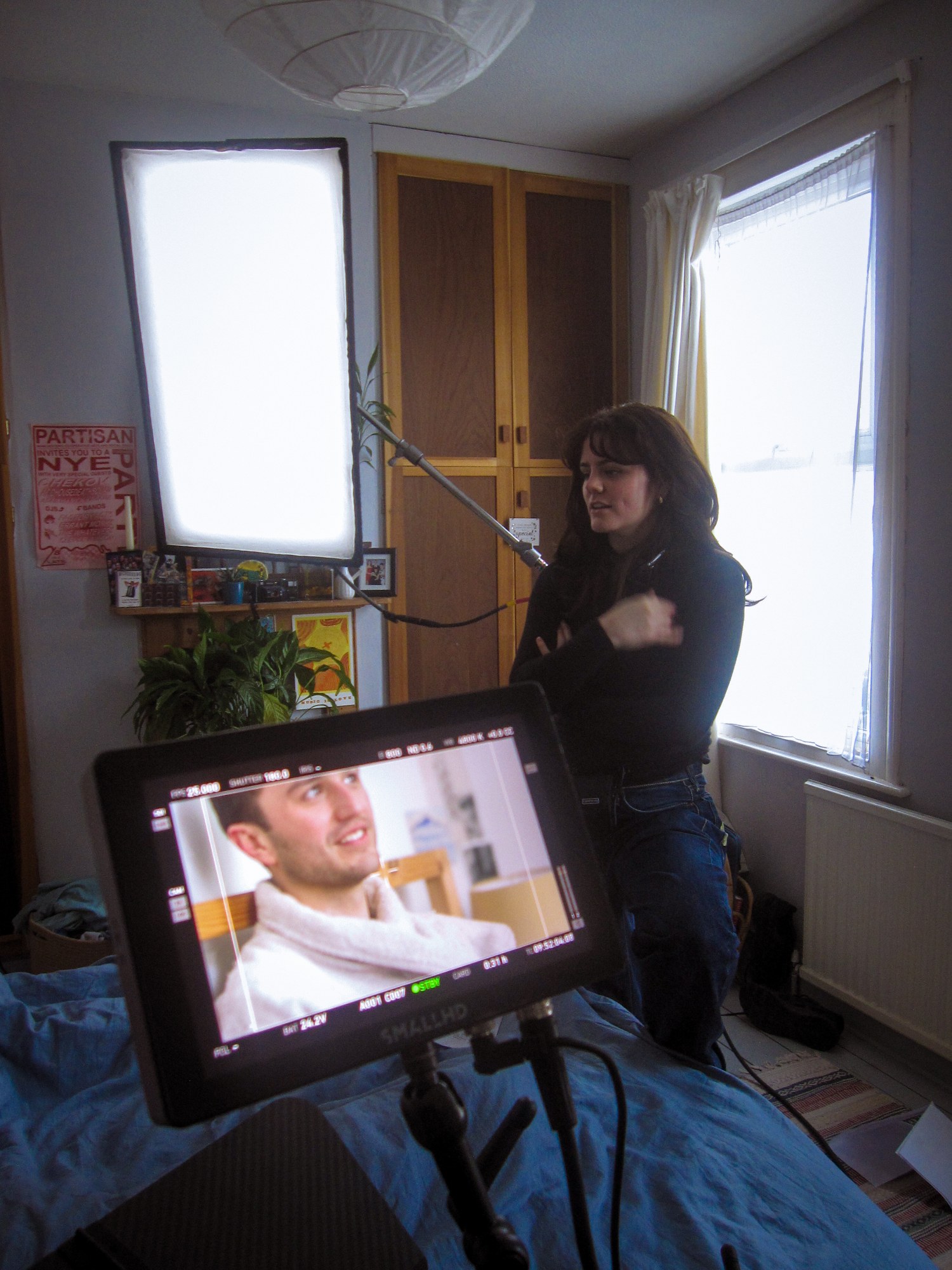
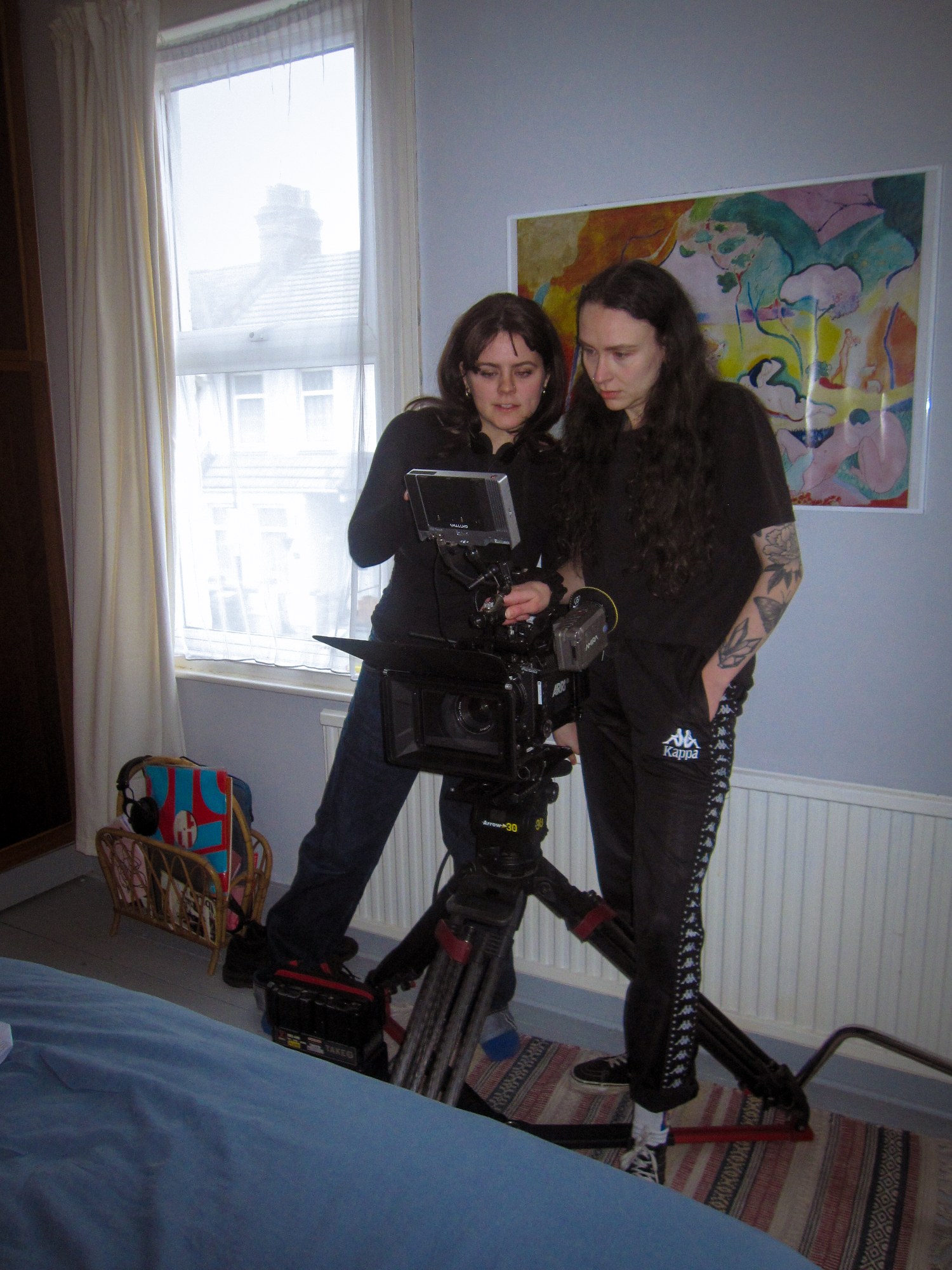
The back-and-forth between Nadia and Jacob hunting the fly has a real snappy quality to it, almost percussive. Was that something that existed in the script’s structure, or did it emerge in the edit?
The script was very much designed to be rhythmic and have pace to it. I spend a lot of time saying things out loud when I write. But the edit is one big re-write, so it had to be rediscovered there, too. Particularly once you add the fly into the mix. It develops from a back-and-forth into a kind of more chaotic three-way. There’s still a shape to the whole thing, but it took time to find the right timings for the beats within that. Especially when you’re working with visual jokes and movement as well as dialogue. But it’s iterative and intuitive and you get there in the end.
The point is that neither really knows what they want, and therefore a sense of control over the situation becomes all the more important.
I actually haven’t decided where I land, and you mentioned it’s been interesting to hear audiences side with different characters. Was that genuine ambivalence engineered into the script from the start, or did it emerge from Ciara and Sonny’s performances, making both positions feel lived-in and real?
I wanted them to both be as bad as each other, and also both be relatable. I’m definitely a bit of both, depending on the day. And for me at least, the point is that neither really knows what they want, and therefore a sense of control over the situation becomes all the more important. But Ciara and Sonny obviously brought an incredible aliveness to it, and it’s such a delight to see. I love watching Ciara’s eyes rove about Sonny’s face, they’re so big! Full of secrets. And Sonny has an incredible physicality and expressiveness in his movements. There’s no joy quite like seeing what real people bring to something and how they complicate it.

Could you share a short film that’s had an impact on you with the DN audience?
As obvious as it is, I think I’m gonna have to go with the early Safdie brother shorts. There’s this one called John’s Gone that’s super lo-fi, deeply off-putting and weird but somehow also funny and touching and memorable. I think about it a lot, actually. The main impact was probably just realising that something can be rough and gross and still good. It’s got a mad little cast of characters and a monkey in it? And it’s mostly just stolen scenes from real life, or at least that’s how it feels. But it’s punk, and I love it, and it reminds me that you just gotta make the film and have fun doing it, whether you have the money or not.
We’re big fans of your work here at Directors Notes. What’s piquing your interest right now and what is next?
Thank you! I’m so glad to be sharing another film on Directors Notes. Right now, my 5-min comedy short Micro Bangs is on the festival circuit. It just premiered at London Short Film Festival, so I’m excited to see where we go next. I have two shorts in development, one about a woman clashing with her best friend’s boyfriend over a birthday cake, the other about a blocked plughole that becomes impossible to ignore. Otherwise, my focus is on developing my first feature. I’m rewriting a script about a man obsessed with tunnelling. And early days on something else related to ambition and fame and women doing crime, which I won’t say much else about!