
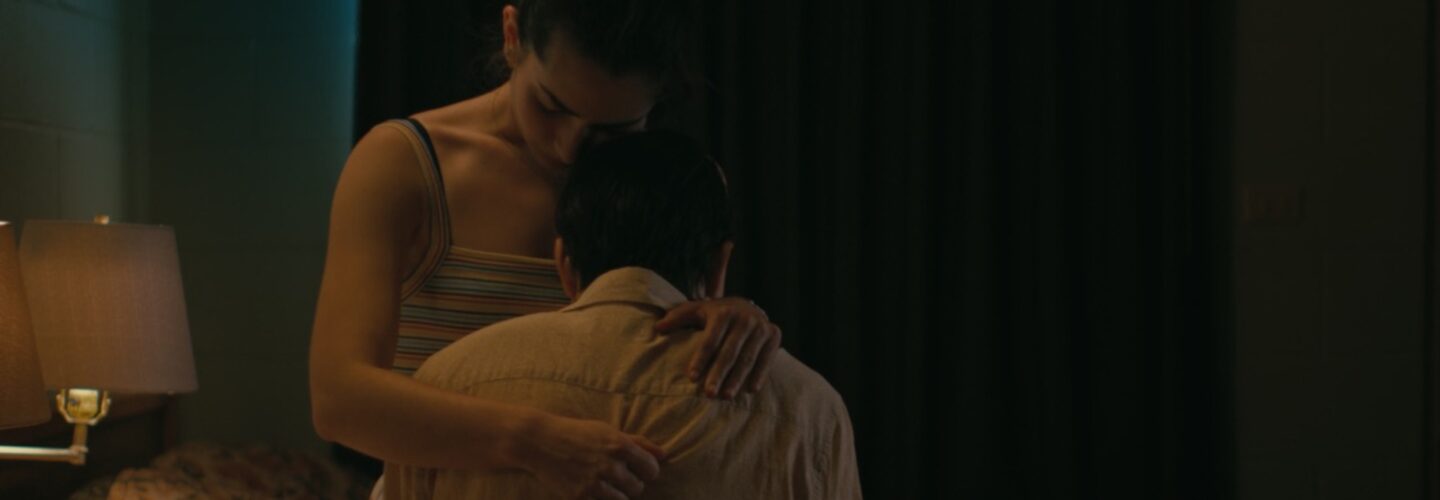
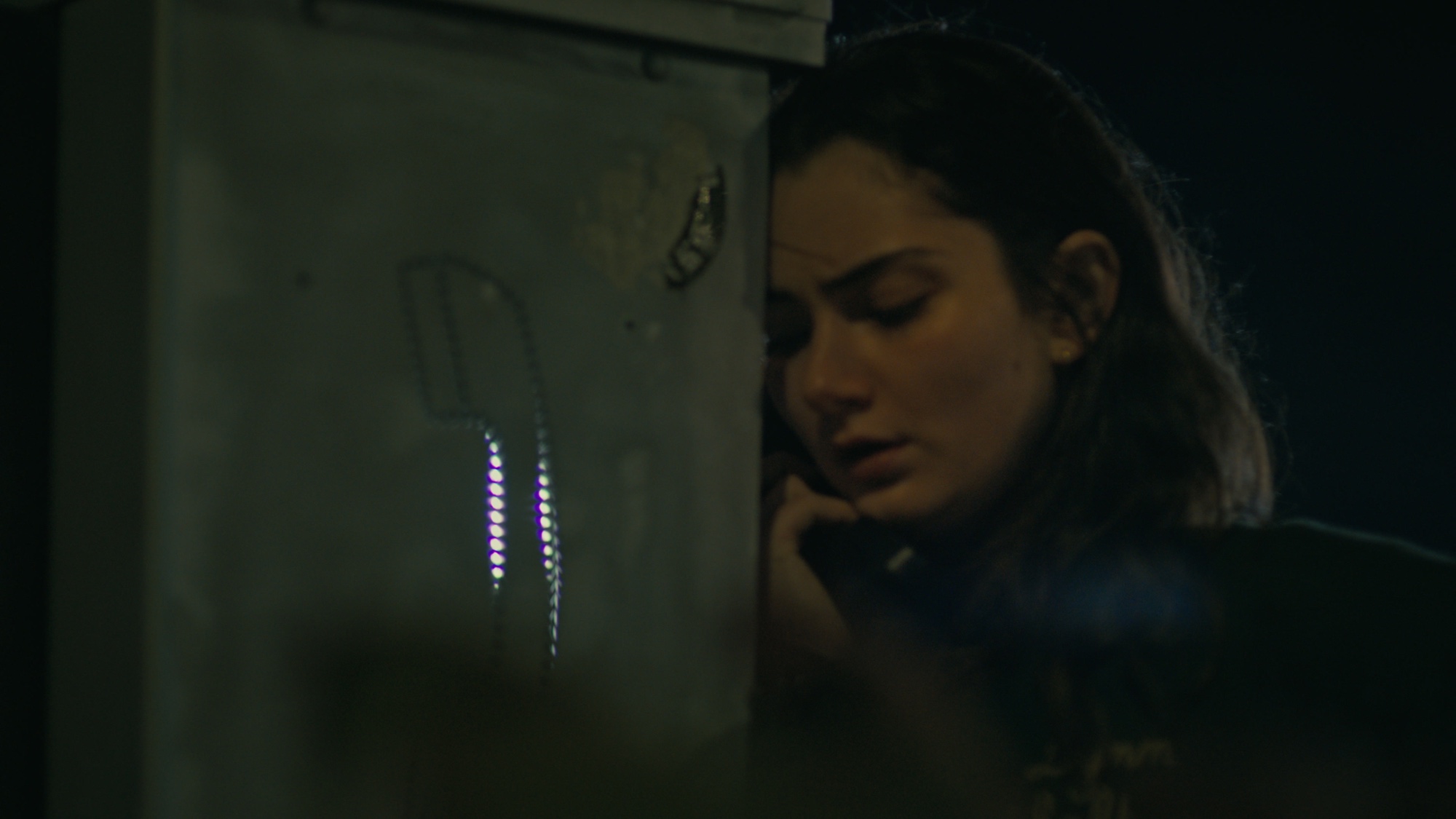
There’s a stretch of life, in those late teenage years, where we perform adulthood without actually knowing the lines. We make decisions because that’s what grown-ups do. We navigate situations we’re not equipped for, and muddle through the murky areas where mistakes and self-discovery blur into one indistinguishable mess. I’m Not Sure marks filmmaker Mylissa Fitzsimmons’ third feature on the pages of Directors Notes, following her look at the awkwardness of adolescence in That Party That One Night and the unsettling horror of Who Decides. She now plants us squarely in that uncomfortable late teenage territory with her confined two-hander drama between a depressed night manager and a naive young woman whose late-night conversation tilts toward something neither quite understands. Fitzsimmons blocks the encounter like a game of cat and mouse, her protagonist in quiet pursuit across carefully delineated zones of a cramped motel room—watching, approaching, wearing down. The camera remains observational until secrets surface, then shifts into close-ups that mirror the audience’s uncertainty about what’s unfolding. It’s a film designed to generate questions rather than resolve them, and we were able to explore some of those questions with Fitzsimmons, delving into writing ambiguity that doesn’t feel evasive, the separate conversations she had with her actors—whom the script was specifically written for—about intention and impulse, and why she blocked physical positioning so deliberately in a film where who moves toward whom carries enormous weight.
We’ve spoken to you here at DN about a coming-of-age drama and a horror short. Please introduce us to I’m Not Sure.
The seed of the idea/themes stemmed from many years ago, when a group of older female friends and I were sitting around talking about a story that had just gone viral about a celebrity male and a young woman who had written a story about their night together. We all talked about when we were that age (17-20), and the idea of being an adult woman and how we all played the part, even though we were the furthest from being fully aware of who we were as females and our sexuality and not fully understanding power dynamics. While the film is not a reflection of that story, I felt there was a common theme. The gray area in which a young woman learns about herself. How she learns autonomy over her sexuality. All of the gray areas of how a man and women communicate.
This idea that when a young woman is out of high school, starting her life and just not being sure what that means, we think we know what it means, but the reality is we are pretending. We still lack the communication skills to talk about what our needs and wants are, especially when it comes to sex…we’re just not sure about life because we haven’t explored enough to know what it is for us.
I felt that this younger generation has a better grasp on body autonomy than the older generation, but there is still the inexperience of communicating and navigating emotions.
I feel that conversations amongst friends can put the world to rights. What was it about your collective recognition that made you want to explore it cinematically?
There’s a generational experience that sparked the initial exploration. While we all have the same experience with that moment of straddling youth and adulthood, I felt that this younger generation has a better grasp on body autonomy than the older generation, but there is still the inexperience of communicating and navigating emotions, especially when it comes to sex and intimacy. They have a harder time with nuance and living in the gray shadows. Which, in my own experience and opinion, is where we discover who we are. It’s uncomfortable and messy, and often where mistakes and wrongs happen.
How do you write a script that’s meant to generate uncertainty without it feeling incomplete or evasive? What’s on the page versus what’s left for performance and audience interpretation?
It was a challenge but oddly, this was probably the most complete and certain thing I’ve written. I started from a place of reflecting on my own early transition from when I had graduated high school, and suddenly, I was supposed to be an adult. In all these situations, I remember thinking, “Well, this is what adults do, so I should be doing this right?” Making decisions in a space of not being sure about what it means to be an adult—whatever that means—opens it up to a lot of questions that have numerous answers. This is where the script was shaped. It was almost like writing a choose-your-own-adventure. Depending on if you are older, younger, male, female and on what experiences you’ve had with sex and life, will determine which questions you start to have, and then the answers vary.
It was almost like writing a choose-your-own-adventure.
I’m not really one to write an ending that gives the one correct answer. I’m one of those people that likes an ambiguous ending. I want to ruminate on the film and figure out my own ending sometimes. Which I know a lot of people hate, but it works for a film like this because, whether you love or hate the film, one of the goals was wanting people to think about it for a few days before deciding what the film is saying. This has meant the film has been hard to program at festivals. There are no easy answers with this film.
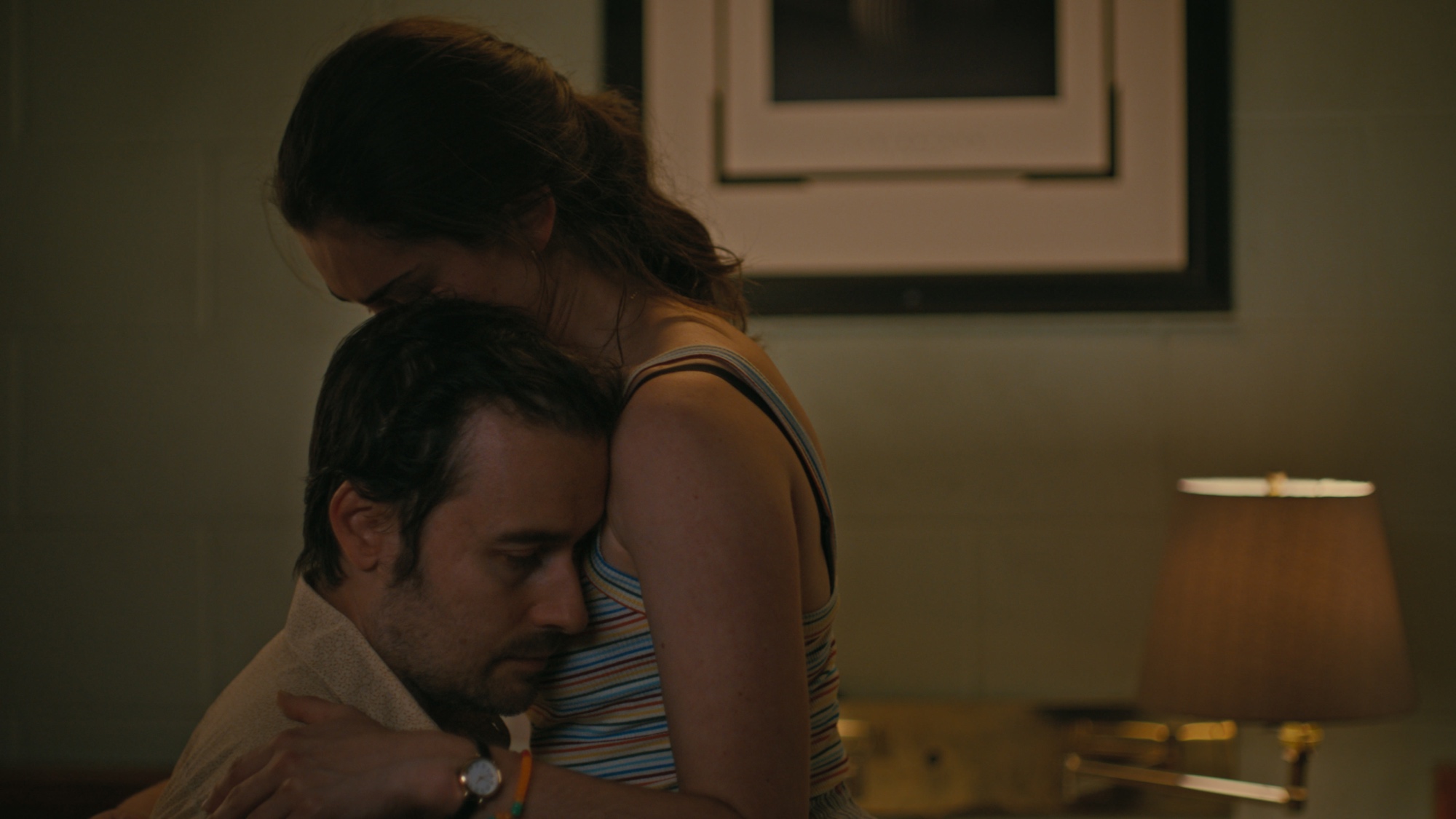
Your actors, Frank Mosley and Emily Robinson, are both carrying a lot of weight in a confined two-hander. What conversations did you have with them before the shoot about who these people are and what they want from this encounter?
From the beginning, I wanted to hear who they thought these characters were. I had written this film specifically for them and their talents, so I wasn’t nervous about whether they could pull it off. Not being worried allowed me to free up that space to listen to them and what they thought and wanted to create.
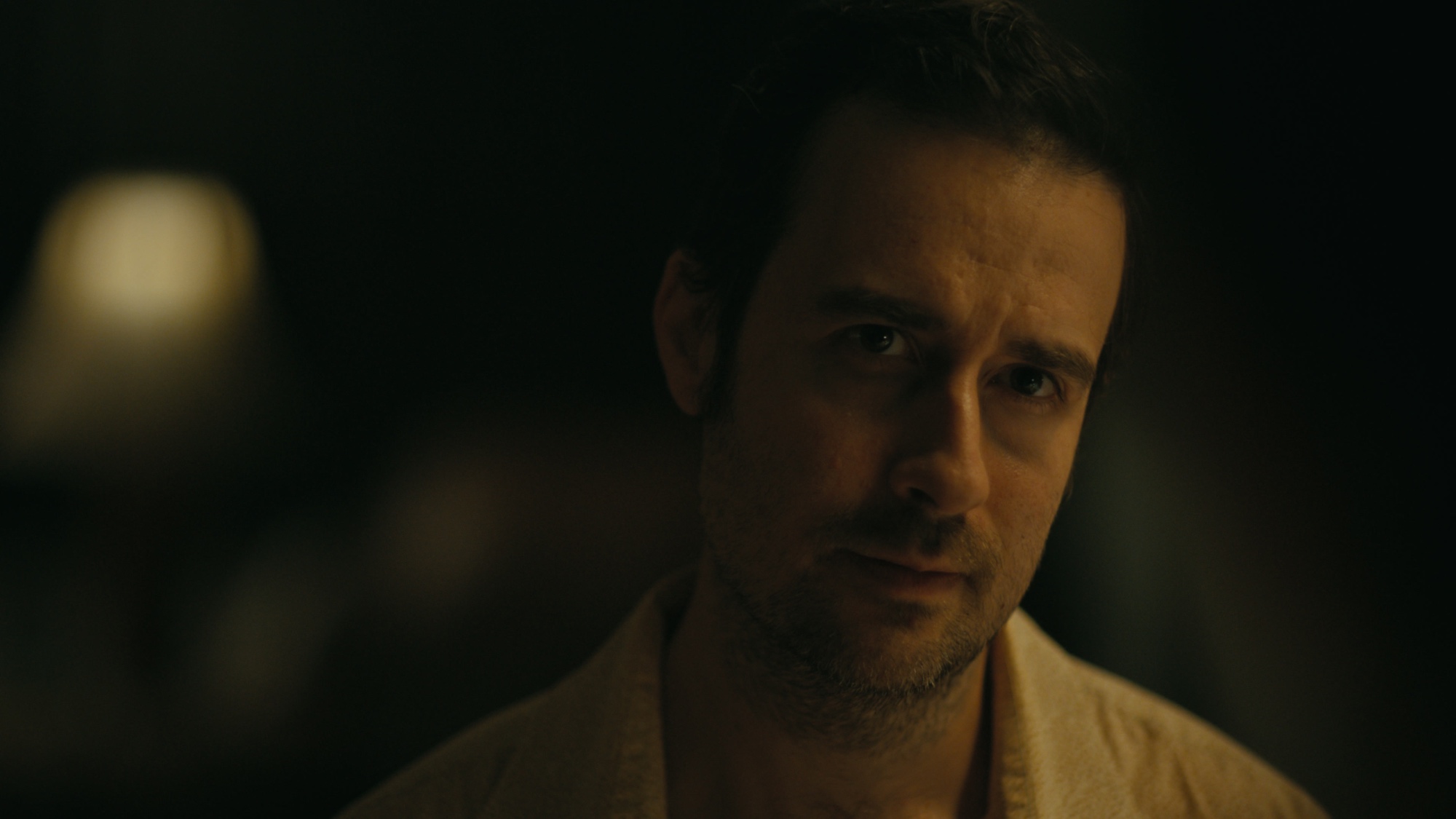
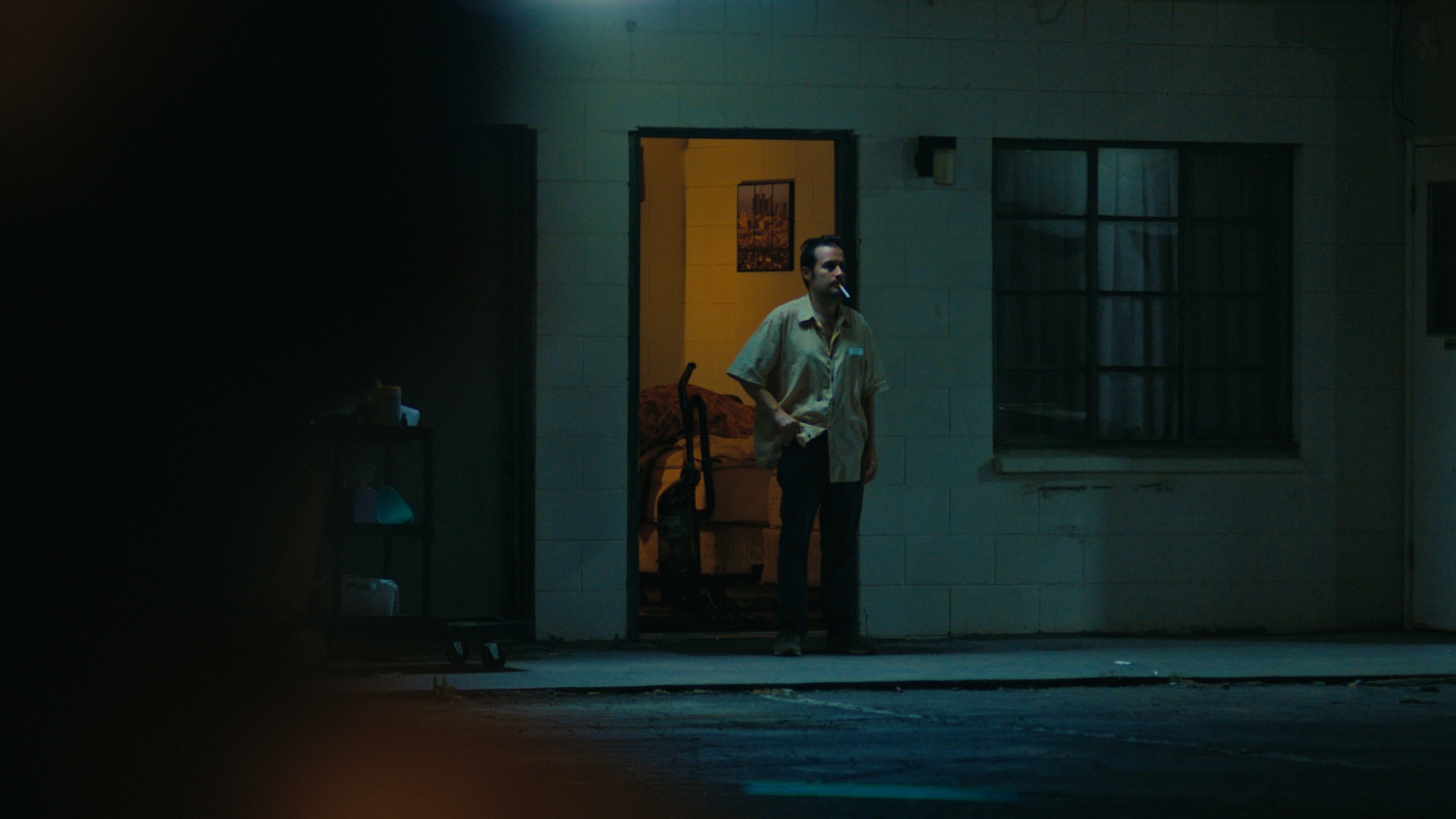
I met with them both separately. With Frank, we really had a clear idea of who Charlie was and what had happened in his life that got him to this emotional breaking point. We talked a lot about whether or not it was right or wrong if he were to have sex with her, and what it meant for him emotionally and how that altered his night and his plans. Frank was very smart in all his prepping. He asked such great questions that opened up a dialogue between us about Charlie’s mental state and the importance of the act of physical touch for someone in that state. All things that carried over into his performance, which is a delicate tightrope he had to walk. I was very clear that while intentions were muddy, they were not nefarious.
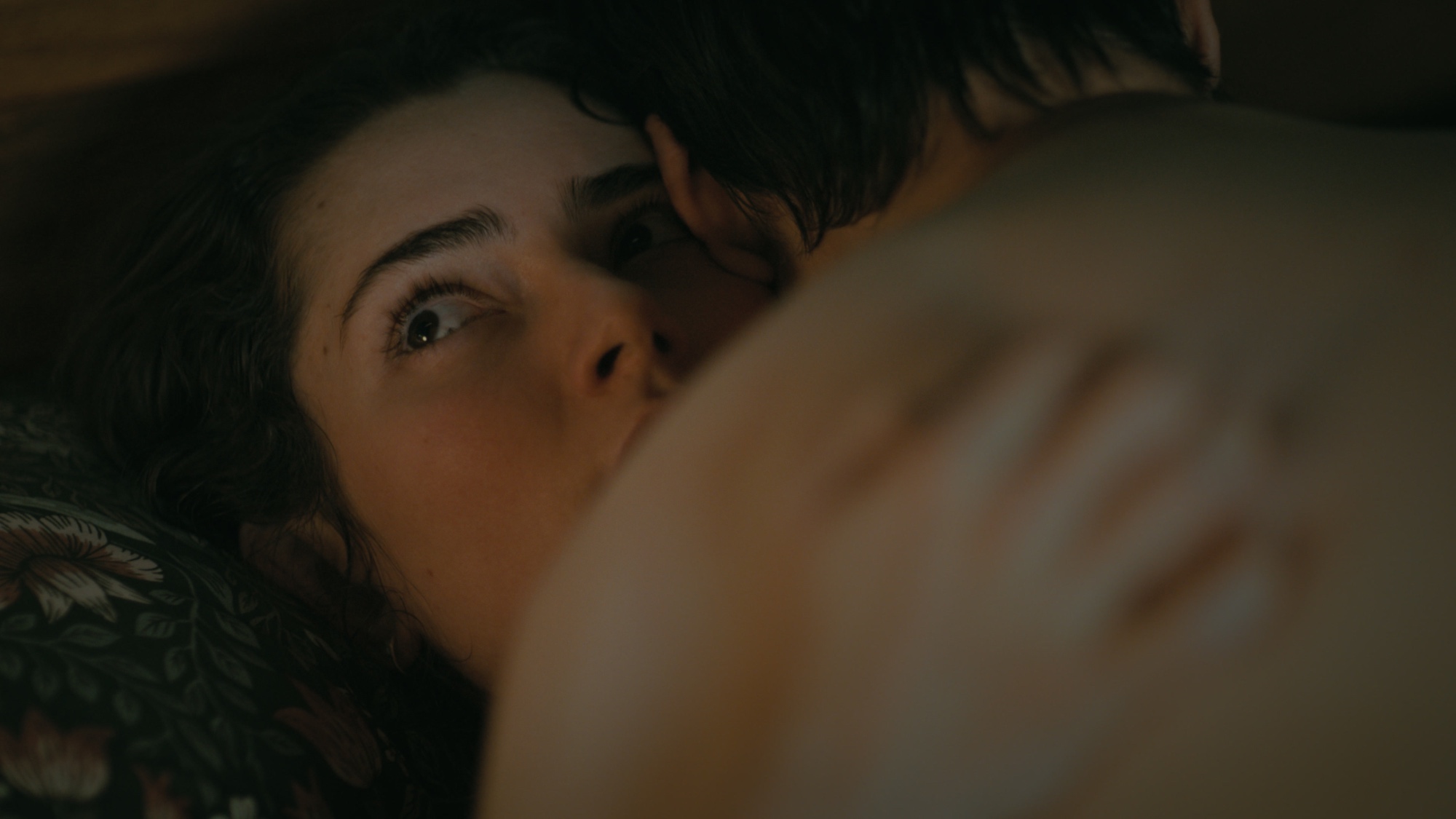
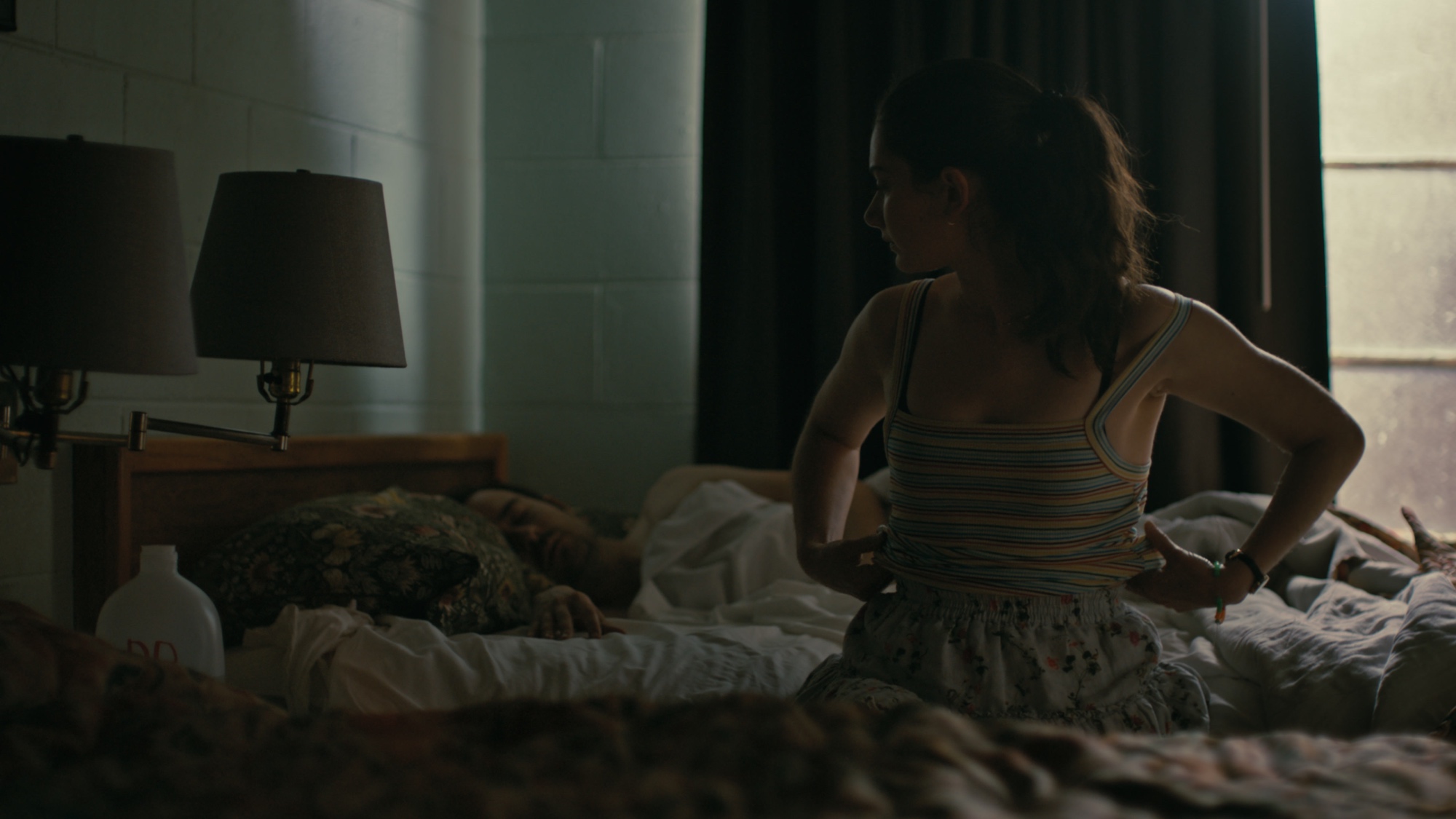
With Emily, we wanted to approach everything from a less emotional intention place and more logical. Emily and I talked more about life experiences and how decisions for someone in that 17-20 age range are so impulsive, and based on the fear of realizing that you are growing up and therefore should act like an adult, without really knowing what that means. We have had different experiences, but we both discussed when it came time to lose our virginity, what our deciding moment was and the regrets or no regrets of it all. We also really dived into how decision making feels so inconsequential at that time period and later in life when you start to reflect, you start to have these moments of realization that maybe that decision at that time was not the smartest, or maybe it was the best. We also talked a lot about Bridgette being the type of girl who still had one foot in her hometown and wanted nothing more than escape. One of the ways she could do that was by becoming this new adult, who was fully formed, but she was just so uninformed about life. So she needs to figure out how to… life.
Most Popular
We are right there in that claustrophobic room. How did you and DP Alyssa Brocato approach blocking the actors within that motel room to create and release tension?
Alyssa is such a gem of a DP. From the very beginning, she knew what I was trying to achieve and she just threw out all these ideas of how to get us there. I really wanted to let the actors command the space and have enough to breathe and move through it at their own pace. Shooting on location in an actual motel space was something we both agreed was essential. We both knew this was an actor’s film, but we also knew that the location was where we could really get the look of the film.
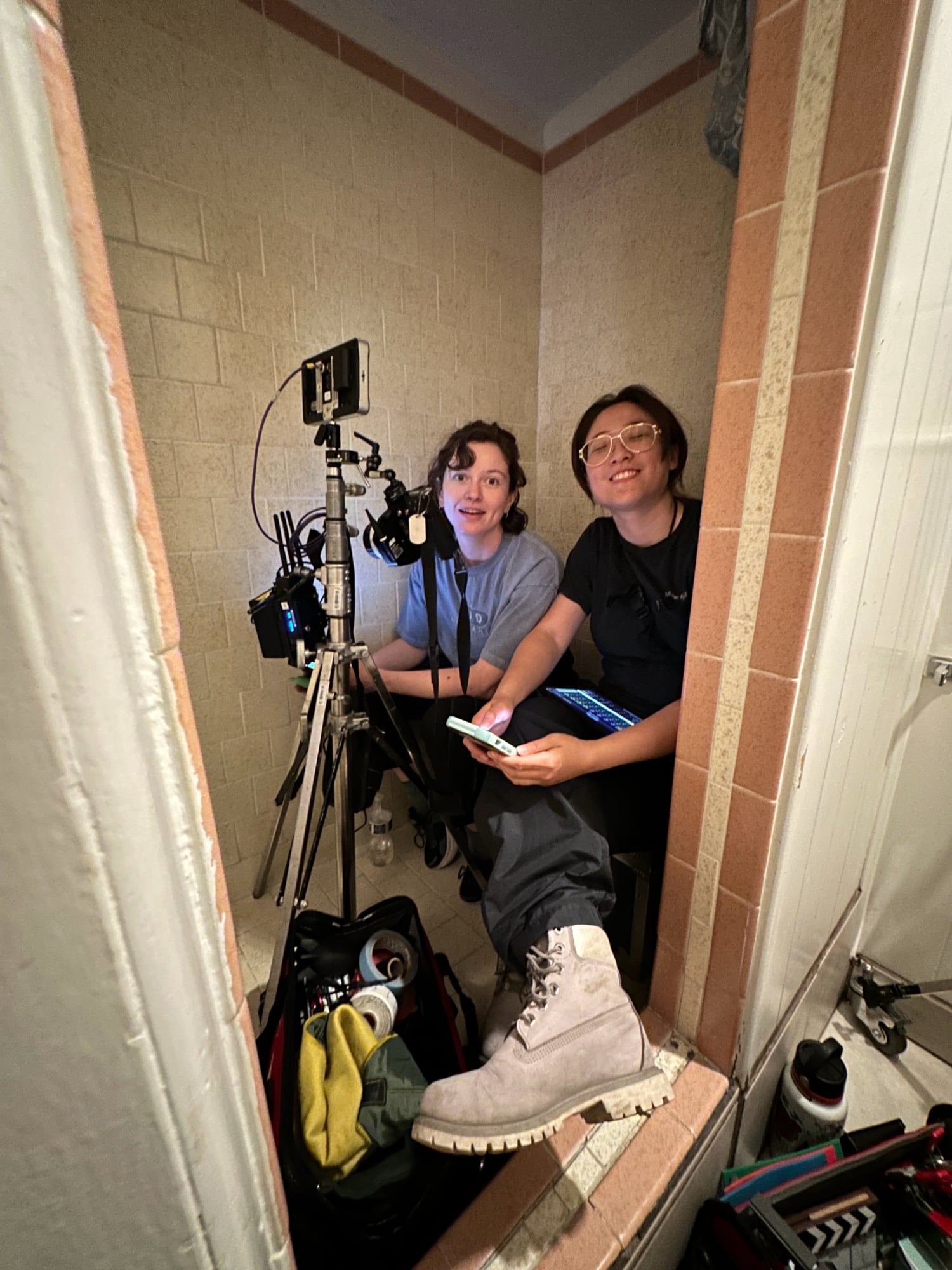
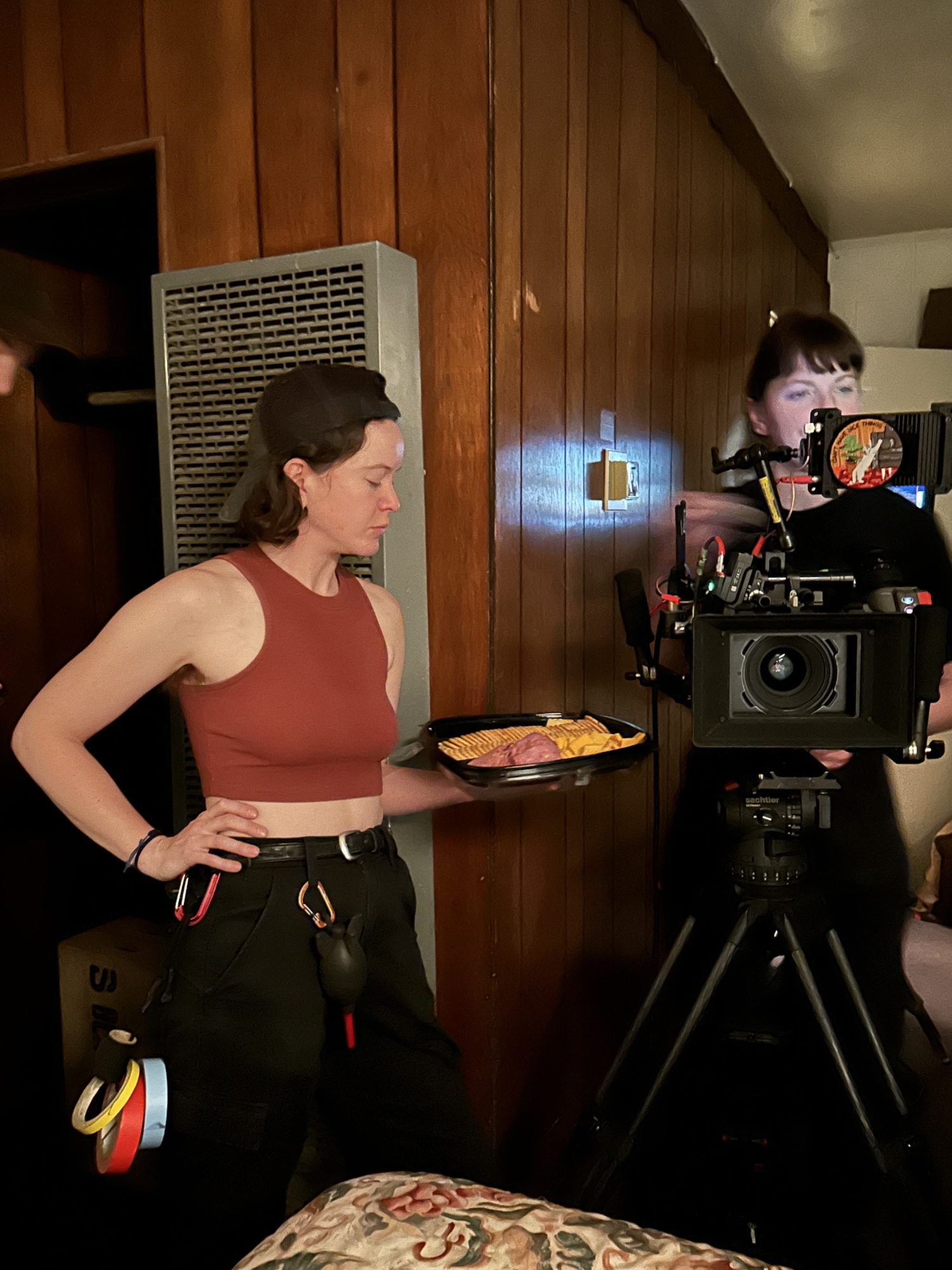
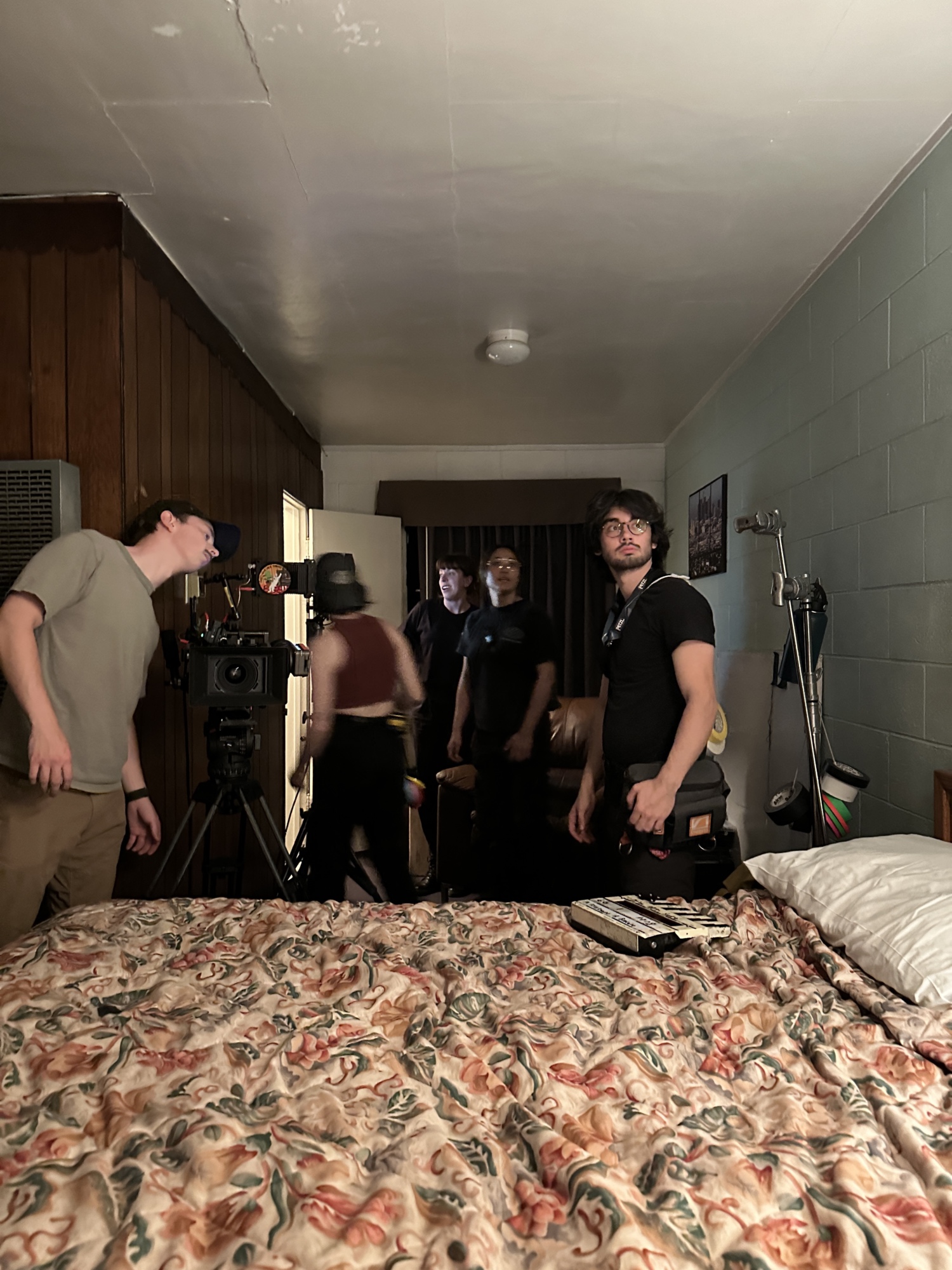
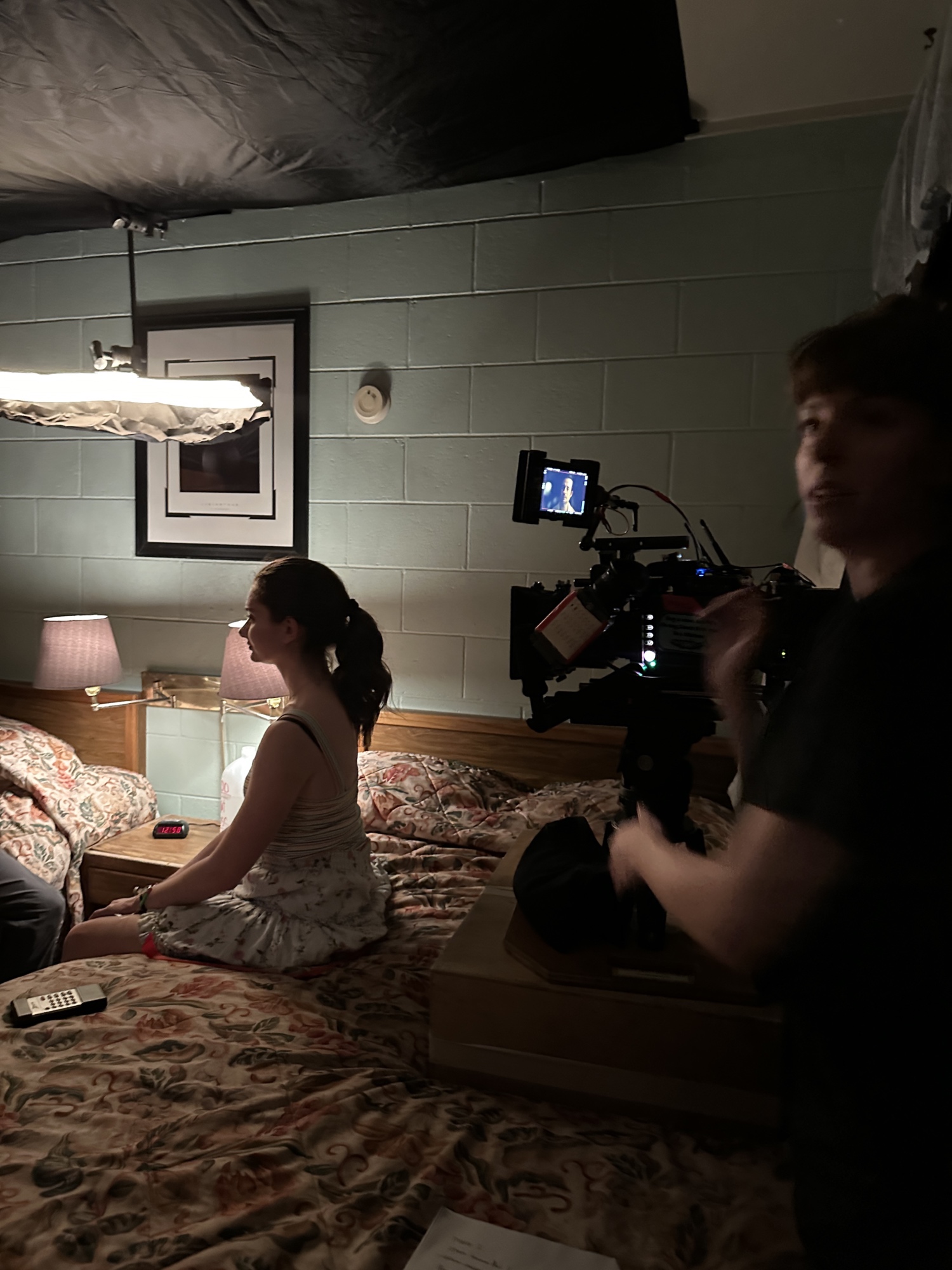
Once we went into the room, we sat with the actors and essentially blocked three areas where these mini scenes would happen. The actors ran through it a few times, and as they did, Aly and her team were able to see what we had to work with in terms of space and how little it was. From that blocking, I was able to really solidify where I was going to make my cuts and when we could move the camera. I’m specific with the look and composition of the frame, and I lucked out with Aly because she listened to me babble on about the look, tone and feel of the film. We had such limited space in the room that she was very intentional about where we put the camera in the room.
That initial establishing shot with every cut had to say something.
I tend to edit in my head as I write and shoot, so when I start a shoot, I talk with the DP about how that pacing is going to be and in this case, that dictated how the camera was going to move. Knowing that I was going to have as few cuts as possible meant less set ups and playing scenes out in full. So that initial establishing shot with every cut had to say something. I think Alyssa is wonderful and everyone should work with her. She brings such a level of fun and openness to a project. But she is also smart and loves a challenge. She was also very instrumental during the color process. Her and I worked together with our colorist Christian Navas, we both had strong ideas and it was a great process of collaborating.
In a film about power dynamics between a man and a woman, physical positioning matters enormously—who’s standing, who’s sitting, who moves toward whom.
I blocked this as if it were a game of cat and mouse. Bridgette was to be the cat, she was in pursuit of Charlie the mouse. Whether it be by actions watching him, walking to him, moving to him on the bed. Or emotionally, with all her personal questions and talking. Eventually, her pursuit would wear him down and in that moment, she would catch him.
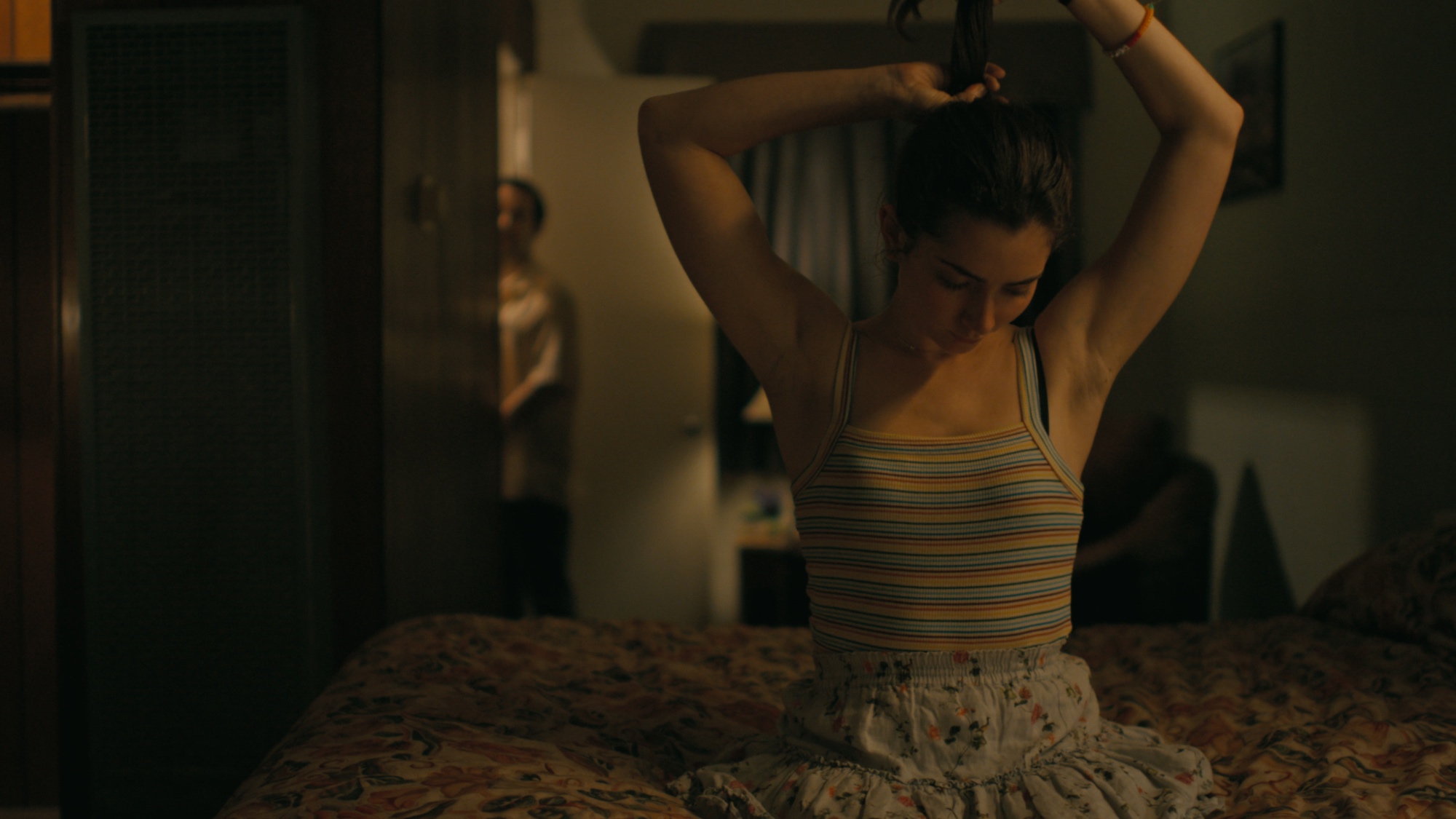
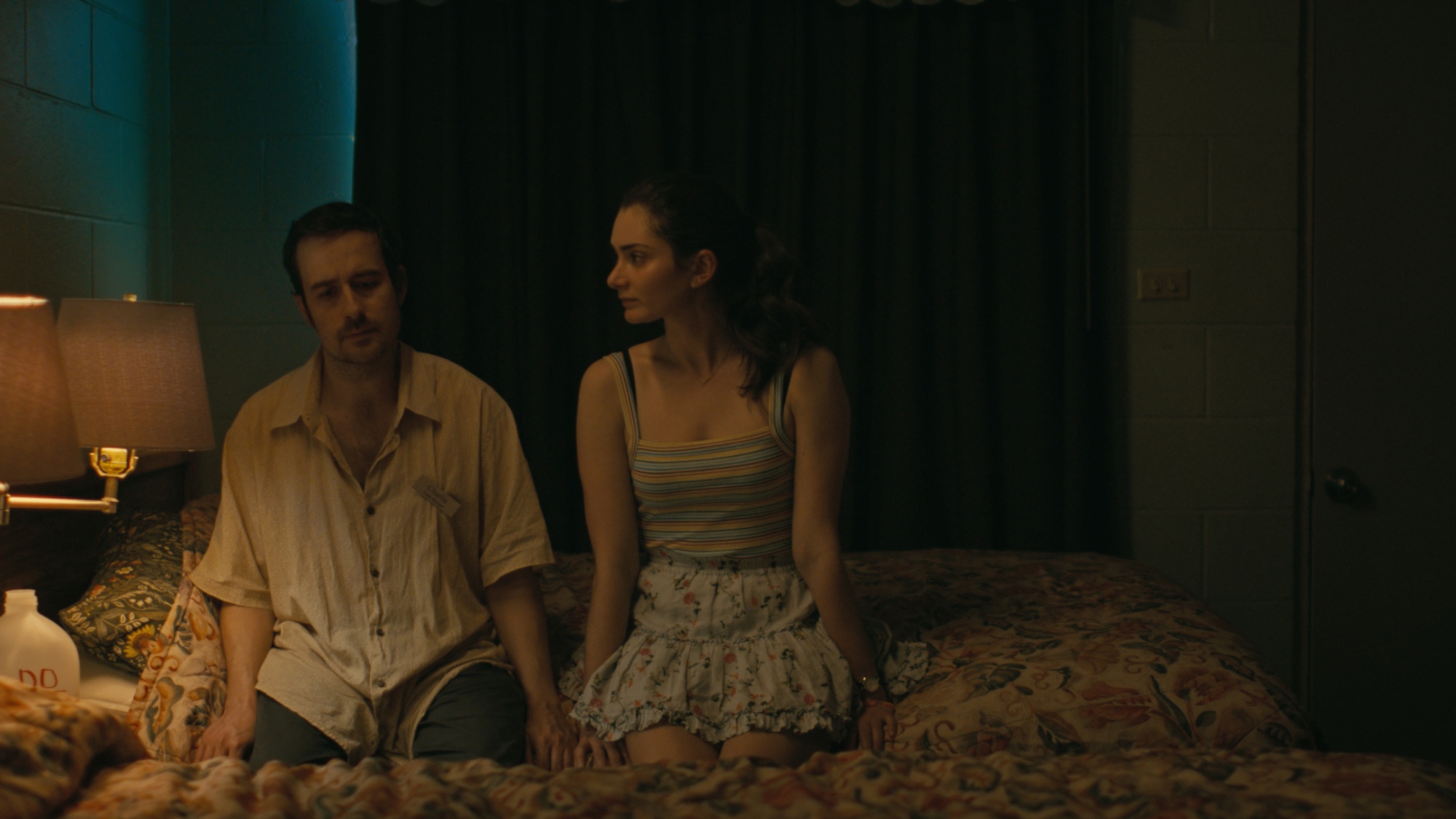
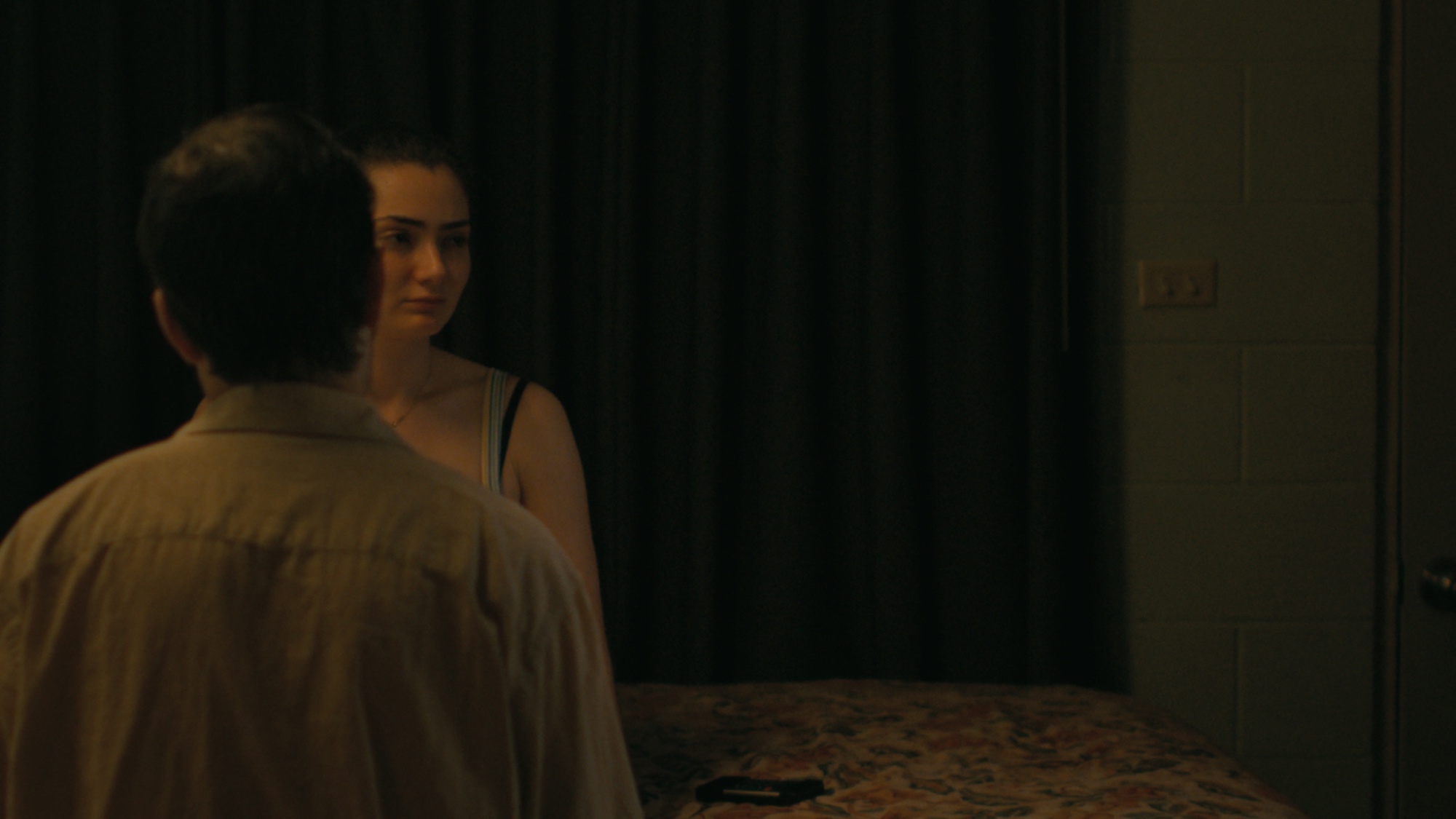
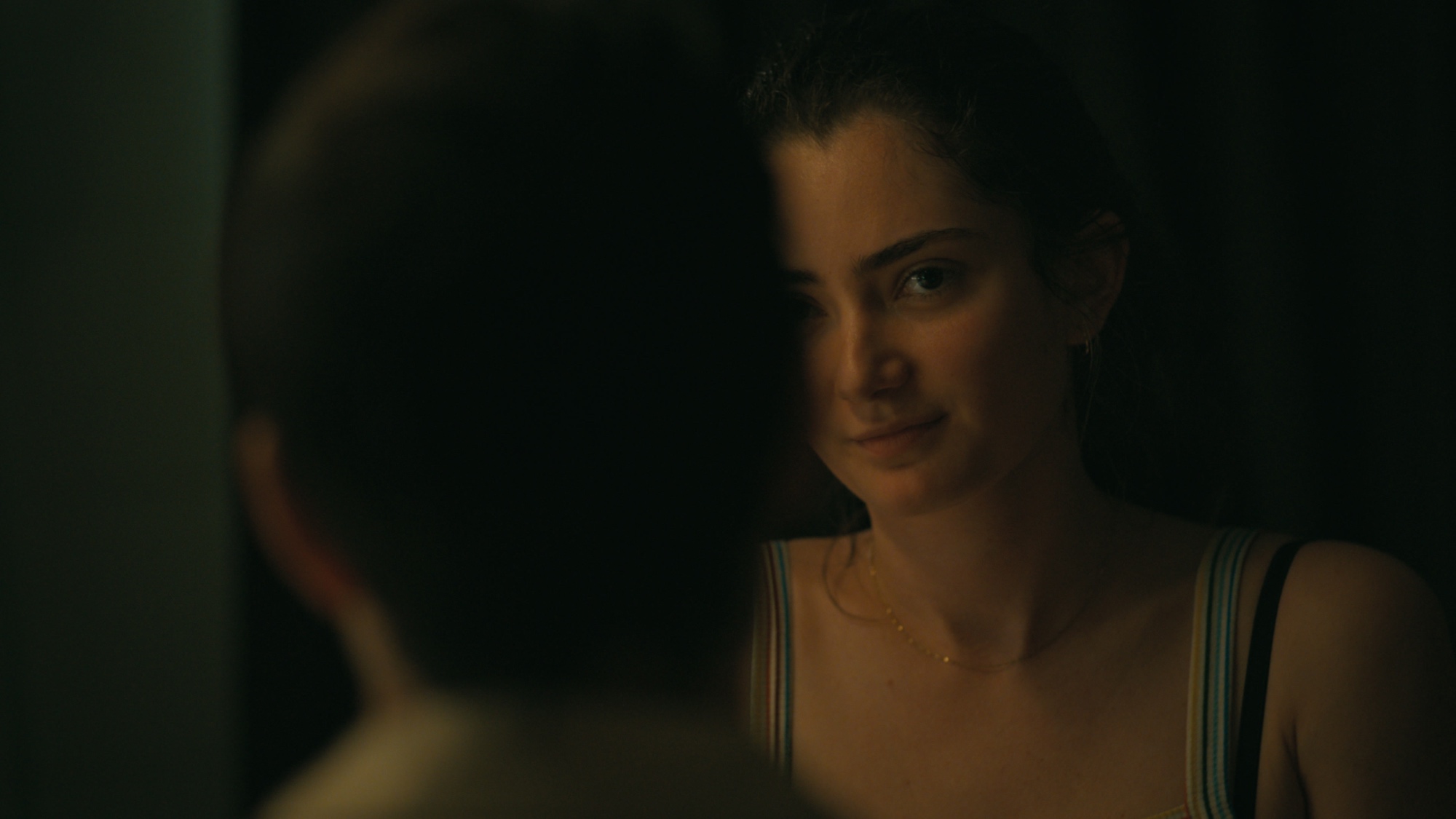
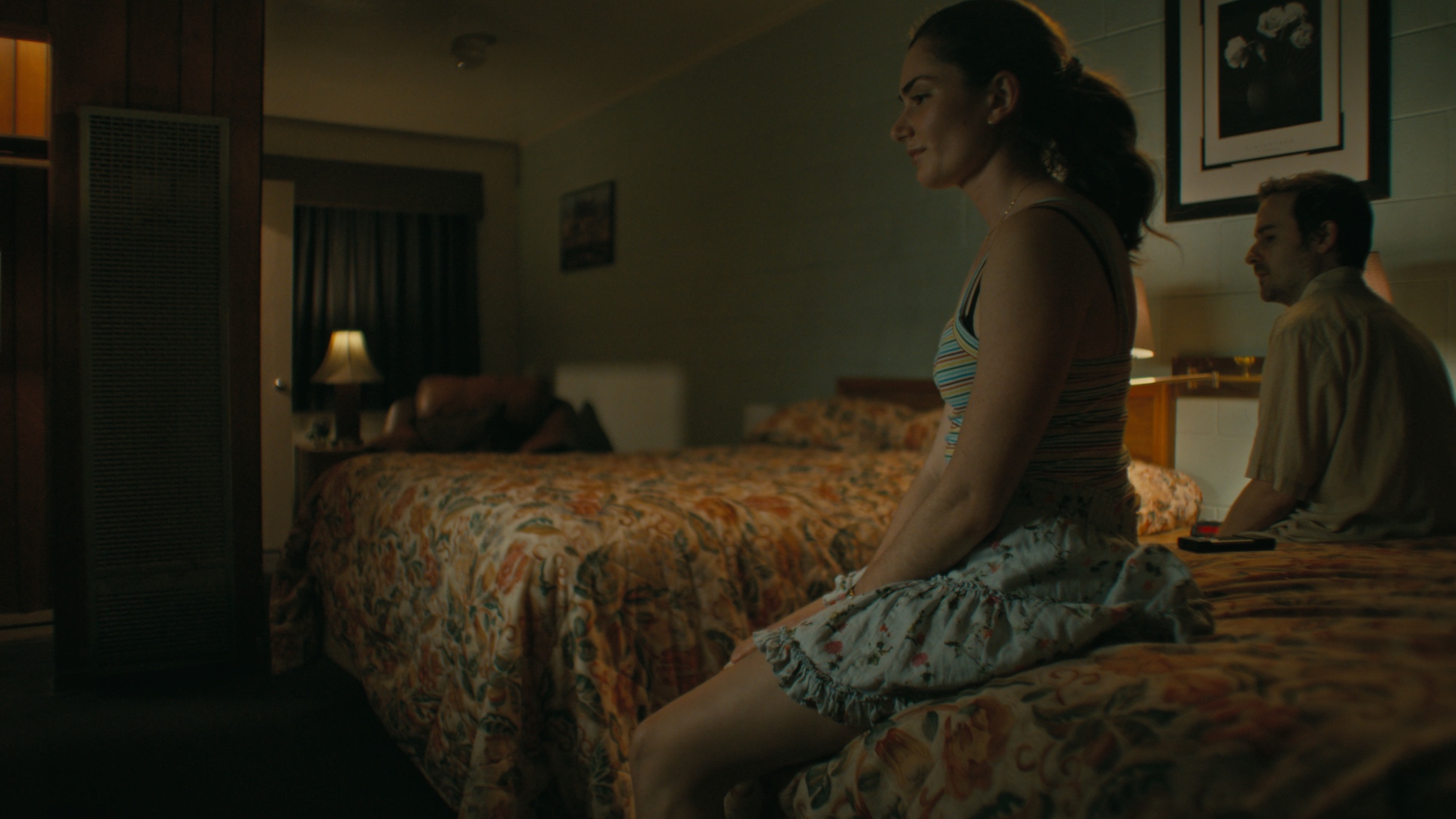
I really wanted that moment to be where the audience has an unconscious doubt about what might be happening.
How did you work to determine when the camera should be observational versus when it might subtly favour one character’s perspective?
We knew it would be observational until the moment the secrets are revealed. In that intimacy and in those closeups, there is a perspective change because I really wanted that moment to be where the audience has an unconscious doubt about what might be happening. We wanted to really get in close to feel what is about to happen, but then get out of it confused and not sure what to do or say, just as Bridgette is.
Can you explain the quietness of I’m Not Sure and working on the silence or near-silence surfacing?
I wanted it to feel like you could only hear the sounds of your own breathing as you were watching. Holding your breath, and then there is that release of that breath in the end. The few sounds you do hear in the room are used almost as punctuation. And any outside sounds, which are very few, are there to remind them that the real world is just outside that door.
I work extensively in film festivals, and I very much contest that the film is hard to programme. What are you working on now?
Festivals always make me question myself as a filmmaker, HA! But we’re not making films for festivals, so while it’s been a challenge, I am deeply proud of this film and everyone who worked on it. I hope it finds the audiences who are meant to watch it, either at festivals or online.
Do you have a favourite short film that you’d recommend to the DN community?
All time favorite short film is Wasp directed by Andrea Arnold. Wasp introduced me to Andrea Arnold, who quickly became one of my all time favorite filmmakers. This film explored choices that had to be made, and the end result was the reality of being a human in a complicated world.
And finally, what are you working on now?
This year, I have a new feature that I made called Mackenzie, which is almost finished in post-production. It’s a film about my childhood growing up in Moab, Utah, and when I ran away from home so that I could marry my celebrity crush, Mackenzie Astin from the TV show The Facts of Life. It was the most amazing experience making the film. Which I made on a microbudget—1 camera, 2 lenses and a microphone. 8 glorious days in the July heat of the desert with an 11-year-old girl, Lucya Yusimov, who had never acted before and 2 friends, my film partner Jaffe Zinn (DP, Editor, Sound Design, Music) and Matt Gibson (AC, Sound). It was such hard work, but the most creatively fulfilling, and I have never laughed so hard. I can’t wait for everyone to see it. I’ll probably retire after that comes out, maybe, probably not.